Discover 10 simple yoga practices that support total wellness, reduce daily stress, improve flexibility, and boost natural energy levels safely.
In today’s fast-paced lifestyle, wellness is no longer limited to treating illness—it is about maintaining balance between the body, mind, and emotions. Yoga, an ancient practice rooted in India, has become a global wellness solution because it addresses physical strength, mental calmness, flexibility, digestion, immunity, and emotional stability in one holistic system.
Unlike intense workouts that focus only on muscles, yoga works gently yet deeply on internal organs, the nervous system, and breathing patterns. When practiced regularly and correctly, yoga can help prevent lifestyle diseases, reduce stress, improve posture, and enhance overall quality of life.
This article explores 10 essential yoga practices for complete wellness, including the best time to practice, step-by-step process, key health benefits, and important safety awareness. These details are especially important for beginners and individuals with medical conditions, as yoga should always be practiced mindfully and preferably under expert guidance.
1. Tadasana (Mountain Pose): The Foundation of Body Alignment
Best Time to Practice:
Early morning, on an empty stomach
Process
Tadasana begins by standing upright with feet together and arms relaxed at the sides. Slowly inhale and raise both arms overhead, interlocking fingers if comfortable. Stretch the entire body upward, lifting the heels slightly off the ground. Maintain balance, keep breathing normally, and hold the posture for 15–30 seconds before gently relaxing.
Benefits
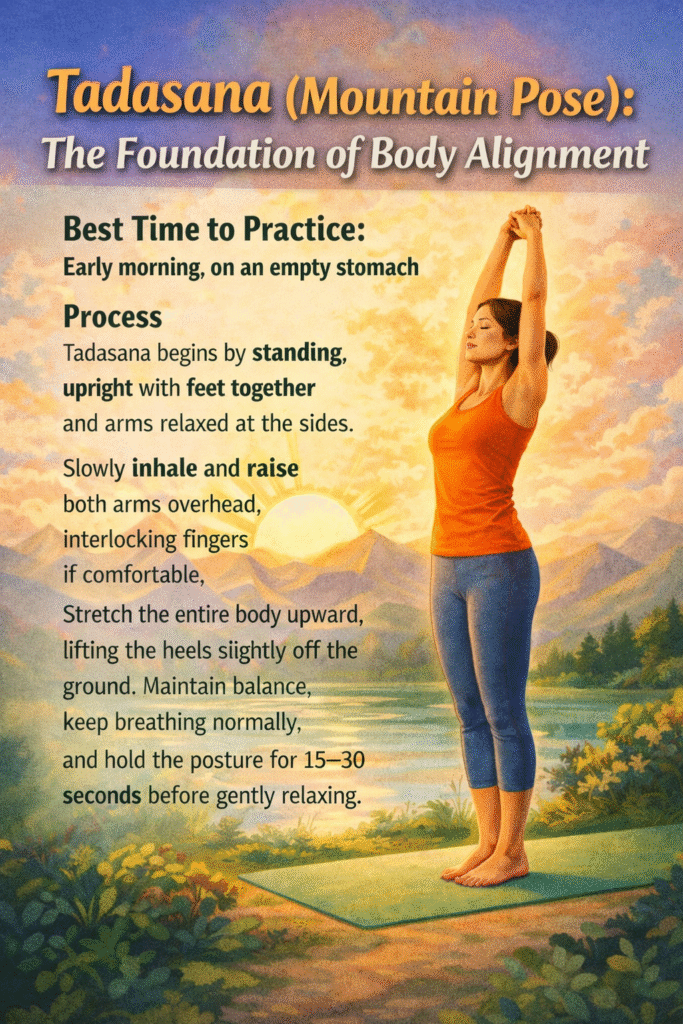
Tadasana improves overall posture and spinal alignment, which is essential for people who sit for long hours. It strengthens the legs, knees, and ankles, enhances balance, and improves body awareness. In growing children and teenagers, it supports natural height development. It also helps improve blood circulation and prepares the body for more complex yoga postures.
Awareness / Who Should Avoid
People with chronic low blood pressure, vertigo, or severe balance disorders should practice cautiously. Those with spinal problems should consult a yoga expert before including this pose in their routine.
2. Vrikshasana (Tree Pose): Building Balance and Focus
Best Time to Practice:
Morning or evening, at least 4 hours after meals
Process
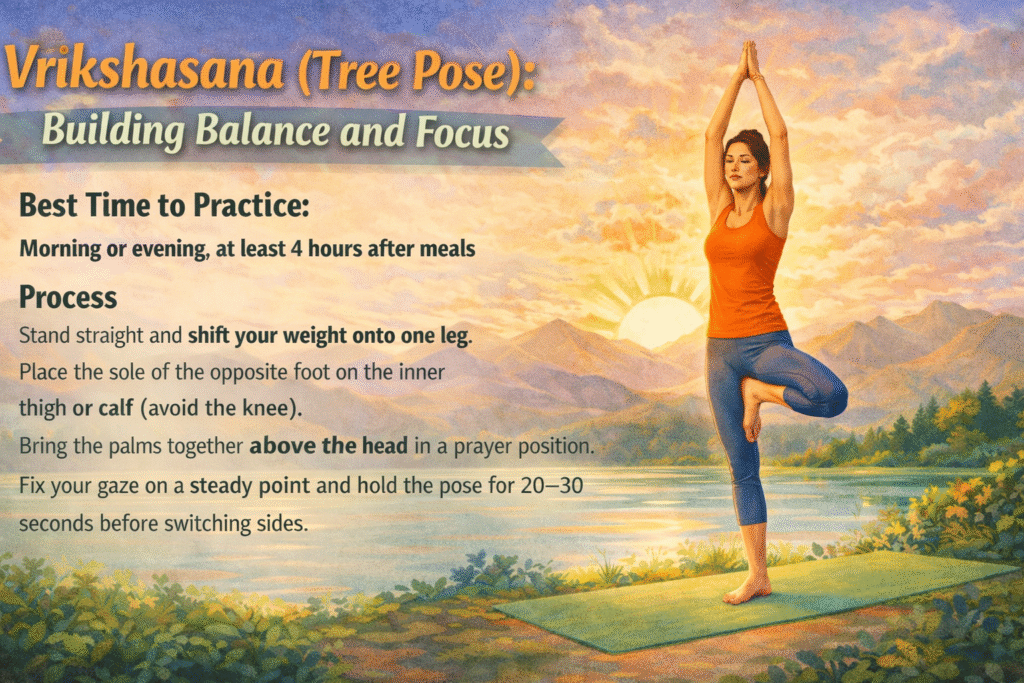
Stand straight and shift your weight onto one leg. Place the sole of the opposite foot on the inner thigh or calf (avoid the knee). Bring the palms together above the head in a prayer position. Fix your gaze on a steady point and hold the pose for 20–30 seconds before switching sides.
Benefits
Vrikshasana strengthens the legs, ankles, and core muscles while improving balance and coordination. It enhances concentration, mental stability, and mind-body connection. Regular practice can help reduce anxiety and improve confidence.
Awareness / Who Should Avoid
Individuals with knee injuries, ankle pain, or balance issues should use wall support. Practice under expert guidance if recovering from joint surgery.
3. Bhujangasana (Cobra Pose): Strengthening the Spine and Digestive System
Best Time to Practice:
Morning, empty stomach
Process
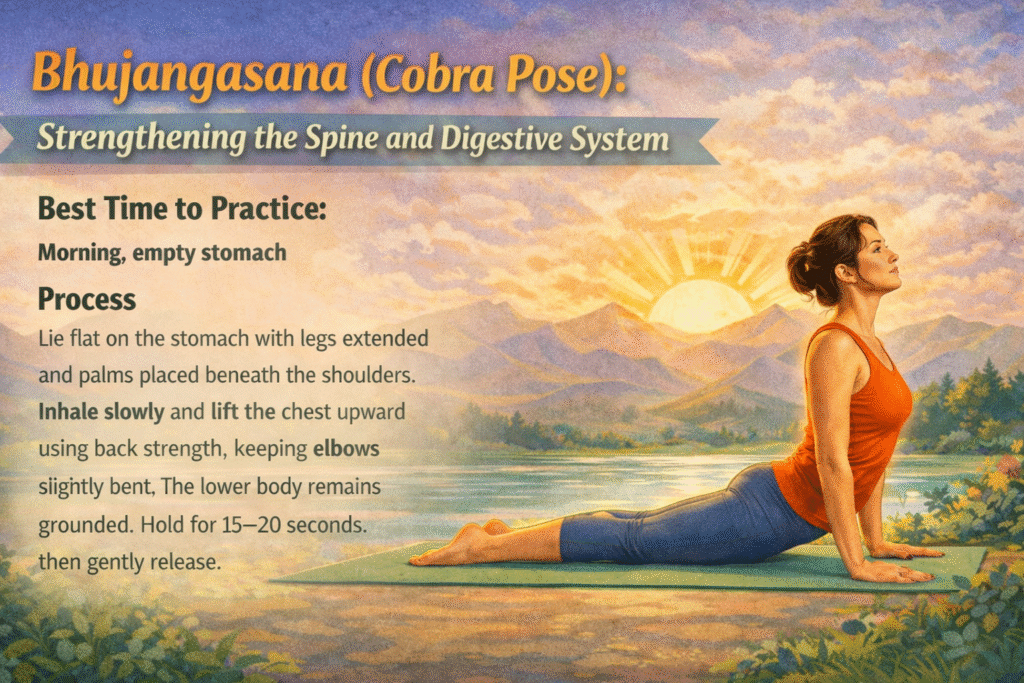
Lie flat on the stomach with legs extended and palms placed beneath the shoulders. Inhale slowly and lift the chest upward using back strength, keeping elbows slightly bent. The lower body remains grounded. Hold for 15–20 seconds, then gently release.
Benefits
Bhujangasana strengthens the spine, improves flexibility, and helps relieve mild back pain. It stimulates digestive organs, supports healthy metabolism, and improves lung capacity. The pose also helps reduce stress and fatigue by opening the chest and improving oxygen intake.
Awareness / Who Should Avoid
This posture should be avoided during pregnancy, hernia, recent abdominal surgery, or severe back problems. Always practice under expert supervision if you have spinal issues.
4. Adho Mukha Svanasana (Downward-Facing Dog): Energizing the Entire Body
Best Time to Practice:
Morning or evening
Process
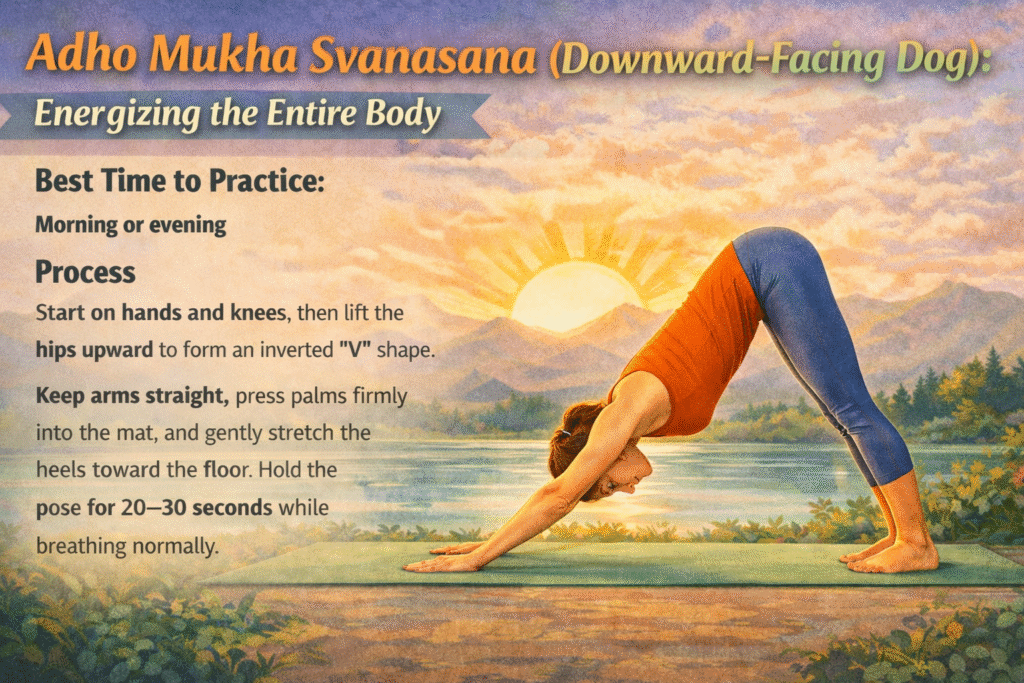
Start on hands and knees, then lift the hips upward to form an inverted “V” shape. Keep arms straight, press palms firmly into the mat, and gently stretch the heels toward the floor. Hold the pose for 20–30 seconds while breathing normally.
Benefits
This pose improves blood circulation to the brain, helping reduce stress and fatigue. It strengthens the arms, shoulders, legs, and spine while improving flexibility. Adho Mukha Svanasana is also known to calm the nervous system and boost overall energy levels.
Awareness / Who Should Avoid
People with wrist injuries, shoulder pain, or severe high blood pressure should practice carefully. Those with recent surgery or dizziness should seek expert advice.
5. Paschimottanasana (Seated Forward Bend): Supporting Digestion and Mental Calm
Best Time to Practice:
Morning, empty stomach
Process
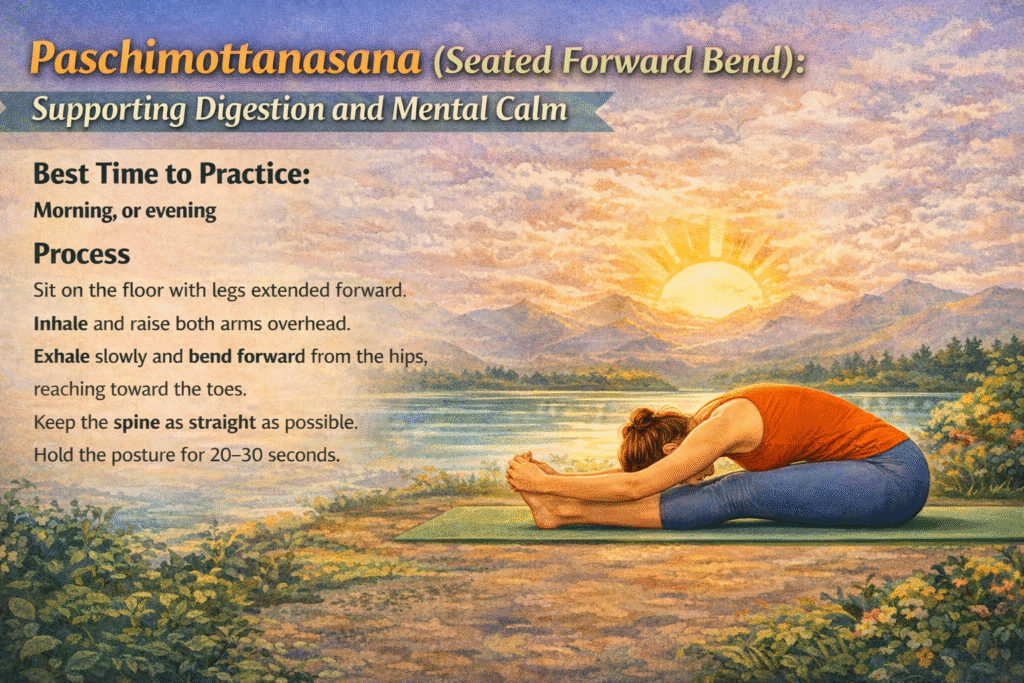
Sit on the floor with legs extended forward. Inhale and raise both arms overhead. Exhale slowly and bend forward from the hips, reaching toward the toes. Keep the spine as straight as possible. Hold the posture for 20–30 seconds.
Benefits
Paschimottanasana improves digestion, relieves constipation, and helps reduce abdominal fat when practiced regularly. It stretches the spine and hamstrings while calming the nervous system. This pose is particularly helpful for reducing stress, anxiety, and insomnia.
Awareness / Who Should Avoid
Avoid this pose if you have severe lower back pain, slip disc, or during pregnancy. Always practice gently and under professional guidance if spinal issues exist.
6. Trikonasana (Triangle Pose): Enhancing Flexibility and Internal Organ Function
Best Time to Practice:
Morning or evening
Process
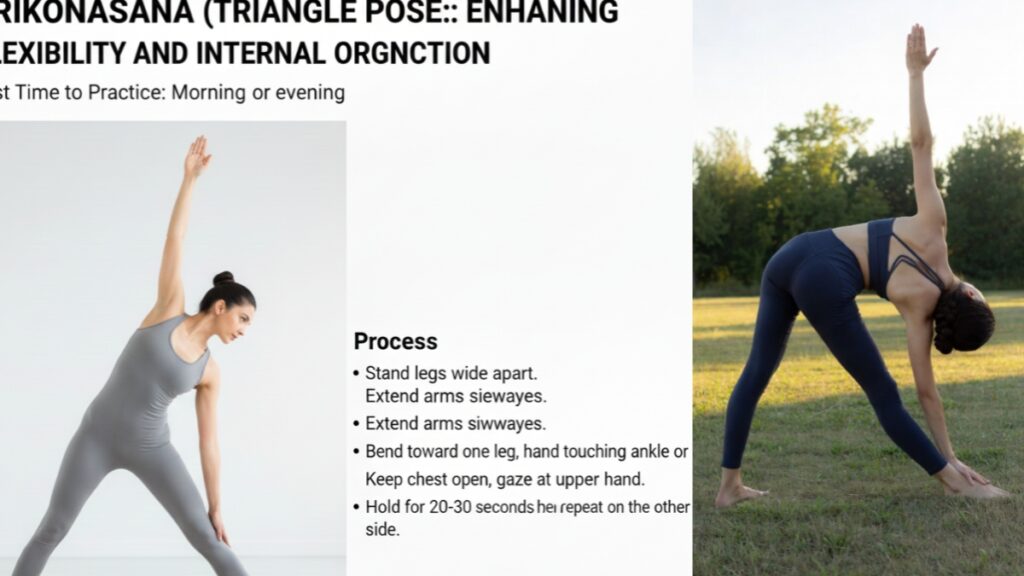
Stand with legs wide apart. Extend arms sideways and slowly bend toward on
nd feet placed flat on the floor. Press the feet down and lift the hips upward. Hold briefly while breathing normally, then lower slowly.
Benefits
Setu Bandhasana strengthens the lower back and glutes, improves posture, and helps reduce stress. It also supports hormonal balance and circulation.
Safety Awareness
Avoid this pose if you have neck injuries or recent surgery. Pregnant women should practice only under professional guidance.
7. Setu Bandhasana (Bridge Pose): Strengthening the Back and Reducing Stress
Best Time to Practice
Morning or Evening
How to Practice
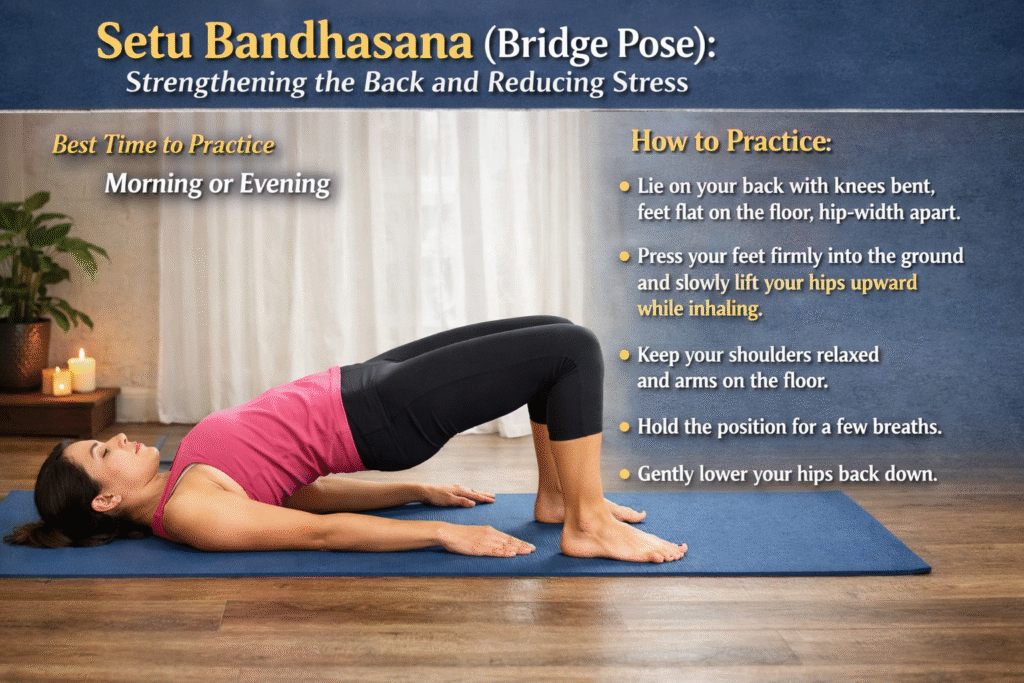
Lie on your back with knees bent and feet placed flat on the floor, hip-width apart. Press your feet firmly into the ground and slowly lift your hips upward while inhaling. Keep your shoulders relaxed and arms resting on the floor. Hold the position for a few breaths while breathing normally, then gently lower your hips back down.
Benefits
Setu Bandhasana strengthens the lower back, glutes, and thighs while improving spinal flexibility and posture. It helps calm the nervous system, reduces stress and anxiety, enhances blood circulation, and supports hormonal balance when practiced regularly.
Safety Awareness
Avoid this pose if you have neck injuries, severe back pain, or have recently undergone surgery. Pregnant women and individuals with medical conditions should practice Setu Bandhasana only under the guidance of a qualified yoga instructor.
8. Vajrasana (Thunderbolt Pose): Supporting Healthy Digestion
Best Time to Practice:
After meals
Vajrasana is unique because it can be practiced immediately after eating.
How to Practice
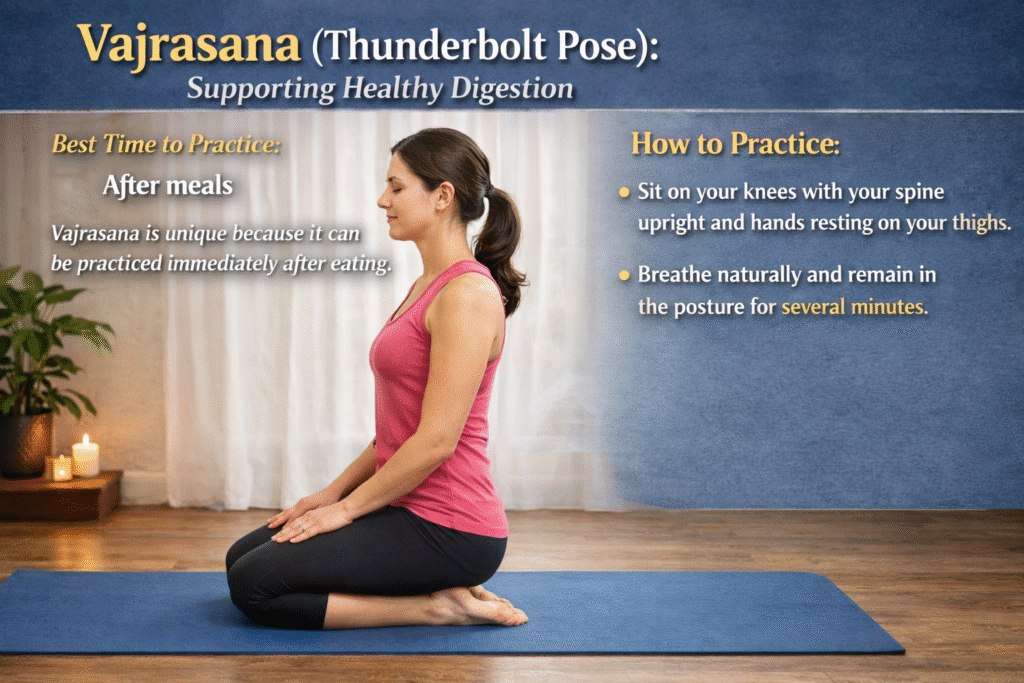
Sit on your knees with your spine upright and hands resting on your thighs. Breathe naturally and remain in the posture for several minutes.
Benefits
This pose improves digestion, reduces acidity, and promotes mental calmness. It also helps improve circulation in the lower body.
Safety Awareness
Those with knee pain or joint issues should use support or avoid long durations.
9. Anulom Vilom Pranayama: Balancing Breath and Mind
Best Time to Practice:
Early morning or evening
How to Practice
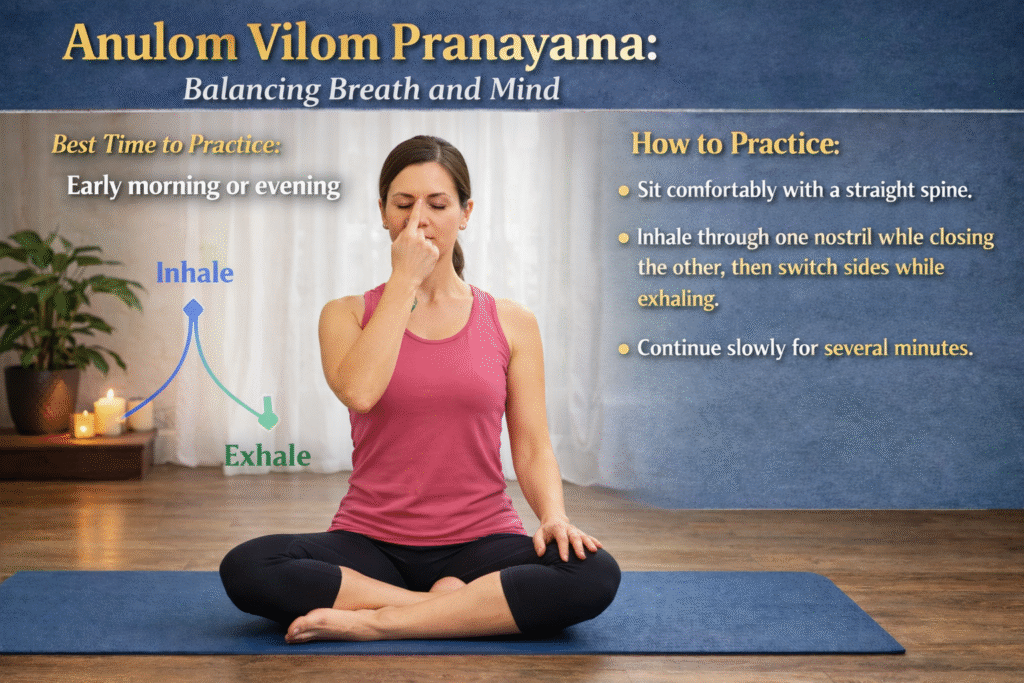
Sit comfortably with a straight spine. Inhale through one nostril while closing the other, then switch sides while exhaling. Continue slowly for several minutes.
Benefits
Anulom Vilom helps reduce stress, improves lung capacity, supports heart health, and strengthens immunity. It also enhances mental clarity and emotional stability.
Safety Awareness
Do not force breathing. People with respiratory conditions should learn this practice from a trained instructor.
10. Shavasana (Corpse Pose): Deep Rest and Recovery
Best Time to Practice:
At the end of a yoga session
How to Practice
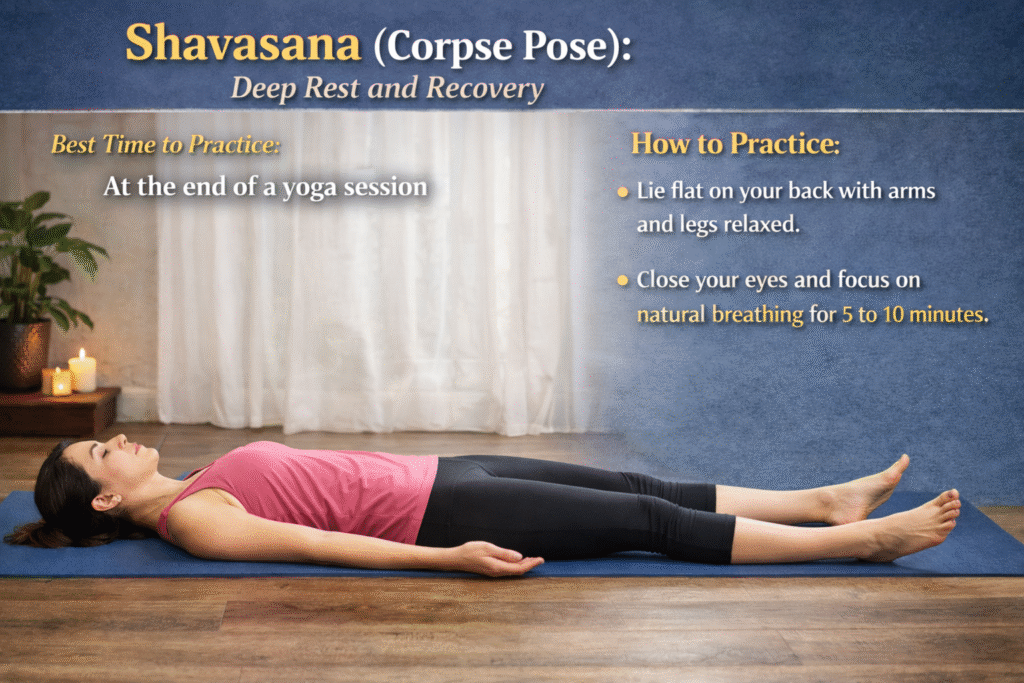
Lie flat on your back with arms and legs relaxed. Close your eyes and focus on natural breathing for 5 to 10 minutes.
Benefits
Shavasana allows the body to absorb the benefits of yoga practice. It reduces stress, lowers blood pressure, and improves sleep quality.
Safety Awareness
Avoid falling asleep. Beginners may benefit from guided relaxation.
Final Thought
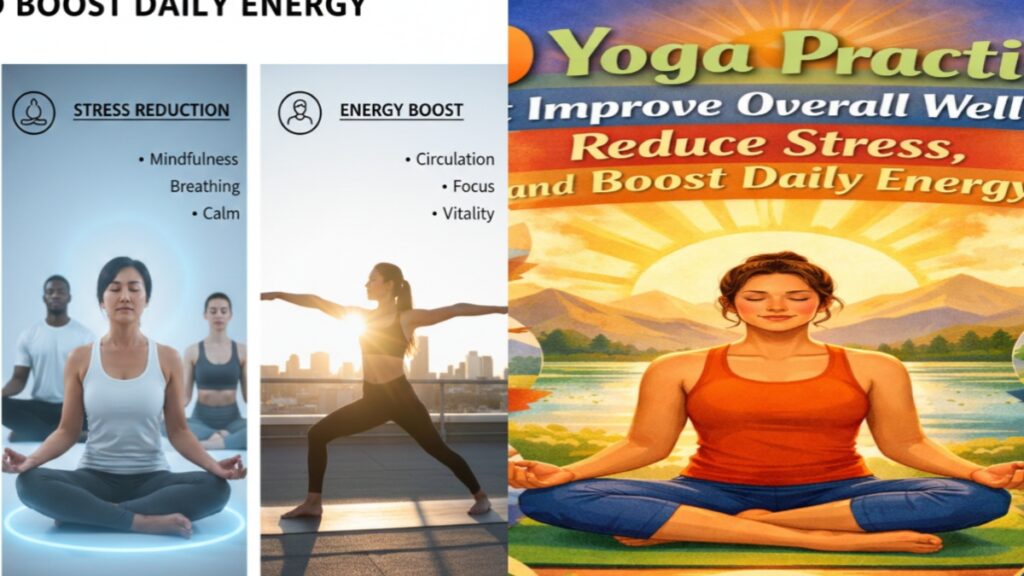
Yoga is not about pushing the body to extremes—it is about listening to it. When practiced consistently and with awareness, yoga becomes a powerful tool for lifelong wellness. However, individuals with medical conditions, injuries, or pregnancy should always practice yoga under the guidance of a qualified instructor or healthcare professional.
True wellness comes from balance, and yoga offers a natural path to achieve it.