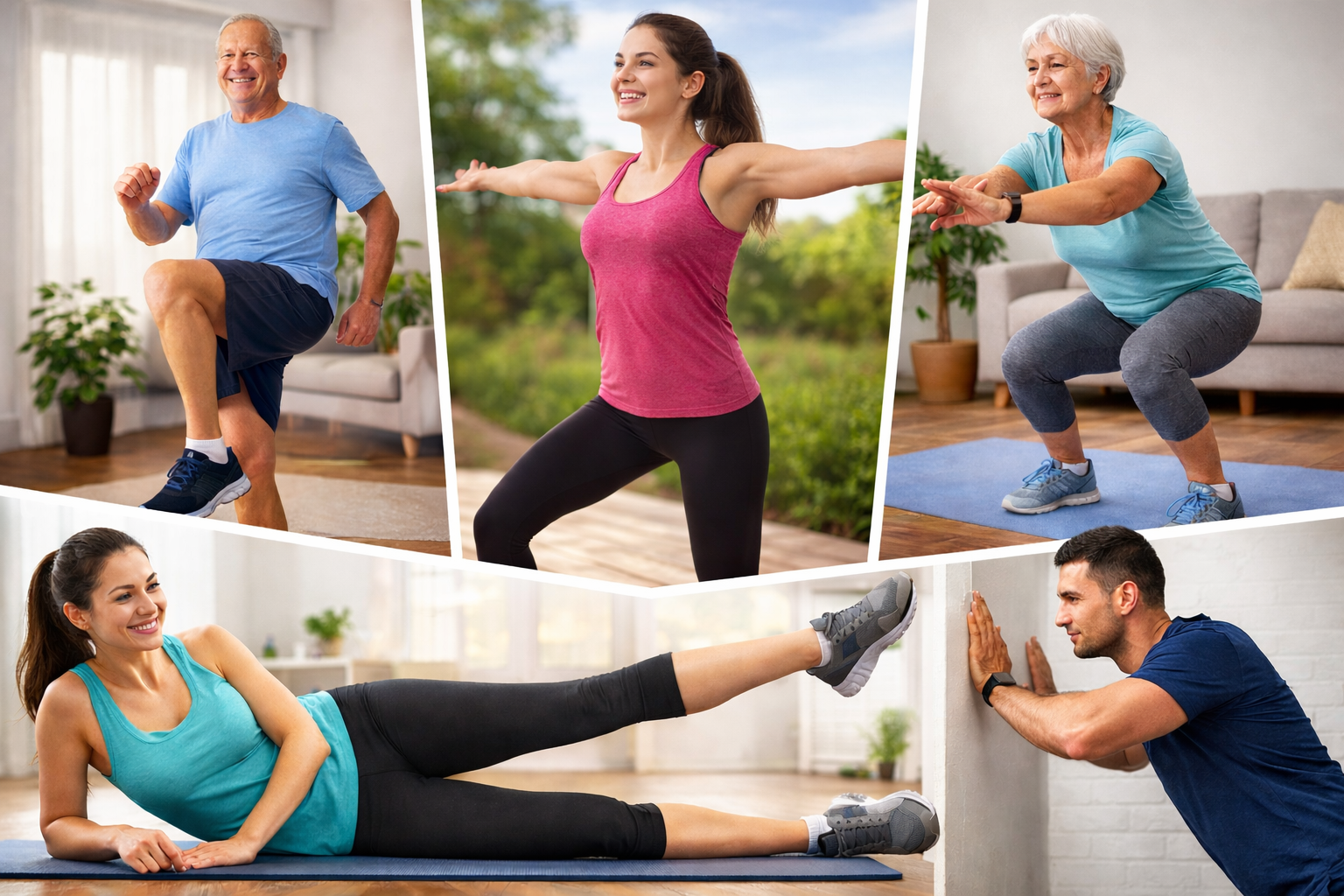
Learn 5 easy free hand exercises to improve stamina, energy, and endurance at home without gym or equipment.
5 Free Hand Exercises for Growing Stamina
1. Introduction
Stamina is the foundation of an active, healthy life. It refers to the body’s ability to sustain physical and mental effort over time without excessive fatigue. Whether you are a student, a working professional, a homemaker, or a senior citizen, good stamina helps you perform daily activities with more energy, focus, and confidence.
In today’s fast‑paced lifestyle, many people struggle with low stamina due to lack of movement, prolonged sitting, stress, irregular sleep, and poor breathing habits. While gym workouts and intense training programs can improve endurance, they are not suitable or accessible for everyone. Some people have medical conditions, joint pain, age‑related limitations, or simply lack the time and resources to attend a gym.
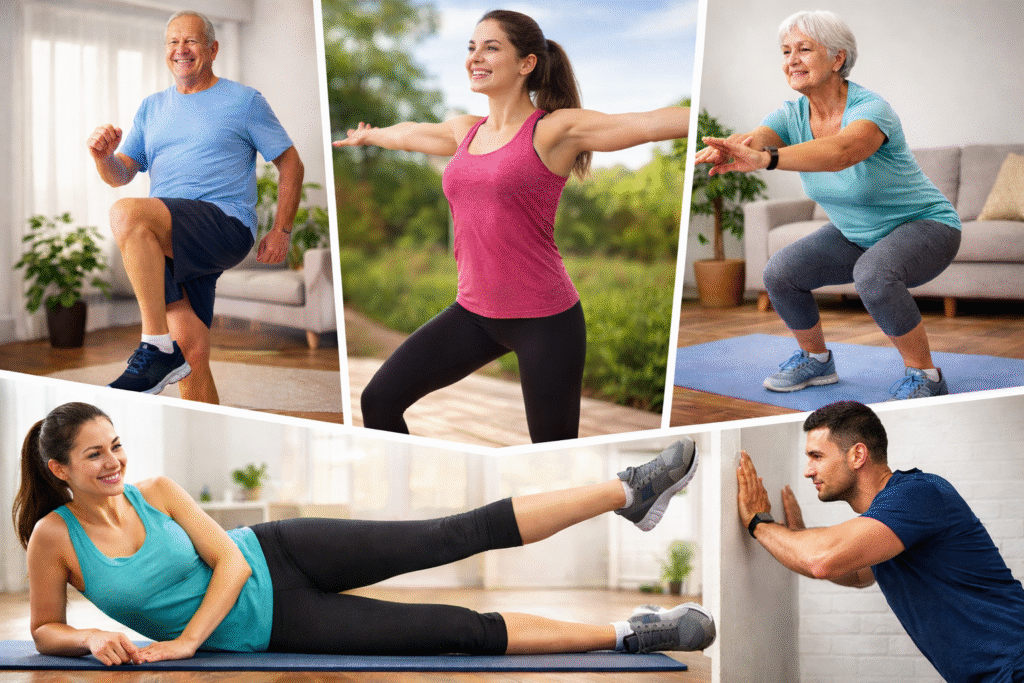
This is where free hand exercises become extremely valuable. Free hand exercises are movements performed using your own body weight, without any equipment. They are simple, adaptable, and can be practiced almost anywhere—at home, in a park, or even in a small indoor space. When done regularly and mindfully, these exercises can gradually improve stamina, circulation, breathing efficiency, muscle endurance, and overall vitality.
In this article, we will explore why free hand exercises are especially important for people of all ages and minor medical conditions, and then discuss five safe and effective free hand exercises that help grow stamina naturally.
2. Why Free Hand Exercises Are Needed When Medical Conditions or Age Limitations Exist
Not everyone can safely perform yoga postures, heavy physical poses, or high‑intensity workouts. Many individuals are advised by doctors to avoid certain movements due to medical or age‑related reasons. However, this does not mean they should avoid physical activity altogether. In fact, gentle and controlled movement is often essential for maintaining health.
2.1 Medical Conditions That Limit Intense Exercise
Certain medical conditions require caution when practicing yoga postures or strenuous physical exercises. These may include:
High blood pressure
Mild heart conditions (under medical supervision)
Knee pain or early‑stage arthritis
Back stiffness or mild disc issues
Obesity or overweight conditions
Respiratory issues such as mild asthma
Post‑recovery phase after illness or surgery
In such cases, deep bends, prolonged holds, extreme stretches, or high‑impact movements can increase the risk of injury or discomfort. Free hand exercises, when performed slowly and within comfort limits, reduce strain on joints and muscles while still improving stamina and circulation.
2.2 Limitations in Older Age
As we grow older, the body naturally loses muscle mass, flexibility, and balance. Older adults may face challenges such as:
Reduced joint mobility
Loss of muscle strength
Balance issues
Faster fatigue
Fear of falling or injury
Complex yoga poses or floor‑based exercises may not always be practical for seniors. Free hand exercises, especially those performed in standing or seated positions, allow older individuals to stay active without excessive risk. These exercises help maintain endurance, improve blood flow, and support independence in daily life.
2.3 Why Free Hand Exercises Are a Safer Choice
Free hand exercises offer several advantages:
Low impact: They place minimal stress on joints.
Adjustable intensity: Movements can be slow or fast depending on comfort.
No equipment required: Suitable for home practice.
Improved body awareness: Encourages mindful movement and breathing.
Consistency over intensity: Builds stamina gradually without exhaustion.
For people with minor medical conditions or age‑related limitations, consistency matters more than intensity. Free hand exercises support long‑term stamina growth while respecting the body’s limits.
3. Types of Free Hand Exercises Suitable for All Ages and Minor Medical Conditions
Below are five free hand exercises that can be practiced by people of almost any age. These exercises focus on gentle muscle engagement, rhythmic movement, and coordinated breathing, which are essential for improving stamina.
Important Awareness: Always move within your comfort zone. If you have a diagnosed medical condition, consult a healthcare professional before starting any exercise routine.
Exercise 1: Marching in Place
Description:
Marching in place is one of the simplest and most effective free hand exercises for building stamina. It mimics walking and gently increases heart rate.
How to Do It:
Stand straight with feet hip‑width apart.
Lift your right knee slightly and place the foot back down.
Repeat with the left leg.
Swing your arms naturally with each step.
Continue at a steady, comfortable pace.
Duration:
Start with 2–3 minutes and gradually increase to 10 minutes.
Benefits:
Improves cardiovascular endurance
Enhances blood circulation
Strengthens leg muscles
Supports balance and coordination
Why It’s Suitable for All Ages:
Marching can be done slowly for beginners or seniors and faster for younger individuals. It can also be done while holding onto a chair for extra support.
Exercise 2: Arm Circles
Description:
Arm circles strengthen shoulder muscles and improve upper‑body endurance, which plays a role in overall stamina.
How to Do It:
Stand or sit comfortably with your spine straight.
Extend both arms out to the sides.
Slowly make small circular movements forward.
After 30 seconds, reverse the direction.
Duration:
1–2 minutes in each direction.
Benefits:
Improves shoulder mobility
Increases upper‑body stamina
Enhances blood flow to arms and chest
Reduces stiffness in shoulders
Why It’s Suitable for All Ages:
Arm circles can be performed seated or standing, making them ideal for older adults or people with limited mobility.
Exercise 3: Side Bends (Standing or Seated)
Description:
Side bends gently engage the core muscles and improve breathing capacity, which is essential for stamina.
How to Do It:
Stand with feet shoulder‑width apart or sit upright on a chair.
Place your hands on your hips or raise one arm overhead.
Gently bend to one side while breathing out.
Return to the center while breathing in.
Repeat on the other side.
Duration:
10–15 repetitions on each side.
Benefits:
Strengthens side abdominal muscles
Improves lung expansion
Enhances flexibility of the spine
Supports better posture
Why It’s Suitable for All Ages:
The movement is slow and controlled, making it safe for people with mild back stiffness or older adults when done gently.
Exercise 4: Heel Raises
Description:
Heel raises strengthen the lower legs and improve circulation, which helps reduce fatigue during daily activities.
How to Do It:
Stand straight and hold a wall or chair for support.
Slowly lift your heels off the ground, standing on your toes.
Hold for 2–3 seconds.
Gently lower your heels back down.
Duration:
10–20 repetitions.
Benefits:
Strengthens calf muscles
Improves balance
Enhances blood circulation
Builds endurance for standing and walking
Why It’s Suitable for All Ages:
Heel raises are low impact and can be adjusted in speed and height, making them safe for seniors and beginners.
Exercise 5: Seated or Standing Breathing with Arm Movement
Description:
This exercise combines controlled breathing with gentle arm movements to improve stamina and oxygen efficiency.
How to Do It:
Sit or stand comfortably with a straight spine.
Inhale deeply while raising both arms upward.
Exhale slowly while lowering the arms.
Keep movements smooth and synchronized with breath.
Duration:
2–5 minutes.
Benefits:
Improves lung capacity
Enhances oxygen delivery to muscles
Reduces fatigue and stress
Supports mental calm and focus
Why It’s Suitable for All Ages:
Because it is gentle and breath‑focused, this exercise is ideal for people with low stamina, older adults, and those recovering from illness.
Awareness and Safety Guidelines
While free hand exercises are generally safe and suitable for most people, some basic awareness is necessary to avoid discomfort or injury, especially for older adults or individuals with minor medical conditions.
Always start slowly and warm up your body before exercising.
Do not push your body beyond its comfort limit; mild effort is fine, pain is not.
Maintain normal breathing during exercises and avoid holding your breath.
If you feel dizziness, chest pain, shortness of breath, or unusual fatigue, stop immediately and rest.
People with heart conditions, severe joint problems, recent surgery, or chronic illnesses should consult a doctor before starting any exercise routine.
Older adults should use support (chair or wall) when needed to prevent loss of balance.
Consistency is more important than intensity; short daily practice is better than overexertion.
These exercises are meant for general wellness and stamina improvement and should not replace medical treatment or professional advice.
Conclusion
Free hand exercises are a powerful yet gentle way to build stamina without placing excessive strain on the body. For individuals with minor medical conditions, age-related limitations, or restrictions on intense yoga and physical poses, these exercises offer a safe and practical alternative.
By practicing simple movements like marching in place, arm circles, side bends, heel raises, and breathing-based arm movements, anyone can gradually improve endurance, circulation, and overall energy levels. The key is consistency, mindful breathing, and listening to your body.
With regular practice, free hand exercises can help you feel stronger, more active, and more confident in daily life—regardless of age.