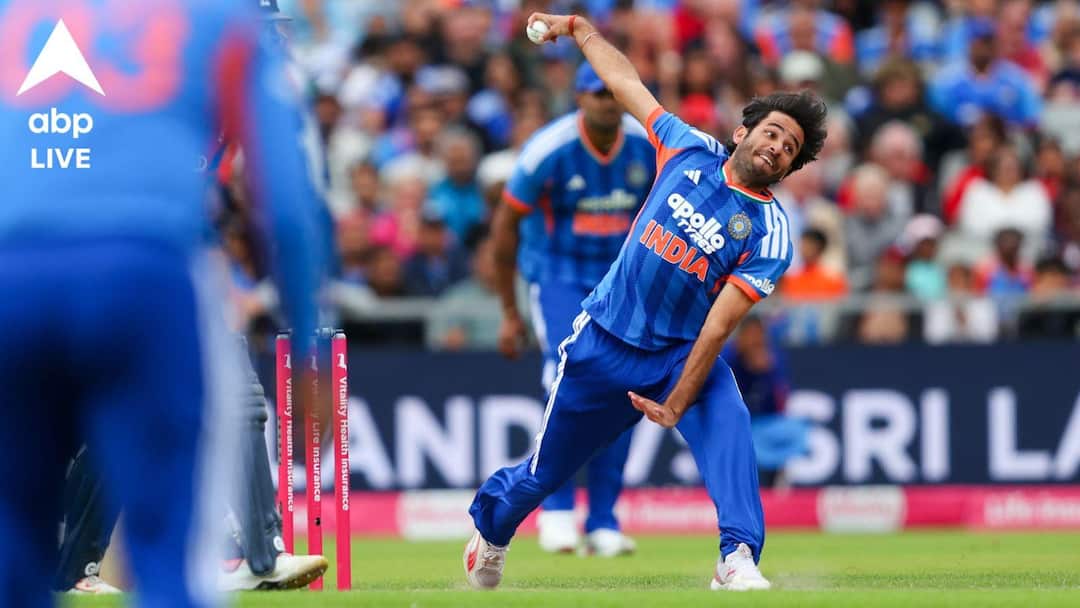
Manchester: Ravi Bishnoi is being identified as one of the main reasons for Team India’s loss in the second T20 match against England (IND vs ENG). Bishnoi spent 29 runs in the 17th over, which turned the tide of the match. This time he made two ‘back-foot no-balls’. A no ball where Indian spinner Ravi Bishnoi’s foot did not go over the line, but it was declared a no ball nonetheless. What are the rules of the International Cricket Council (ICC) regarding this no ball, for which Team India has to pay a big fee?
Back foot no ball, what does the ICC rule say?
When a bowler’s front foot falls outside the crease, the ball is declared a no ball. This ball gets a free hit. Similarly, when the bowler’s foot falls outside the side line of the crease, it is called a backfoot no ball.
The way Bishnoi makes angles, bowls corner runs, can cause back foot no ball problems with bowlers. Although spinners back foot no ball is rarely seen. Fast bowlers sometimes back foot no balls.
According to ICC rules, just as a batsman gets a free hit on a left no ball, a backfoot no ball also gets a free hit. Incidentally, Bishnoi bowled 3 back foot no balls in this match.
England won by 4 wickets in Manchester#TeamIndia will look to turn things around in the 3rd T20I in Trent Bridge
Scorecard ▶️ https://t.co/WYfL8tAm58 #ENGvIND pic.twitter.com/2KZN6H39DR
— BCCI (@BCCI) July 4, 2026
Bishnoi’s over turned the tide of the match
England needed 49 runs to win in the last 4 overs. Ravi Bishnoi spent 29 runs in the 17th over. From here the English team needed 20 runs in 3 overs. They scored 20 runs in the next 2 overs and won the match in 19 overs. Thus Bishnoi’s over proved very costly for the team.