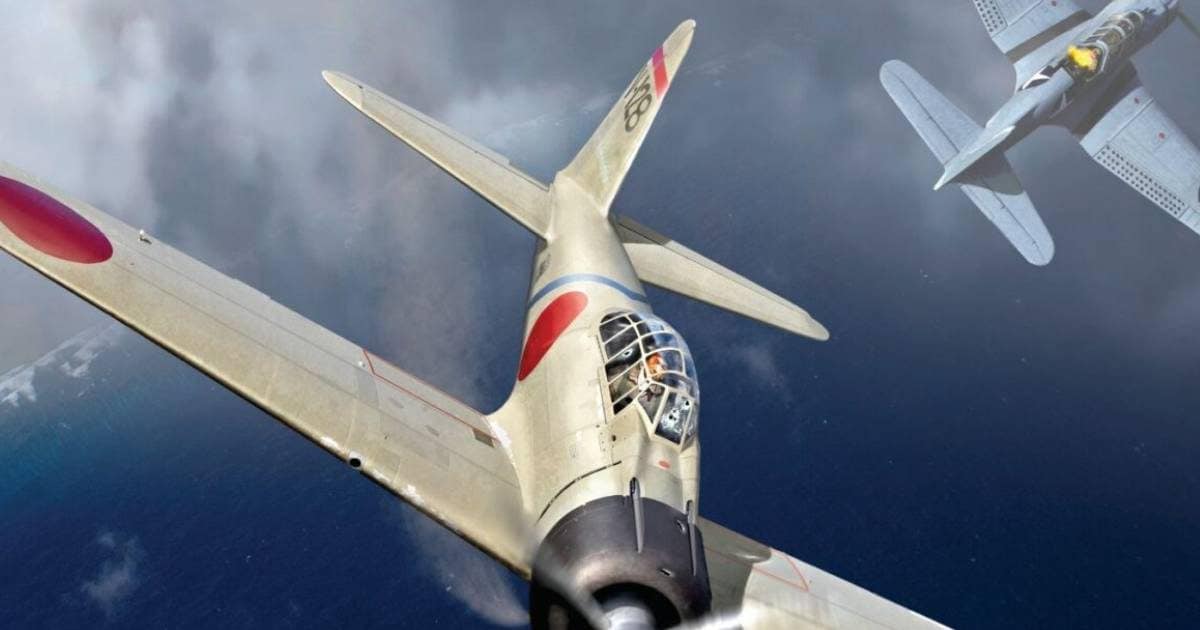
New Delhi. On the morning of December 7, 1941, the thunder of hundreds of Japanese planes suddenly echoed over the blue waves of the Pacific Ocean. Foremost among them was the Mitsubishi A6M2 ‘Zero’. It was not just an aircraft but it was actually an angel of death. When smoke rose over Pearl Harbor and American pilots tried to compete with their heavy planes, they realized that they were chasing not a bird but an illusive shadow. The Zero would turn and perform acrobatics so fast in the air that the American gunners would turn into balls of fire even before they could set their guns.
When there was panic in the Pentagon: “Don’t fight alone!”
In the initial days of the war, the fear of ‘Zero’ was so prevalent in the American Army that the commanders had to change their strategy. In view of the plight that American planes faced in the sky, a very shameful but necessary order had to be issued from the headquarters:
“No American pilot will challenge a ‘Zero’ alone. If it is to be killed, it is mandatory for at least two aircraft to attack simultaneously.”
This was the first time in history when the world’s biggest power admitted that even one of its best aircraft was inferior to a ‘Zero’ of Japan. The US Army clearly warned its pilots that if they made the mistake of ‘dogfight’ (circling aerial combat) with the Zero, their death would be certain.
America’s pride destroyed
· Elusive Agility: The Zero was so light that it could turn twice the speed of American planes. The American pilots would keep watching and the Zero would come up behind them and strafe them with 20 mm guns.
· Death Mantra: Japanese pilots were taught that the plane was their body. Without any heavy armor, this aircraft was as fast as lightning.
· Persistent Attack: Its firepower was so high that even after destroying the American fleet, it could remain in the air for hours searching for prey.
Disadvantages of Mitsubishi A6M2 Zero
Mitsubishi A6M2 Zero was famous for its speed and agility. But these very qualities also became its biggest weakness. To keep the weight down, Japan had compromised on safety. There was no armor plate at the back to protect the pilot. Self-sealing facility was also not provided in the fuel tank of the aircraft. Because of this, the plane would immediately catch fire as soon as American bullets hit it. At higher speeds its ailerons would get jammed, making turning difficult. In the end, America’s strong and armored aircraft took advantage of these shortcomings.
question Answer
Question 1: What was America’s biggest loss in the Pearl Harbor attack?
Answer: The biggest shock was the sinking of USS Arizona. A Japanese bomb fell on its ammunition depot, destroying the ship and killing 1,177 sailors. Even today its debris is present under water.
Question 2: What tactics did Japan use to sink ships in shallow water?
Answer: The water at Pearl Harbor was shallow, where normal torpedoes would sink into the mud. Japan added wooden fins to its torpedoes so that they could directly hit ships floating near the surface of the water.
Question 3: Were all America’s ‘Aircraft Carriers’ destroyed?
Answer: No, and this was the turning point of the war. At the time of the attack, all three main American carriers (Enterprise, Lexington, Saratoga) were practicing at sea, so they escaped safely.
Question 4: What was ‘Battleship Row’ and why was it targeted?
Answer: It was a line of 8 giant warships parked on the shore of Ford Island of Pearl Harbor. Japan believed that if these ‘Mahabali’ ships were destroyed, the back of the US Navy would be broken.
Question 5: Which specific ships did Japan use in the attack?
Answer: Japan had sent 353 aircraft from its 6 aircraft carriers. In addition, they also used small ‘midget’ submarines so that they could stealthily enter the harbor and attack ships.