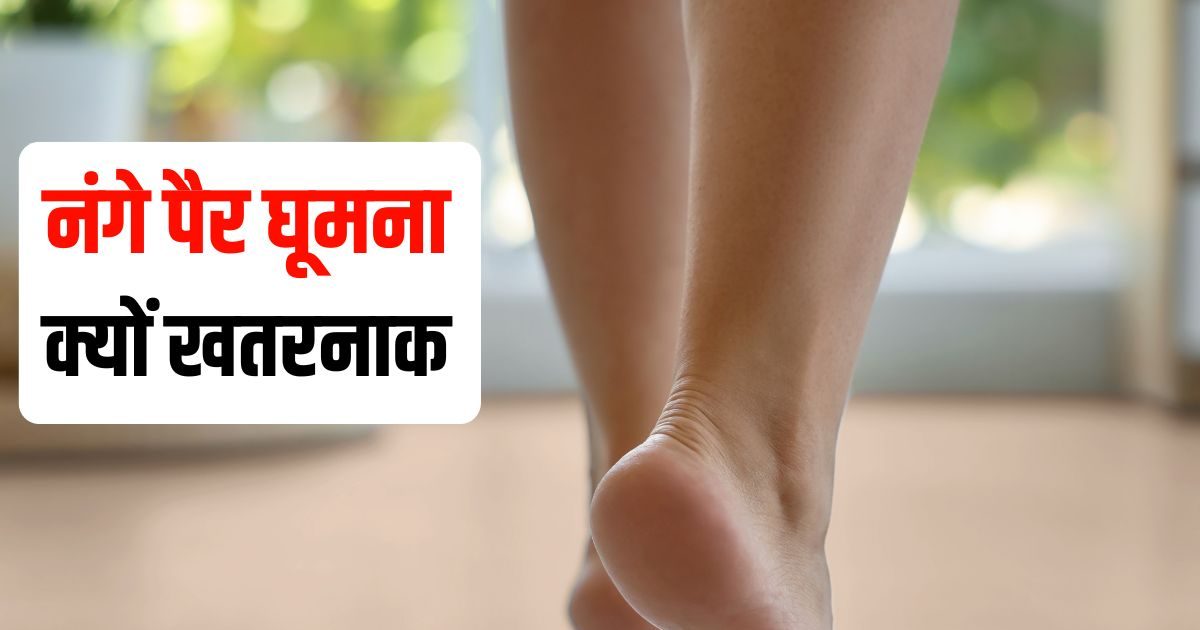
Hidden Risks of Walking Barefoot: Many people take off their shoes outside the house for the sake of cleanliness. People feel that this will keep the house clean and it will be easier to walk around barefoot. Most people like to walk barefoot inside the house. Some people consider it comfortable, while others associate it with Indian tradition or cleanliness. Especially after the increasing trend of work from home, people keep moving around the house without shoes and slippers the whole day. If you also do this, then you need to be careful. Experts say that walking barefoot even inside the house for a long time can be harmful for the health of feet, joints and spine. This habit can gradually become the cause of many serious problems.
According to experts, sometimes while cooking food while standing in the kitchen, sometimes while climbing up and down stairs, sometimes while cleaning or washing clothes, people often do it barefoot. All these activities take place on a hard floor without any support. In such a situation, only the fat pad present under the feet bears the entire shock. Continuous pressure increases swelling, pain and fatigue, which over time can turn into problems like metatarsalgia and plantar fasciitis.
Walking barefoot at home can be very dangerous for people suffering from diabetes. In this disease, the sensitivity of the nerves of the feet decreases, due to which small injuries, blisters or cuts are not detected on time. Even small things lying on the floor can cause serious wounds or infections. During the Covid pandemic, an increase in cases of fractures of fingers and feet while walking at home was also seen. According to experts, wearing shoes even inside the house increases stability and reduces the risk of injury.
Walking barefoot on the floor also puts extra pressure on the heels, ankles, knees and waist, especially on hard surfaces like tile or marble. Walking barefoot can cause problems like heel pain, joint stiffness, Achilles tendonitis and back pain. Walking barefoot on a cold floor can affect body temperature, which can lead to complaints of cold, cough and cold feet. Its effect is quickly visible in children and elderly people. Prolonged exposure to cold surfaces can also cause muscle strain, stiffness and cramps.
According to health experts, wearing light, comfortable and supportive shoes or slippers indoors is the safest option. Choose footwear that has good cushioning, arch support and strong grip. Sandals that are too thin or completely folded can be harmful. Keep separate slippers for the bathroom and use separate shoes for inside and outside the house, so that you can protect yourself from dirt and germs. Walking barefoot may seem comfortable for some time, but in the long run this habit can harm the feet, joints and the entire body. Small precautions can prevent major health problems.