Last Updated:
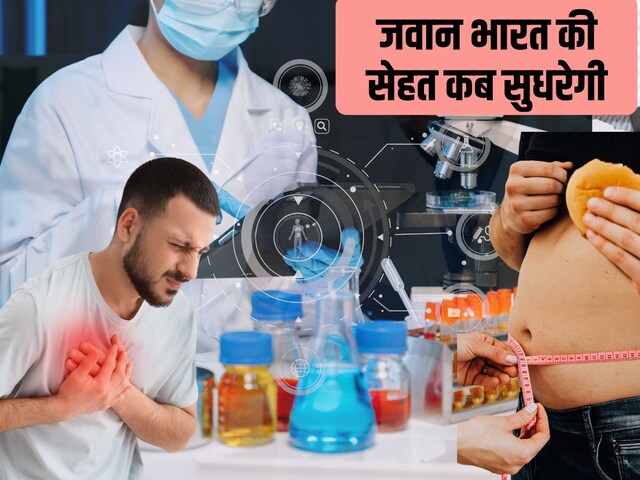
Can Health Budget Heal India: India is a country of 1.40 billion. Here, one out of every four adults suffers from high blood pressure, 10 crore people have diabetes and 14 lakh new cases of cancer occur every year. That means the heart of young India is sick. The government has made many new announcements in this budget. So will the heart of ailing India improve with this budget?
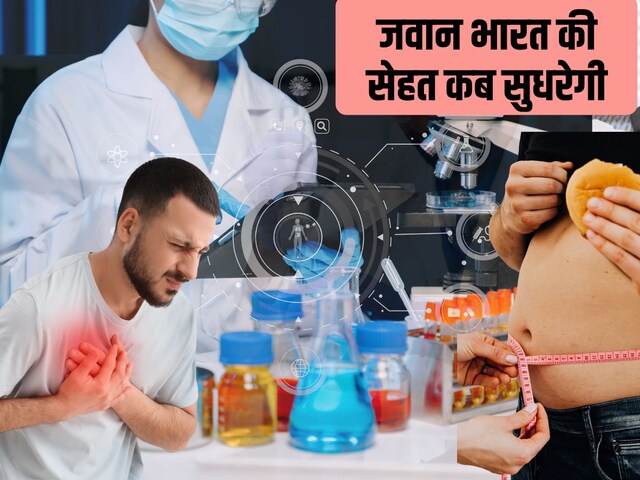 There are more than 10 crore diabetes patients in India.
 Can Health Budget Heal India: So to say, we are the youngest country in the world. We proudly say that our country has 60 percent youth population. But this youth seems to be getting infected. If government figures are to be believed, one out of every four people here either has high BP or diabetes. We are called Diabetes Capital of the World. Here more than 10 crore people have diabetes, more than 10 crore people have high BP. 14 lakh new cancer patients come every year. What can we say about obesity? Non-communicable diseases are beginning to plague India. Overall, the heart of young India has become sick. Now the question is what is its treatment. The government has definitely taken some concrete steps in this budget, but will it improve our health?
Doctors have new hope from the budget
Director of Internal Medicine at CK Birla Hospital Dr. Manisha Arora It is said that the announcement of Biopharma power by the Finance Minister in the budget is a big step to take this sector forward. By encouraging local production, our health sector will be strengthened and affordable treatment will be available to the common people. With this we will also be able to become a global biopharma hub. Increasing competition in drug production may further reduce drug prices. In this way, options for patients will also increase. This initiative can bring relief to patients, especially in expensive treatments like cancer, diabetes and autoimmune diseases. Overall, this step could prove to be a game changer for the management of chronic diseases and public health in India.
Chairman of Medical Oncology at Sir Gangaram Hospital Dr. Shyam Aggarwal It is said that abolishing basic custom duty on 17 cancer medicines is a welcome step. Along with this, to reduce the price of medicines for 7 rare diseases, they have also been made duty free. This is a sensitive and humanitarian step, which will directly reduce the cost of treatment. With this, expensive treatment will become cheaper and treatment will be available to the common man. The financial burden on the families of people who suffer from these rare diseases will be reduced to a great extent. Managing Director of Paras Health and Co-Chair of FICCI Healthcare Committee Dr. Dharminder Nagar Says that the government’s initiative to make the country self-reliant in drug production is welcome. This will make the treatment of rare autoimmune diseases cheaper. A new ecosystem will be created in bio-pharma manufacturing which will not only speed up research and production for diabetes and autoimmune diseases but will also make an important contribution to the global economy.
Non-spending of budget is a big concern
The steps taken by the government will definitely bring some fundamental changes but the real problem is the implementation of the policies. This time a provision of Rs 1,06,530 crore has been made in the budget for health. This is 9 percent more than last year. The government has reduced the prices of medicines for non-communicable diseases i.e. obesity, diabetes, high blood pressure, cholesterol, cancer etc. Along with this, many announcements have been made to make the country a pharmaceutical hub. But the real question is whether India will be able to improve its health with this increased health budget. If seen, we have made many types of progress in the health sector. But there is still a need for an inclusive health sector. Even today the budget allocated in the health sector is not spent completely. In 2025-26, the government had kept a budget of Rs 100,858 lakh crore for health, which was later revised to Rs 96,853 crore. But the reality is that even this much could not be spent. The government was able to spend only Rs 65.7 thousand crore in the last financial year. This type of non-spending of the budget is a matter of concern.
It is necessary to control non-communicable diseases
As far as non-communicable diseases are concerned, at one time India was suffering from infectious diseases like cholera, TB, malaria, leprosy, pox, polio, but today its place has been taken by non-communicable diseases. About 25 percent of adults are victims of some form of obesity. At the same time, one out of every four adults is suffering from either high blood pressure or diabetes. Non-communicable diseases have surrounded us from all sides. Of all deaths today, 63 percent are due to non-communicable diseases, most of which could have been prevented. The government has tried to make medicines for these diseases cheaper, but the real problem is that most people do not understand that obesity, diabetes or high blood pressure are any diseases. This is the reason why cases of heart attack or cardiac arrest are often reported every day. For all this, there is a need to make a more comprehensive policy than the budget. We will have to start preventive services for these diseases from the primary health center level itself. Besides, arrangements will have to be made to monitor it by setting up health camps in remote areas.
About the Author

A trusted face of the journalism world for 18 years. In her long career, Lakshmi Narayan has served in prestigious organizations like DD News, Outlook, Nai Duniya, Dainik Jagran, Hindustan. Various contemporary…read more