Last Updated:
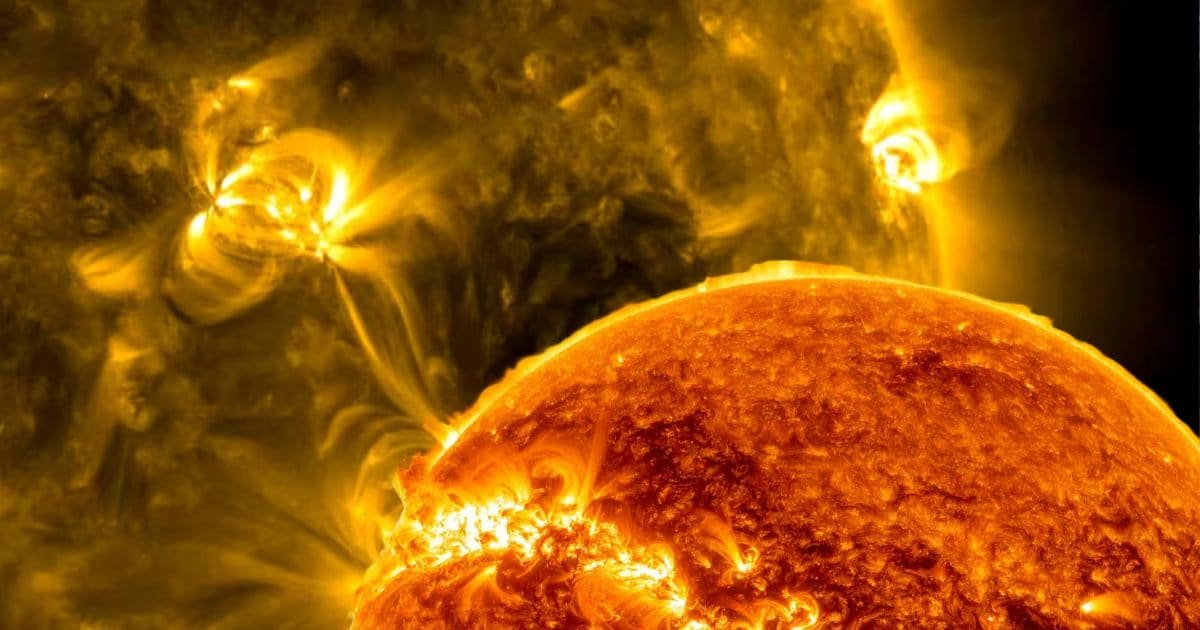
Solar Flares Blast: The huge sunspot Region 4366 that has emerged on the Sun is becoming increasingly dangerous. According to NOAA, geomagnetic activity may increase on Earth on February 5 and Northern Lights may be visible in low latitudes. There is also a danger of radio, GPS and satellite systems being affected by this.
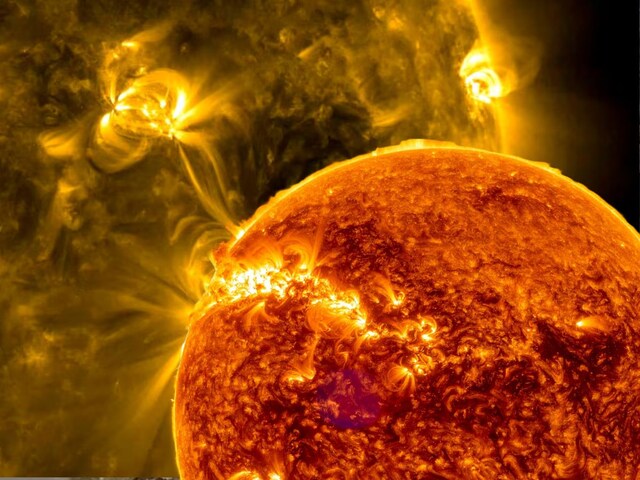

Sun is releasing solar flares.
Solar Flares Blast: A very huge and dangerous sunspot formed on the Sun is increasing the concern of scientists these days. This sunspot has released solar flares in the last two days, which has been named Region 4366. These also include the most intense solar eruption in recent years. According to the Space Weather Prediction Center of the American agency NOAA, geomagnetic activity may increase on Earth on February 5, due to which there is a possibility of Northern Lights i.e. Aurora being visible even at lower latitudes than normal. However, this has not been fully confirmed yet.
Region 4366 suddenly emerged a few days ago and spread very rapidly. Its size is almost half that of the sunspot that caused the historic Carrington Event (1859), which produced the most destructive geomagnetic storm ever recorded. Due to this rapid growth this sunspot has become extremely unstable. In just 24 hours, more than 20 solar flares erupted from the region, including 23 M-class and 4 X-class flares. X-class solar flares are considered the most powerful.
The biggest storm in 2 years
This activity came at around 6.57 pm on Sunday, when the sunspot released a solar flare of X8.1 category. This is the most powerful solar flare since the X9.0 flare in October 2024. A partial radio blackout was recorded in the South Pacific immediately after the explosion. Along with this, a huge cloud of plasma came out from the Sun in the direction of the Earth, which is called coronal mass ejection.
Will solar flare hit Earth?
SWPC estimates that this CME will not completely hit the Earth on February 5, but there is a possibility of a slight collision. If this happens, charged particles from the Sun will move towards the Earth’s magnetic poles and bright and colorful auroras can be seen in the sky. According to scientists, sunspots are deep areas of magnetic instability on the surface of the Sun. When the magnetic lines get entangled here, they suddenly break and produce solar flares and CMEs. The Sun reaches its most active phase i.e. solar maximum every 11 years. NASA has confirmed that this phase continues through 2024 and that intense space weather may last until 2026.
What is the harm to GPS system and satellites?
During this time, not only spectacular auroras can be seen, but problems like interference in radio communication, disturbances in the GPS system and damage to satellites can also occur. X5.1, recorded in November 2025, was the most powerful solar flare ever recorded, but Sunspot 4366 has already surpassed it. Now it remains to be seen whether this sunspot will break even bigger records.