Last Updated:
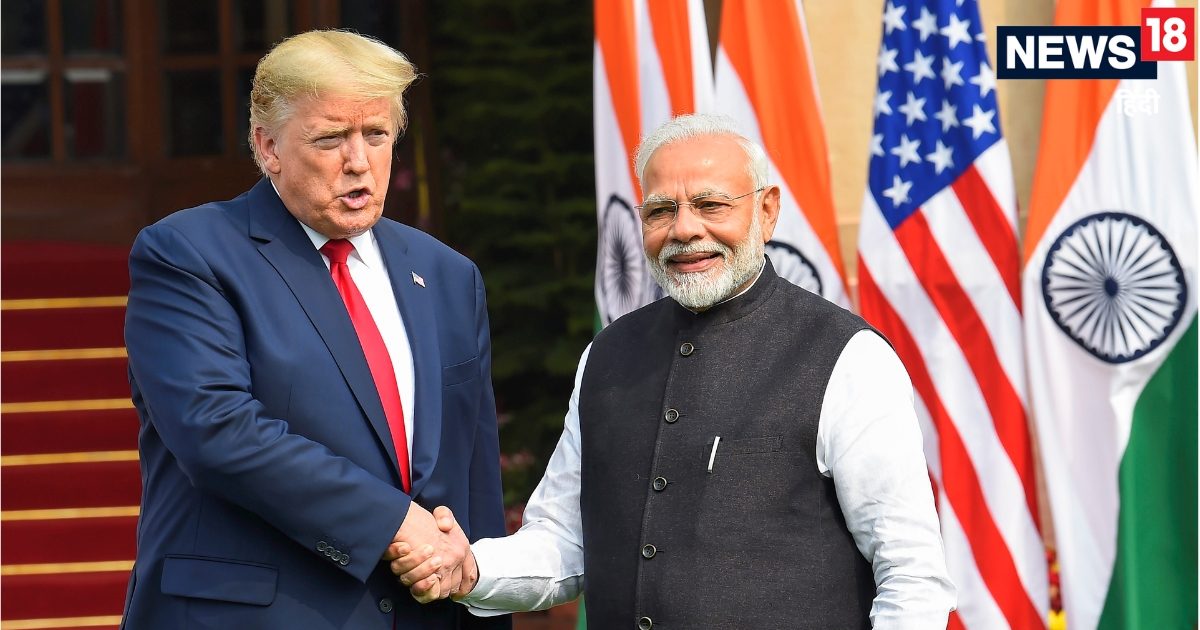
India-USA Trade Deal: After assuming power in America, Donald Trump started taking major decisions on the economic front. The American President started imposing additional duty on goods imported from all the countries of the world on the basis of Reciprocal Tariff. India also did not remain untouched by this, but now a trade deal has been agreed between the two countries. The Trump government has also announced to reduce the tariffs imposed on India.
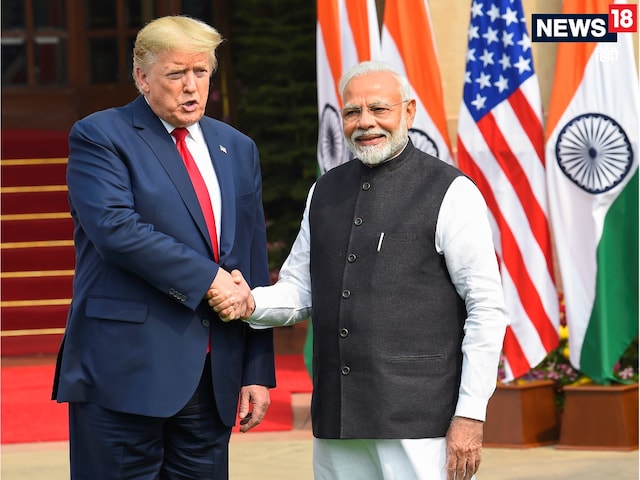

India-USA Trade Deal: India and America have made public the details related to the trade deal. (file photo)
India-USA Trade Deal: After the trade deal between India and America, both the countries have talked about working together on the economic and strategic front. Now both the countries have made the terms of the deal public. The special thing is that there is no mention of dairy in it. This means that India has been successful in keeping dairy out of this trade deal. Apart from this, there are many provisions which are going to benefit both the countries. A framework for an interim agreement has been prepared. This framework reaffirms the commitment of both countries to the comprehensive US-India bilateral trade agreement (BTA) negotiations initiated by President Donald Trump and Prime Minister Narendra Modi on February 13, 2025, which will include additional market access and support for more robust supply chains. This interim agreement between the US and India will be a historic milestone in the partnership between the two countries, reflecting a shared commitment to reciprocal and balanced trade based on mutual interests and concrete results.
While announcing this trade deal, Trump had written on Truth Social that India will stop importing oil from Russia in exchange of 18 percent tariff, there will be zero tariff on American goods in the Indian market and India will buy American products worth 500 billion dollars. Experts believe that after this deal, India’s labour-intensive export sectors of textiles, leather, jewellery, toys and furniture will gain an edge in the American market. The 18% tariff rate is likely to benefit small and medium-sized companies as it is lower than rival Pakistan’s 19% rate. 20% tariffs are applicable on Vietnam and Bangladesh.
The provisions of the interim agreement prepared by India-America are as follows -:
- India will eliminate or reduce tariffs on all US industrial goods and will also reduce tariffs on a wide range of US food and agricultural products, including dried distillers grains (DDGs), red sorghum for animal feed, nuts, fresh and processed fruits, soybean oil, wine and spirits, among other products.
- The US will impose a reciprocal tariff rate of 18 percent on products from India under Executive Order 14257 (Regulation of Imports Under Reciprocating Tariffs to Correct Trade Practices that Contribute to Large and Persistent Annual US Merchandise Trade Deficits) dated April 2, 2025. This includes textiles, leather and footwear, plastics and rubber, organic chemicals, home decor, handicraft products and some machinery. Also, under the successful conclusion of the interim agreement, as per the amended provisions issued under Executive Order 14346 (Relating to Amending the Scope of Reciprocal Tariffs and Determining the Procedures for Implementation of Trade and Security Agreements) dated September 5, 2025, reciprocal tariffs on many items including generic drugs, gems and diamonds and aircraft parts will be removed.
- The United States will remove tariffs imposed on certain aircraft and aircraft parts imported from India that are critical to national security under Proclamation 9704 of March 8, 2018 (Adjustment of aluminum imports into the United States), Proclamation 9705 of March 8, 2018 (Adjustment of steel imports into the United States), and Proclamation 10962 of July 30, 2025 (Adjustment of copper imports into the United States). Were imposed with the aim of eliminating the mentioned threats. Similarly, consistent with US national security requirements, India will receive a concessional tariff rate quota for automobile parts subject to duties imposed under Proclamation 9888 (Adjusting Imports of Automobiles and Automobile Parts into the United States) of May 17, 2019. Additionally, based on the findings of the US Section 232 investigation on drugs and drug ingredients, India will get benefits with respect to generic drugs.
- The US and India are committed to providing priority market access to each other on a permanent basis in areas of mutual interest.
- The United States and India will set rules of origin that will ensure that the benefits of the agreement accrue primarily to the United States and India.
- The United States and India will work on eliminating non-tariff barriers affecting bilateral trade. India has agreed to eliminate long-standing barriers to trade in U.S. medical devices, eliminate stringent import licensing procedures that delay market access or impose quantitative restrictions for U.S. information and communications technology (ICT) products, and, with the aim of achieving a positive outcome within six months of entry into force of the Agreement, determine whether U.S.-made or international standards, including testing requirements, are acceptable for U.S. exports entering the Indian market in identified sectors. Recognizing the importance of working together to address long-standing concerns, India has also agreed to eliminate non-tariff barriers to trade in US food and agricultural products.
- In order to facilitate compliance with applicable technical regulations, the US and India intend to discuss their respective standards and conformity assessment processes for mutually agreed areas.
- If there is a change in the tariffs set by either country, the United States and India agree that the other country can amend its commitments.
- The US and India will work towards further expanding market access opportunities through dialogue. The US has also confirmed that it will consider India’s request to reduce tariffs on Indian goods during BTA negotiations.
- India and America have agreed to strengthen economic security coordination, so that supply chain strength and innovation can be promoted. Under this, supplementary steps will be taken to deal with non-market policies of third parties. There will also be cooperation on inbound and outbound investment reviews and export controls.
- India intends to buy energy products, aircraft and aircraft parts, precious metals, technology products and coking coal worth $500 billion from America in the next 5 years. India and the US will significantly increase trade in technology products, including graphics processing units (GPUs) used in data centers, and expand joint technical cooperation.
- India and the US are committed to eliminating discriminatory or burdensome practices and other barriers to digital trade and agree to set a clear path forward to achieve strong, ambitious and mutually beneficial digital trade rules under the BTA.
About the Author

Received primary and higher education from Bihar, Uttar Pradesh and Delhi. After graduation from Jhansi, he did PG Diploma in Journalism from Delhi University. Started professional career from Hindustan Times Group…read more