Last Updated:
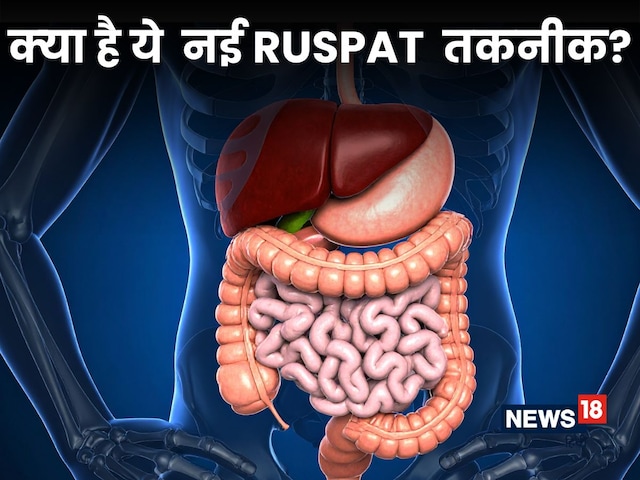
Till now when we fall ill, doctors recommend X-ray, ultrasound, CT scan or MRI. But all these have their limitations. Researchers have now created a technology called RUSPAT (Rotational Ultrasound Tomography + Photoacoustic Tomography) which will leave all these behind.
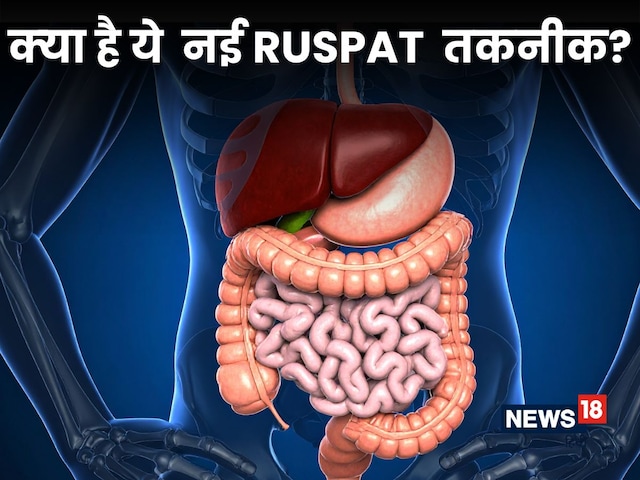

Researchers at Caltech and University of Southern California (USC) have developed a medical technology that can show 3D color images of the internal organs of our body. According to the report of Science Daily, the name of this technology is RUSPAT. It is a unique combination of ultrasound and photoacoustic tomography, which can clearly show not only the structure of the organs but also the blood flow in them. The best thing about this new technology is that it neither uses radiation nor requires any contrast dye. Let us understand what is this new technology and what will be the benefit of its use in the diagnosis of cancer and diabetes.
What is this new technology and how will it work?
Till now when we fall ill, doctors recommend X-ray, ultrasound, CT scan or MRI. But all these have their limitations. Like X-ray only sees bones and ultrasound gives information only about soft organs i.e. soft tissues of the body. Researchers have now created a technology called RUSPAT (Rotational Ultrasound Tomography + Photoacoustic Tomography) which will leave all this behind. This technology combines the power of ultrasound with photoacoustic imaging, providing a simultaneous 3D view of the structure of body organs and blood vessels.
Get rid of expensive machines and complex tests
In a country like India, where tests like MRI and CT scan are very expensive and their availability is less in small towns, RUSPAT can prove to be a game-changer. This technology not only simplifies testing, but its cost is also expected to be much lower than existing machines. This means that in the coming time, the facility of 3D imaging will become more accessible and affordable for the common man.
A strong weapon against cancer
The biggest benefit of this technology will be in early detection of breast cancer. Currently used mammograms are often painful and sometimes less accurate. Through RUSPAT, doctors will be able to see cancer lumps and the blood vessels leading to the tumor in great detail without any incision. With this, it will be possible to catch cancer at a very early stage, which will increase the chances of success of treatment manifold. Experts believe that this new technology can prove to be very helpful in the future in early detection of cancer, monitoring of nerve damage and screening of brain-related diseases.
Big relief for diabetic patients
India is called the ‘Diabetes Capital of the World’. Diabetic patients often fear damage to the nerves of the legs, which is called ‘neuropathy’. Often it is detected only when the problem becomes severe. Scientists say that RUSPAT technology will detect nerve damage much earlier, so that treatment can be started in time and serious situations like leg amputation can be avoided.
Why is this technology special from Indian point of view
Often patients in small towns of India have to run to big cities for advanced scans. Since the RUSPAT device is less complex to make and easier to use, if this technology comes to India and reaches small towns, it will bring huge benefits in treatment. This will not only save time but will also reduce the financial burden on the patients.
About the Author

Deepika Sharma has been working in News18 Hindi for the last 5 years. While holding the post of News Editor, along with leading the Entertainment section for 4 years, she is now leading the team of Lifestyle, Astrology and Dharma. Letter…read more

Great experience of reading news
Scan the QR, download News18 app or click here to continue on the website