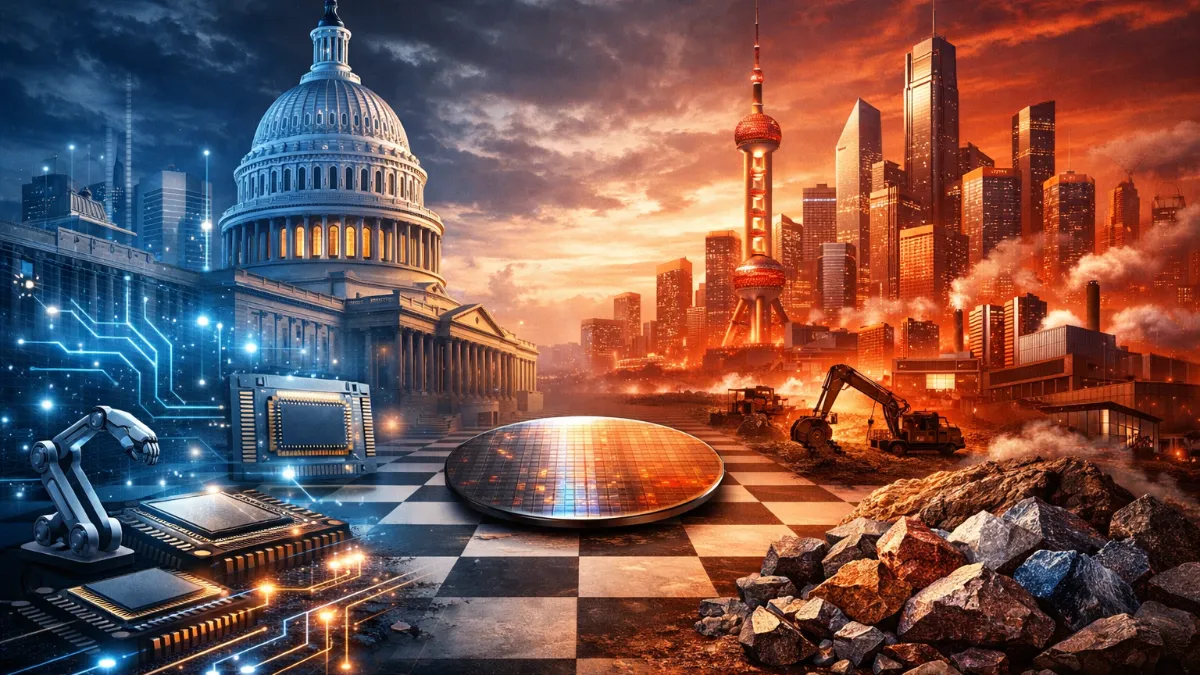
U.S. leaders warn of an urgent race with China to secure AI, semiconductors, and critical minerals, highlighting economic and national security risks.
Washington, D. C. 17th December —Leaders in government and industry as well as economists are calling this week for swift and determined action by the United States in order to preserve its competitive advantage over China in artificial intelligence, critical minerals, semiconductors, and high technology supply chains. Failure to do so risks losing this terrain in terms of both economics and security.
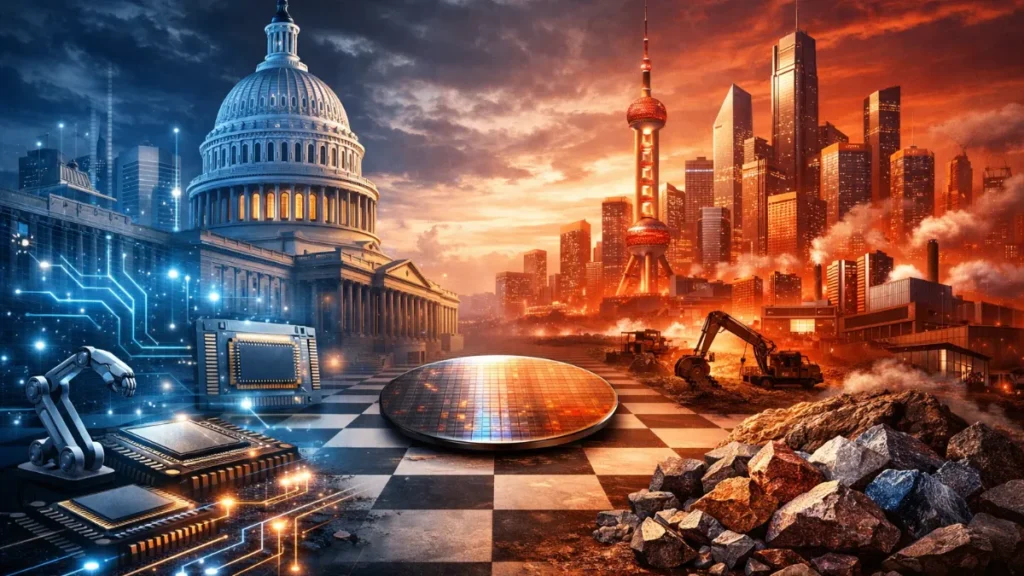
During an **Axios Live event** on December 11, prominent voices from Washington and the corporate world settled on interpreting the present-day situation in relations between the United States and China not as an ordinary economic rivalry but rather as a geopolitical and industrial struggle that could have long-term ramifications concerning U.S. leadership.
“This is not market competition, this is about dominating in the industries of tomorrow,” a panelist stressed, preceding a series of passionate appeals to action.
**💡 1. Broad Front: AI, Minerals, and Manufacturing**
Speakers at the Axios Live event, including senior White House adviser Jarrod Agen of the National Energy Dominance Council, Rep. Raja Krishnamoorthi (D-Ill.), and USA Rare Earth CEO Barbara Humpton, cited these three aspects where the USA needs to improve its industry:
* Artificial intelligence and computing
* Autonomy regarding critical mineral supply chains
* Semiconductors and other hardware technologies
These are public goods, considered essential to economic competitiveness as well as national security. However, as Agen pointed out, the classic playbooks—incremental policies or isolated industrial initiatives—will not get the United States very far. Instead, the country requires trans-sector solutions capable of providing a boost to innovation and manufacturing in order to mitigate pressure from competition posed by the threat from China.
**⚡ 2. Semiconductor Chips and Policy Reversal: Controversy and Consequences**
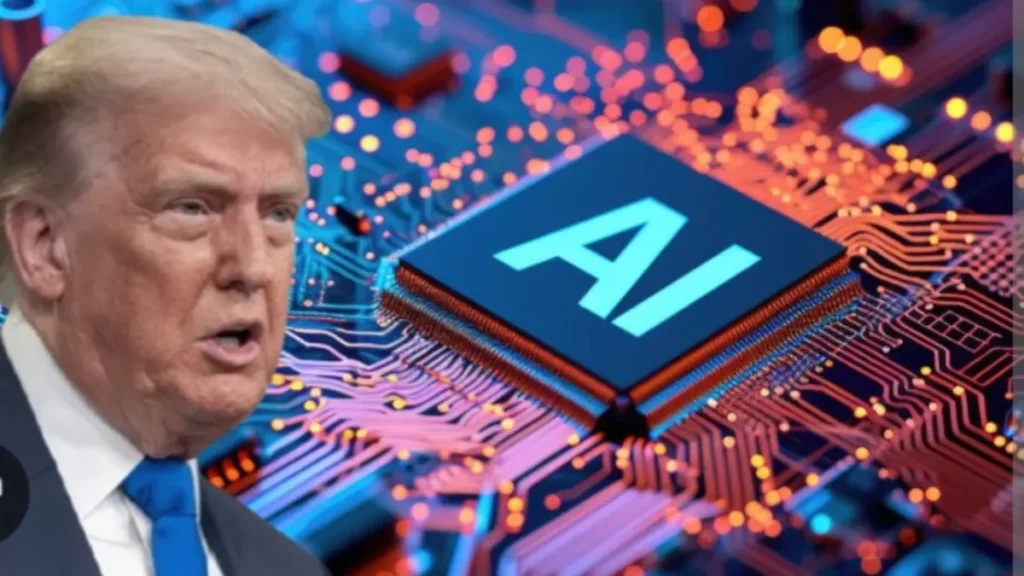
One of the flashpoints at the convention was the recent decision of the Trump administration to allow the sales of H200 AI chips from the firm Nvidia to China, overturning a previous ban on the sales.
Experts point out that this Just-In-Time policy reverses U.S. initiatives to ensure that the country retains a lead in semiconductors, which are deemed to be one of the key engines of technological success for the 21st century.
Rep. Krishnamoorthi said removing the ban would “surrender a technological edge” that the country maintains to this day, particularly when it comes to leading-edge computing for AI:
“It’s not just an economic issue; it’s an issue of national strategic significance relating to our military modernization efforts.”
**⛏️ 3. China’s Strategic Position in Critical Minerals**
While semiconductors are considered the “brains” of the new technological economy, critical minerals are its “backbone.” Critical minerals consist of rare earth elements and a variety of metals that are essential in magnet materials, batteries, electric vehicles, energy technologies, high electronics, and military applications.
China leads today in a number of these essential mineral value chains, especially processing capacity, to exert significant control over global flows.
At Axios, Barbara Humpton said that without access to these minerals, even key US defense systems might be in jeopardy.
**🔗 4. Diversification and Strengthening of Supply Chains**
In response to China’s preeminent position in global technology, American policymakers and private partners have undertaken a host of efforts designed to decrease reliance upon foreign supplies when it comes to technology:
* American investment in a “$7.4 billion smelter” with Korea Zinc, aimed at domestically processing strategic minerals and reducing Chinese market dominance.
* U.S.-led supply chain partnerships, like the newly formed ‘Pax Silica’ initiative, where multiple countries come together as allies to access silicon and semiconductor supplies beyond the influence of China.
However, these efforts are met with political and technical hurdles, and industry insiders say that developing new supply chains will require several years of heavy investments.
**🌐 5. Geopolitical Factors – Alliances and International Competitions**
The U.S.-China tech rivalry has driven broader geopolitics:
* The U.S. has either created or strengthened alliances with Asian, European, and Middle Eastern countries for chip, AI, or critical mineral supply chain management.
* China is actively promoting its indigenous AI chip industry and attracting substantial investment in local players, such as MetaX.
* Some alliances, like Pax Silica, exclude key partners such as India, highlighting complexities in reshaping the supply chain.
Observers note that this “tech alliance landscape” reflects a global structural realignment in innovation and industry.
**🤖 6. AI Leadership: A Strategic Imperative**
Artificial intelligence remains a key area of competition. Douglas Petno, co-CEO of JPMorgan Chase, emphasized the importance of winning the AI race for long-term U.S. competitiveness.
“The magnitude and scope of our challenges … are daunting,” Petno said, underlining that success in AI depends not only on software but also on secure hardware and critical minerals.
**📜 7. Strategic Imperatives and Policy Options Ahead**
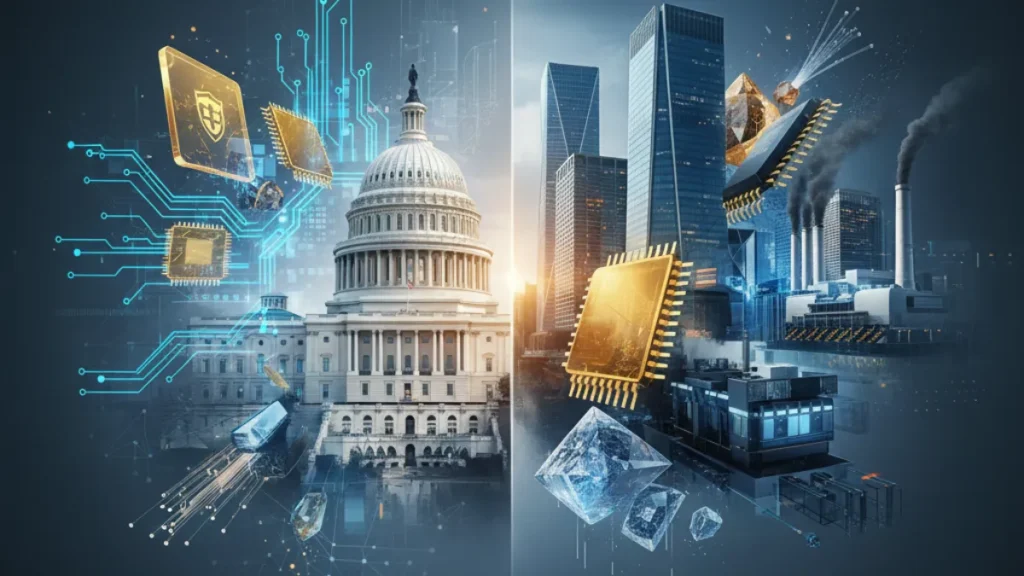
Experts suggest several priorities to maintain U.S. leadership:
* Build Resilient Supply Chains — Increase mining, refining, and materials processing domestically and with trusted allies.
* Coordinate Export Controls — Tie restrictions on high-end technology to industrial investments.
* Encourage Innovation & R&D — Invest in AI, quantum computing, clean energy, and semiconductors.
* Enhance International Partnerships — Collaborate with allies on technology and supply diversification.
* Navigate Geopolitical Complexities — Balance competition with engagement to prevent escalation.
**⭐ Conclusion: A Defining Era of Technological and Strategic Competition**
America is at a critical point in its competition with China, spanning minerals, manufacturing, semiconductors, AI, and global alliances.
Speakers emphasized that time is not on America’s side, and decisive collective action is required now to maintain global leadership and national security.
The race for the technologies of the future is here and now.
References / Sources
- Axios – https://www.axios.com
- The Economic Times – https://economictimes.indiatimes.com
- CSIS (Center for Strategic & International Studies) – https://www.csis.org
- Financial Times – https://www.ft.com
- CIO – https://www.cio.com
- FinancialContent – https://www.financialcontent.com
- The Indian Express – https://indianexpress.com
- Newsweek – https://www.newsweek.com
- FP Analytics (Foreign Policy) – https://fpanalytics.foreignpolicy.com
- Reddit – https://www.reddit.com
—