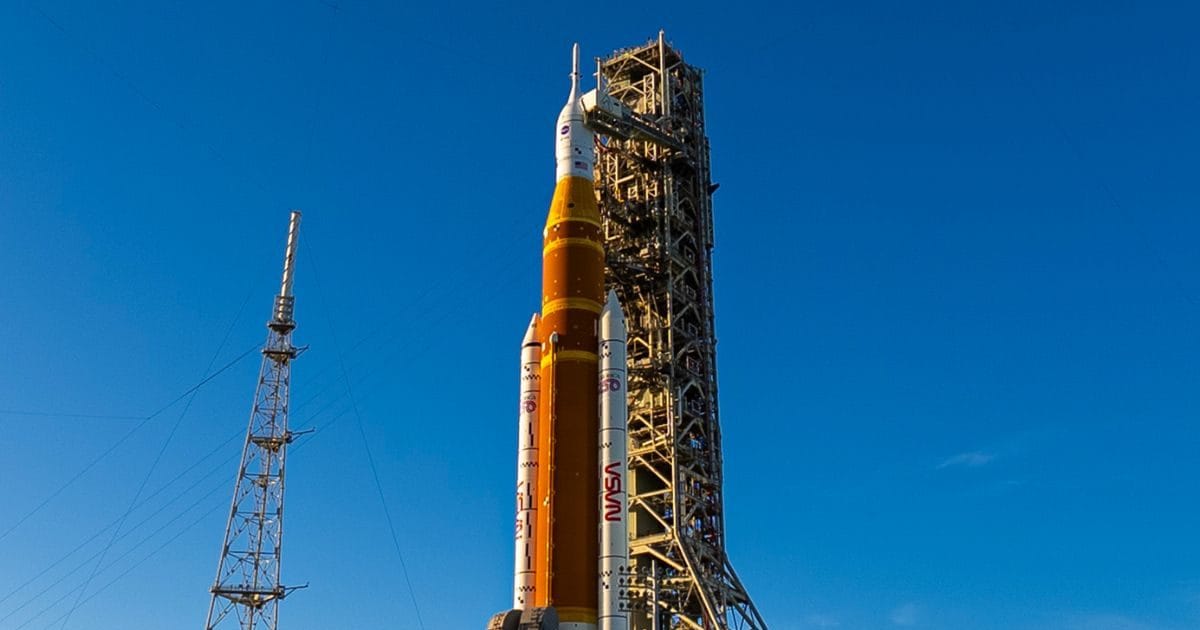
American space agency NASA has postponed its moon mission. NASA Chief Jared Isaacman said Saturday that the planned March launch of Artemis 2, the first manned flyby mission to the Moon, will no longer happen. He attributed this to a technical flaw in the rocket.
Isaacman posted on social media platform X that a problem related to helium flow in the Space Launch System (SLS) rocket has come to light, due to which the March launch window is now out of consideration. He said, ‘I know people are disappointed with this decision. This disappointment is being felt the most by the NASA team, which has worked hard day and night in preparation for this ambitious mission. Referring to the 1960s, he said that even when NASA did what was considered impossible, there were many failures and delays.
According to NASA, the giant SLS rocket and Orion spacecraft will be returned to Kennedy Space Center’s Vehicle Assembly Building for inspection and necessary repairs. A detailed briefing will be given on this matter in the coming days.
What is Artemis-2 mission?
Three American and one Canadian astronauts will travel around the Moon in the Artemis-2 mission, which will last for about 10 days. This mission is being considered an important step towards landing humans on the lunar surface again. The goal of returning to the Moon was first announced during the first term of former President Donald Trump.
There were continuous obstacles in Artemis mission.
Earlier, NASA had said that March 6 could be the earliest possible launch date of Artemis-2. However, the program has faced frequent delays. The uncrewed test mission Artemis-1 was also launched in November 2022 after being postponed several times.
As recently as early February, Artemis-2’s ‘wet dress rehearsal’ was interrupted due to technical problems, including a liquid hydrogen leak. This rehearsal is conducted under actual launch conditions with fully fueled tanks and system checks, which were successfully completed this week.
NASA wants to advance a human mission to the Moon at a time when competition from China in the space sector is increasing. China aims for a manned lunar mission by 2030. Its uncrewed Chang’e-7 mission is proposed to explore the lunar south pole in 2026, while tests of its manned spacecraft Mengzhou are expected this year.
NASA’s ultimate goal is to prepare for future human missions to Mars through missions to the Moon.