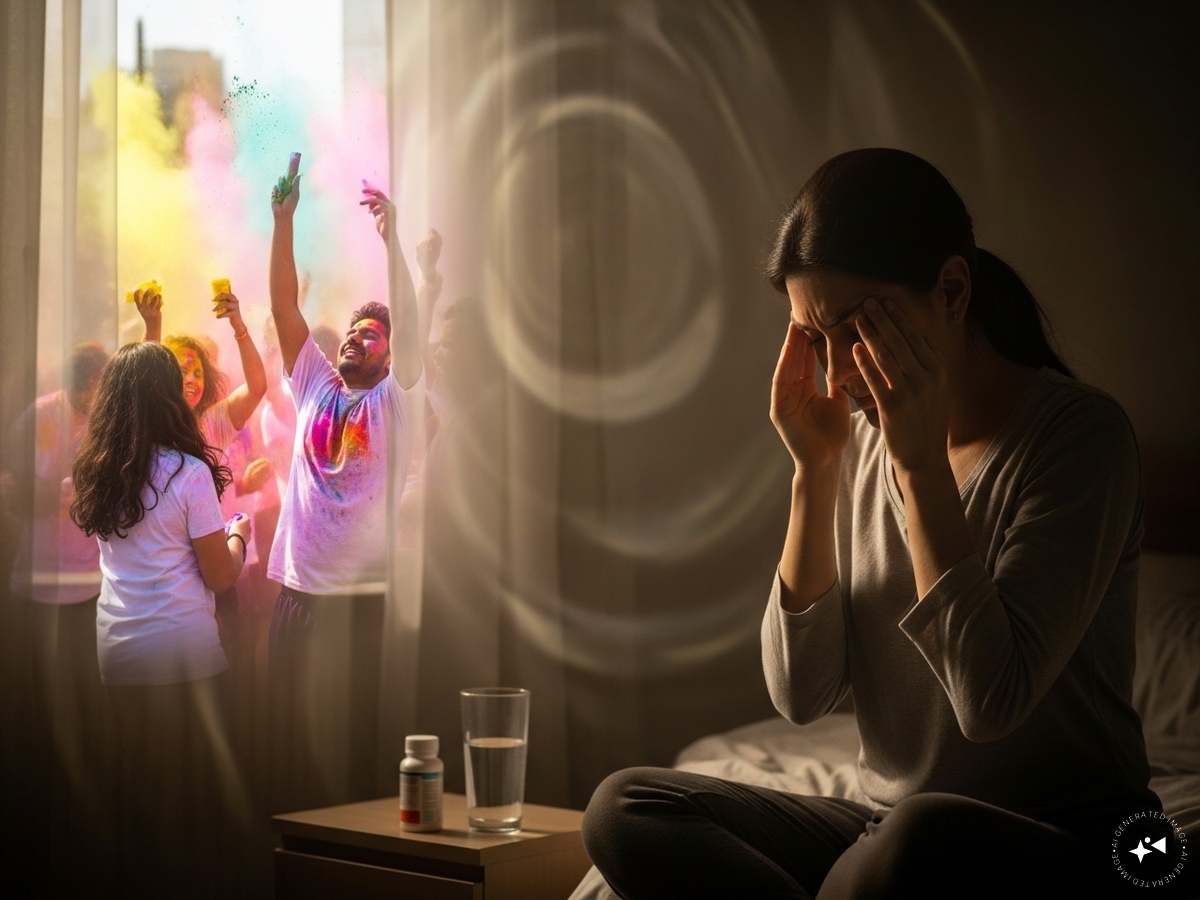
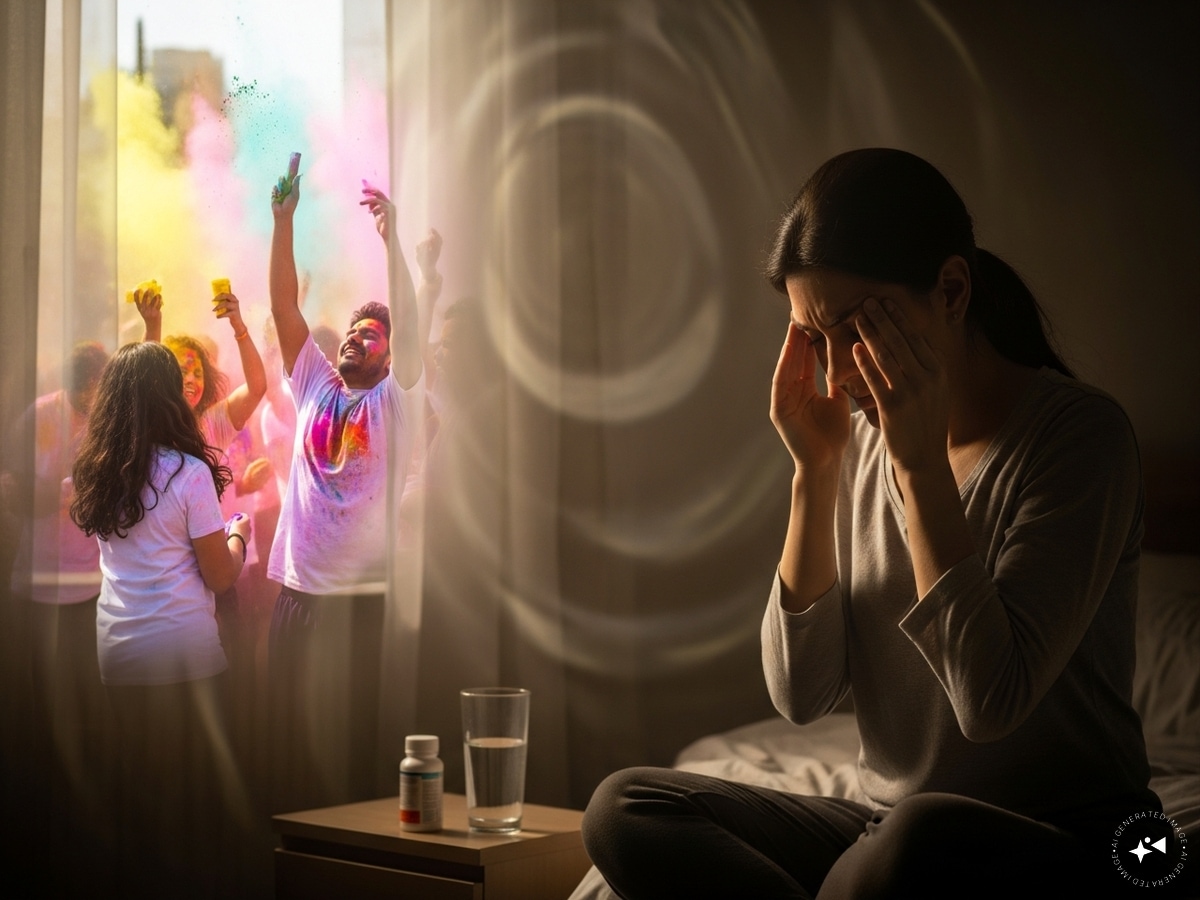
The festival of Holi is celebrated with great pomp in India, but for migraine patients this time is no less than an ordeal. According to statistics, about 15-20% of India’s population is affected by migraine, with women being the most affected. Experts say that migraine is not an ordinary headache, but it is a ‘neurological sensitivity disorder’. During Holi, the noise and pollution in Delhi, Jaipur and other cities of North India takes this sensitivity to its peak.
Migraine and brain sensitivity
Unlike normal headaches caused by stress, migraine involves complex neurological pathways. In this the brain becomes hypersensitive to light, sound and smell. When a person is exposed to these triggers, pain pathways associated with the trigeminal nerve are activated. Due to this, there is pain like throbbing on one side of the head, nausea, vomiting and irritation due to light and sound.
Dr. Nitin Bhakal, Senior Consultant, Neurology, Narayana Hospital, Jaipur explains.“It usually feels like a throbbing headache, often on one side, and may be accompanied by nausea, vomiting, and sensitivity to light and sound. Some people notice visual disturbances, called aura, before the headache begins.”
‘Onslaught’ of synthetic colors and odors
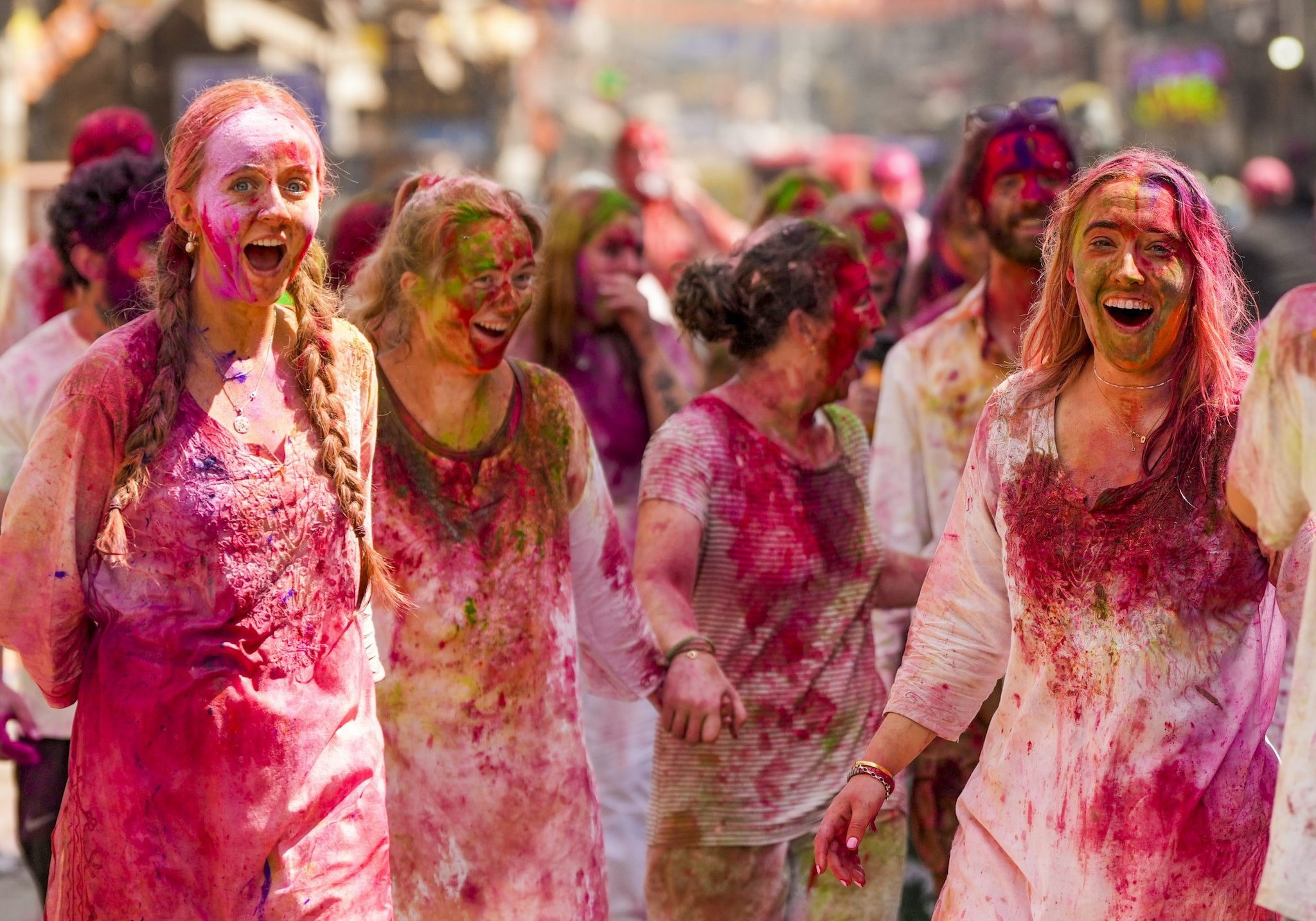
Dr. Nitin Bhakal explains that the triggers become active even before the beginning of Holi celebrations. Chemicals and artificial fragrances are often added to the synthetic colors available in the market. When these colors blow in the air or are applied to the face, their pungent smell directly stimulates the parts of the brain that control pain and emotions. Apart from this, the smoke and pollution of Holika Dahan make this situation even more serious.
DJ noise and stress on the nervous system
High-decibel DJ systems playing in Holi parties can be dangerous for migraine patients. According to doctors, the brainstem of migraine patients has extreme sensitivity to sound. Constantly listening to noise puts pressure on the hearing ability and the nervous system goes on ‘high alert’. By being exposed to this noise for a long time, the brain starts losing its balance and starts sending pain signals.
Apart from this, by the end of March the heat and sunlight become very intense in North India. Holi celebrations usually peak between 10 am and 3 pm, when sunlight is at its brightest. Bright light activates parts of the brain through the retina that are associated with headaches. This is called photophobia. Sunlight reflected from colored water and white clothes increases this effect manifold.

Great experience of reading news
Scan the QR, download News18 app or click here to continue on the website