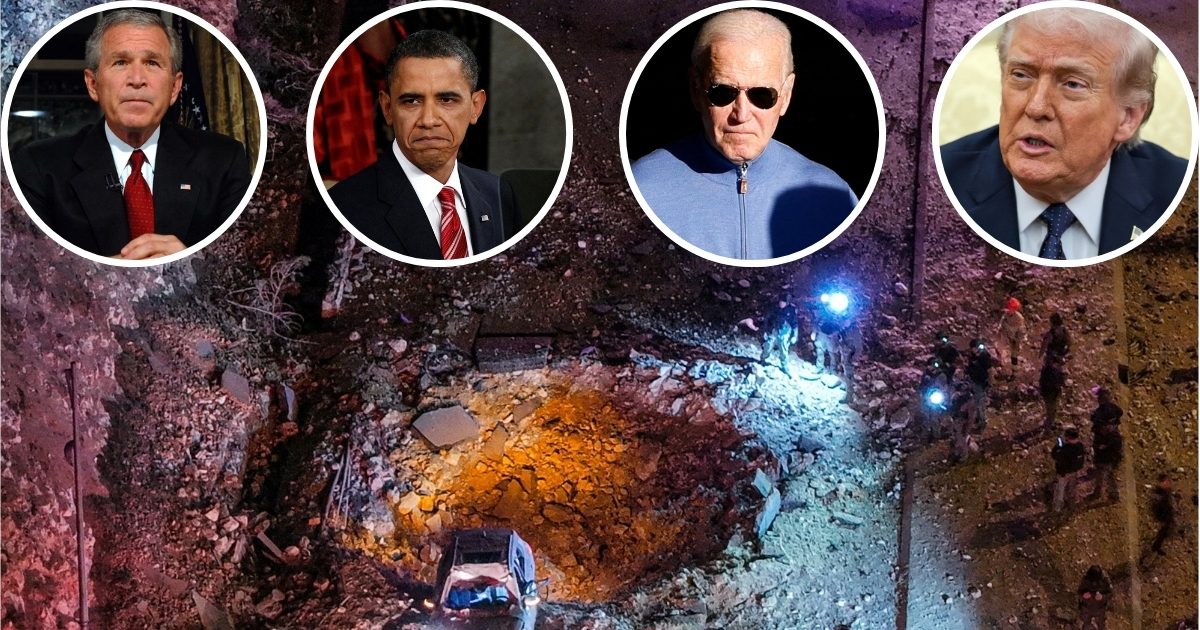
America War Cost: The War on Terror started by America after the terrorist attacks on New York and Washington on September 11, 2001, not only completely changed its foreign policy, but also threw many parts of the world into conflict for decades. The then President George W. Bush called it a decisive war against global terrorism. Since then, the US has fought three full-scale wars and conducted airstrikes, drone strikes and military operations in at least 10 countries. According to the report of ‘Al-Jazeera’, more than 9 lakh people have died so far in this entire campaign, while the total expenditure is estimated to be 8 trillion dollars. According to the World Bank report, India’s total GDP by the year 2024 was Rs 3.91 trillion.
Afghanistan War: 2001–2021
On October 7, 2001, the United States launched ‘Operation Enduring Freedom’ in Afghanistan in direct response to the 9/11 attacks. The objective was to destroy the Al-Qaeda network and remove the Taliban regime from power. The Taliban government fell in the first few weeks, but after this the insurgent groups started a long resistance. The war proved to be the longest conflict in US history, lasting the tenures of four presidents and ending with the US withdrawal in 2021. Immediately after the withdrawal, the Taliban again captured power. According to Brown University’s ‘Costs of War’ project, about 2.41 lakh people died directly in this war. At least 3,586 US and NATO soldiers were killed. America spent approximately 2.26 trillion dollars on this war.
| America’s war spending (2001 to present) |
| Item | Expenditure |
| Department of Defense | 2.1 trillion dollars |
| homeland security | 1.1 trillion dollars |
| defense budget | 884 billion dollars |
| Medical care for ex-servicemen | 465 billion dollars |
| loan interest | 1 trillion dollars |
| Estimated expenditure on ex-servicemen in 30 years | 2.2 trillion dollars |
| Note: India’s GDP (World Bank data for 2024): $3.91 trillion |
Iraq War: 2003–2011
On March 20, 2003, President Bush launched the attack on Iraq. It was claimed that the then President Saddam Hussein possessed weapons of mass destruction (WMD), but this claim was later proved to be false. On May 1, 2003, Bush announced ‘Mission Accomplished’, but the real conflict flared up after this. Power vacuum and violence gave rise to extremist organizations, the most important of which was the rise of ISIL (ISIS). In 2008, America agreed to the withdrawal of troops and this process was completed in 2011 during the tenure of Barack Obama.
Drone war: Pakistan, Somalia and Yemen
Although not declared a formal war, the US expanded drone campaigns since the mid-2000s. The CIA carried out attacks in the tribal areas of Pakistan targeting Al-Qaeda and Taliban leaders. These attacks increased significantly in the early years of the Obama administration. Missile and drone attacks were carried out against fighters associated with al-Shabaab in Somalia and against al-Qaeda leaders in Yemen. These operations gave a new direction to the concept of ‘remote warfare’, but also raised controversies regarding civilian casualties.
According to the World Bank, India’s total GDP in the year 2024 was $3.91 trillion. (Courtesy from World Bank website)
Intervention in Libya: 2011
In 2011, a rebellion broke out in Libya against ruler Muammar Gaddafi. The US joined the NATO-led campaign and launched air and missile strikes to enforce the no-fly zone. Gaddafi was removed from power and died, but the country remained mired in prolonged instability and factional conflict.
Campaign against IS in Iraq and Syria
From 2014, America began intervention in Syria with the aim of defeating ISIL. The U.S. Air Force carried out sustained airstrikes in Syria and supported local coalition forces, continuing the ongoing campaign in Iraq. US forces in Iraq advised local troops and conducted operations against remnants of ISIL. In 2020, the attack targeting Iranian General Qassem Soleimani in Baghdad on the orders of then President Donald Trump became a major cause of regional tension.
Spending twice as much as India’s total GDP
According to an analysis by Brown University’s Watson Institute, about 9.4 lakh people died directly in US-led wars since 2001. This includes conflict areas like Afghanistan, Pakistan, Iraq, Syria and Yemen. Indirect deaths (such as hunger, disease and lack of health services) are not included in these figures. Economically, America has spent about 5.8 trillion dollars so far. This includes $2.1 trillion on the Defense Department, $1.1 trillion on Homeland Security, an increase of $884 billion in the defense budget, $465 billion on medical care for veterans and nearly $1 trillion on debt interest. At least $2.2 trillion more is expected to be spent on veterans care over the next 30 years. In this way, the total estimated cost of wars after 2001 could reach 8 trillion dollars. These campaigns, which lasted for more than two decades, have had a profound impact on global politics, regional balance, and America’s internal economy.