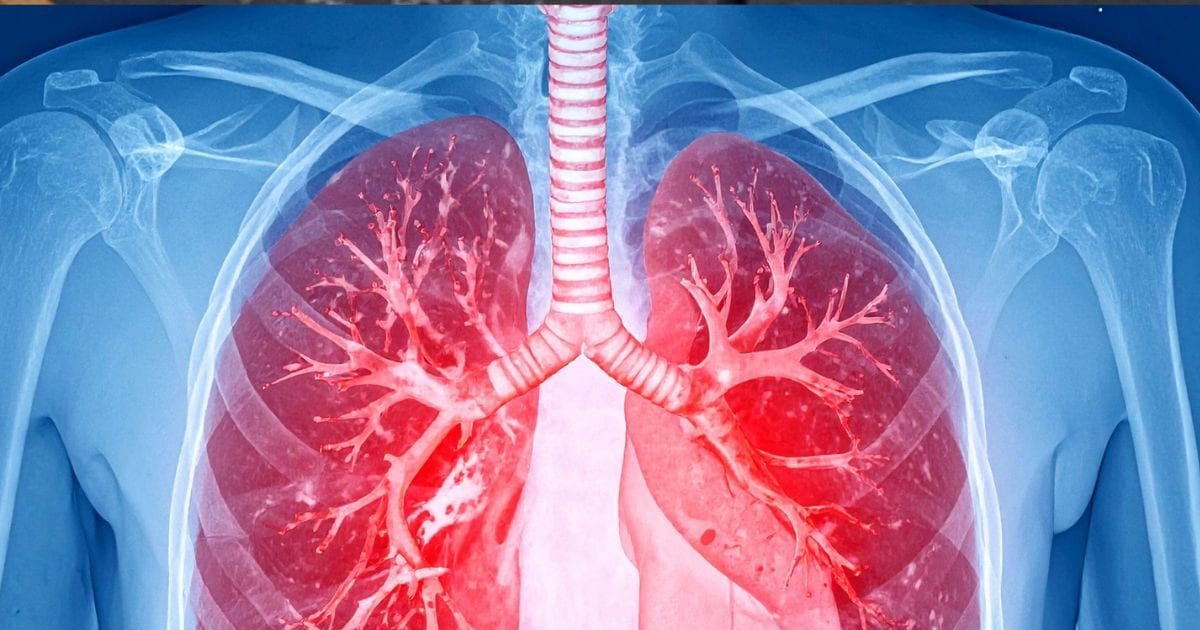
Risk Factors for Lung Disease: When we breathe, our lungs act like a filter. They absorb oxygen and expel harmful carbon dioxide. In today’s time, due to increasing air pollution, changing lifestyle and unhealthy habits, lung related diseases are increasing rapidly. Often people keep postponing lung testing until they start having severe trouble breathing. Doctors believe that ignoring lung health can prove fatal. Timely screening can not only catch diseases at an early stage, but also help in maintaining good lung function for a long time.
Dr. Bhagwan Mantri, former pulmonologist of Moolchand Hospital, New Delhi, told News18 If you are completely healthy and do not have any symptoms of respiratory diseases, then after the age of 35 to 40, you should get your lungs checked every year. There is no fixed age for lung examination, because it also depends on the risk factors of the people. If you live in a polluted city, smoke or have a family history of lung disease, then you should get a basic pulmonary function test (PFT) done after the age of 30. This test helps in telling how much air your lungs are able to take in and how fast they are releasing it out.
The doctor minister said that the criteria for testing are different for people who smoke or have been heavy smokers in the past. People between the age of 50 to 80 who are heavy smokers should undergo low-dose CT scan (LDCT) every year. Smoking permanently damages the lung cells, increasing the risk of COPD and lung cancer manifold. Smokers should contact a doctor as soon as they notice symptoms like shortness of breath or chronic cough, regardless of age.
According to experts, the risk of lung problems is not limited only to age or smoking. People who work in factories or industries where there is high exposure to dust, smoke, chemicals or asbestos are at higher risk of lung disease. Apart from this, people who have repeatedly had asthma or pneumonia in childhood, their lungs may remain sensitive even in adulthood. Smoke from indoor stoves and dangerous AQI levels in cities are also causing premature aging of the lungs of otherwise healthy people.
According to the doctor, lung disease often progresses silently. If you have cough for more than two weeks, do not consider it as a common cold. Wheezing, chest tightness, coughing up blood or unusual shortness of breath while climbing stairs are signs of lung weakness. Many times people mistake pain in the shoulders or upper back as muscle strain, but sometimes it can also be referred pain from a serious lung problem. If such symptoms appear, spirometry or chest X-ray should be done immediately.
Nowadays, passive smoking i.e. coming in contact with the smoke of others and external air pollution have become enemies of the lungs. Prolonged exposure to polluted air increases the risk of chronic bronchitis. Apart from this, the air inside the house can sometimes be more dangerous than the outside, which could be due to poor ventilation, smoke of incense sticks or hair of pets. People who live in polluted areas should get their oxygen levels and lung function checked at least once a year, so that oxygen deficiency can be avoided in the future.