Last Updated:
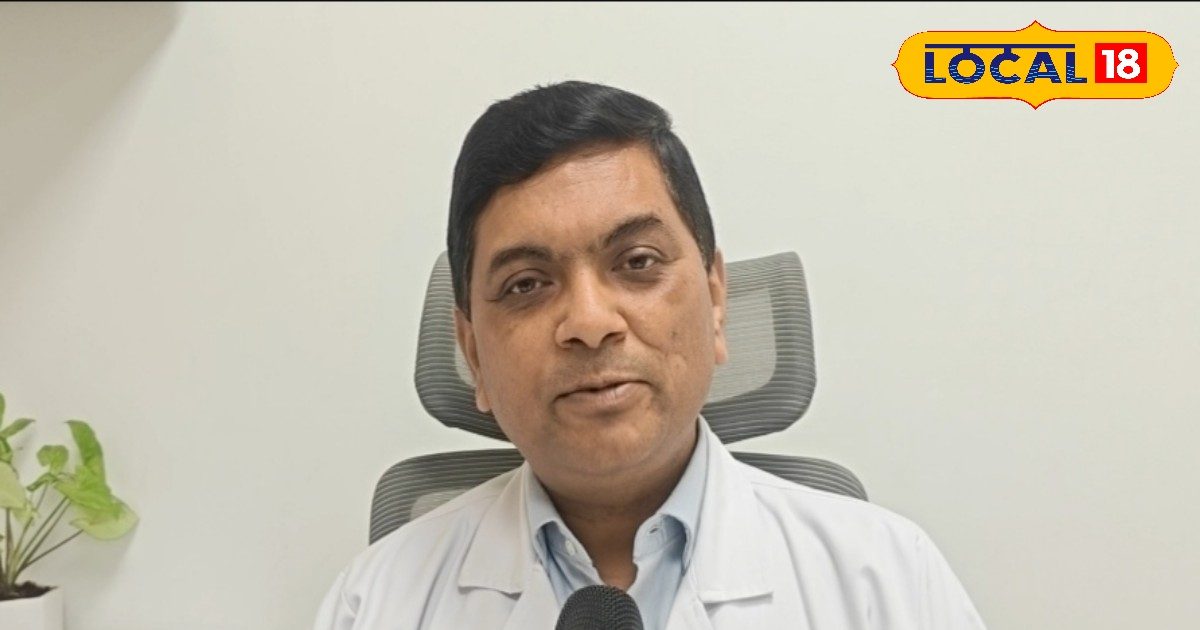
The last 13 years have been no less than a painful wait for Ghaziabad’s Ashok Rana and his family. His son Harish, after an accident, reached such a condition where he was alive but no less than lifeless. His breathing continued, his heart continued to beat, but he was completely cut off from the world around him. Can neither speak nor hear nor understand anything. Dr. Sandeep Jain of Yashoda Hospital, Ghaziabad tells Local 18 that Permanent Vegetative State is such a condition in which the patient’s body remains alive but his ability to think and understand is almost lost.
After the accident, Harish Rana became completely dependent on family and medical support. He was given food through a tube and medicines were also given in the same way. Many times he would open his eyes but would not be able to recognize anyone nor would he be able to react in any way. This situation is very emotional and difficult for the family. On one hand, his son is in front of him but he cannot talk to him nor can he understand anything.
After this long struggle, father Ashok Rana, seeing the condition of his son, sought permission for euthanasia in the Supreme Court. He told the court that his son has been in a condition for the last 13 years where there is no hope of his recovery and he is living a life of constant pain. After hearing the entire case, the Supreme Court finally gave him permission for euthanasia on Wednesday. After this decision, this matter has become a topic of discussion across the country. Dr. Sandeep Jain of Yashoda Hospital, Ghaziabad explains that Permanent Vegetative State is such a condition in which the patient’s body remains alive but his ability to think and understand almost disappears. The patient is not aware of what is happening around him. He cannot do any work by himself and becomes completely dependent on others.
what else
According to Dr. Sandeep Jain, when a person suffers a serious head injury, many times important parts of the brain get damaged. In such a situation, some parts of the brain work only to keep the body alive but the ability to think, understand and react is lost. In many cases, the chances of recovery of such patients are very less. Patients who remain on life support for a long time also have to face many other health problems.
Other problems increase
According to Dr. Sandeep Jain, in such patients there is a risk of lung infection, urine infection, bed sores and many other types of infections in the body. The patient can feel these problems but is not able to tell anyone. After any accident, the first one hour is very important which is called the golden hour. If the right treatment is received within this time, the patient’s chances of survival and recovery increase significantly. Many experts are considering this decision of the Supreme Court as an important step, which has opened the way for a legal option for the families of patients suffering from serious and incurable conditions.
About the Author

Priyanshu has more than 10 years of experience in journalism. Before News 18 (Network 18 Group), he had worked with Rajsthan Patrika and Amar Ujala. He has Studied Journalism from Indian Institute of Mass Communic…read more