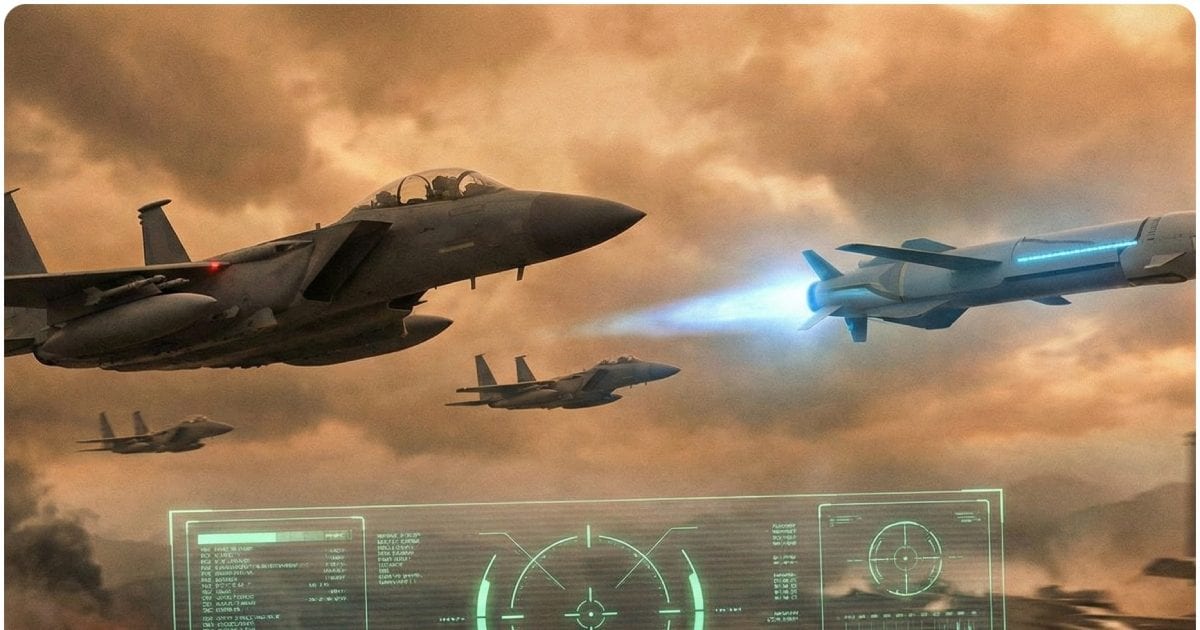
Sydney. America is once again claiming to take the lead in the battlefield on the basis of technology. Earlier this month, the US Department of War (Pentagon) released a new ‘AI Acceleration Strategy’ on the rapid use of Artificial Intelligence (AI) in the military and confidently announced that America is now ready to become an undisputed AI-enabled fighting power. But behind the strategy’s shiny language lies a troubling truth, according to experts – the plan appears to be more a document of posturing, publicity and ‘AI peeking’ than technical reality.
Noise of AI-first, discretion missing
Armies around the world – from China to Israel – are incorporating AI into their military infrastructure. But America’s method is different and most aggressive. Here AI is not being declared as an assistive technology, but as a panacea for every problem. The strategy clearly states that the only way to make the US Army more dangerous, more capable and more lethal is through AI. For this, the Pentagon will increase experimentation on AI models, remove ‘administrative barriers’, invest heavily in AI infrastructure and give green signal to huge military projects driven by AI.
Intelligence information becomes ‘weapon’ in hours
The most worrying thing about this strategy is the project, which claims that with the help of AI, intelligence will be converted into weapons ‘not in years, but in hours’. That means decisions will be faster, attacks will be faster – and the margin for error will be fatally increased. Experts said that a scary example of this has been seen in Gaza, where Israel’s AI-based targeting systems have been accused of increasing the deaths of civilians. Such systems transform information into weaponized decisions at unprecedented speed and scale – leaving human reason behind.
Military AI to 30 million common people? big question
Another surprising aspect of the strategy is the plan to directly deliver American AI models to 3 million civilians and soldiers. The question is, why do civilians need the military’s AI-enabled systems? And if military capabilities are unleashed on society on this scale, who will handle the consequences? The answers to these questions are not found anywhere in the strategy.
story vs reality
Contrary to the Pentagon’s claims, the reality is much harsher. An AIT study in July 2025 revealed that 95% of organizations saw no tangible benefits from investing in generative AI. Technical flaws, incorrect output and unstable performance of tools like ChatGPT and Copilot were the main reasons for this. If this same technology is failing in corporate offices, then how dangerous its consequences can be in the battlefield – it is scary to imagine.
‘AI Peacocking’: War Strategy or Marketing Show?
The Pentagon’s AI-first strategy seems more like a cosmetic leadership guidebook than a concrete military roadmap. Here AI is being said to be the solution to problems which actually do not exist. Aggressive marketing of AI has created an artificial fear of being “left behind”, and US war policy seems to ride on that fear.
When technical confusion can be fatal
The truth is that the capabilities being publicized fall far short of their promises. And in a military context, such technical limitations can lead not only to failure but also to the death of innocent people. Today, America is relying on marketing-based business models more than technical integrity and strength to implement AI in its military. This path is not only dangerous, but can make the coming wars more inhumane. War can be won with AI – This claim is easy, but if the war is fought relying on AI, then humanity will pay the price.