Last Updated:
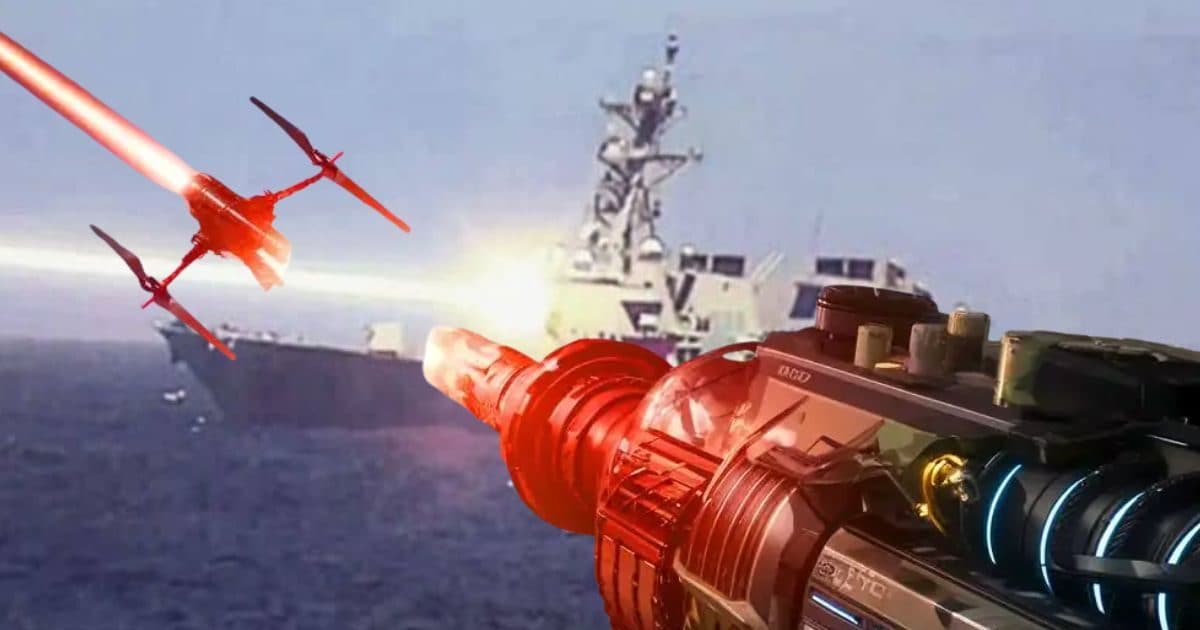
Cheap Air Defense System Laser Beam Weapon: This air defense technology is part of the strategy of the US Defense Department, in which low-cost and fast-response energy-based weapons are being included in multi-layered maritime defense. HELIOS can also be deployed on other warships in the future.

America created a weapon to melt drones.
US Laser Beam Weapon: The US Navy has successfully tested a laser weapon from its warship deployed in the sea. This test was conducted in 2025 and its information was made public in early 2026. During this, the high-energy laser system HELIOS installed on the guided-missile destroyer USS Preble shot down four drones. This is the first time that the US Navy has confirmed that a ship-mounted laser weapon has hit airborne targets in an operational demonstration.
What is HELIOS system?
The full name of HELIOS is High-Energy Laser with Integrated Optical Dazzler and Surveillance. This is a laser weapon with a capacity of about 60 kilowatts, which has been developed by Lockheed Martin. It is directly linked to the Aegis Combat System of Arleigh Burke class destroyers like USS Preble. This means it can identify and attack threats based on data received from the ship’s existing radar and fire-control systems.
How does this laser work?
HELIOS works in two ways
- Soft kill capability – It can confuse enemy drones by dazzling their optical or infrared sensors, thereby losing their ability to monitor and target.
- Hard Kill Ability – It causes physical damage to the target with concentrated thermal energy i.e. can burn or melt the drone.
What is its specialty?
- It works on line of sight, that is, it attacks the directly visible target.
- It does not require ammunition like a conventional missile.
- The cost per shot is extremely low, whereas conventional missile interceptors can cost millions of dollars.
- Can be fired rapidly and continuously.
- Capable of shooting down small and medium-sized drones, especially at short ranges.
However, the problem is that the effectiveness of the laser depends on the weather. Excess moisture, sea spray, clouds or particles such as dust can weaken the laser beam. This is why large-scale use of directed energy weapons has been limited so far.
Affordable but highly accurate
This test is part of the US Defense Department’s strategy to include low-cost and fast-response energy-based weapons in multi-layered maritime defense. HELIOS can also be deployed on other warships in the future, although this will require further testing. However, the Navy did not provide information about the size or speed of the drones used in the test, and how many times the laser was fired to bring down each drone.
A thing of great use in the war with Iran
This successful test of HELIOS shows that laser weapons have now moved out of the laboratory and towards deployment on real warships and can play a big role in future maritime battles. We all know that Iran’s biggest strength is its Shahed drones, which it has also given to Russia. Its great strength is that the air defense system costs a lot to bring it down but the cost of drones is less. America can easily defeat them with laser weapons and its cost will also be less with the Iranian air defense system Bawar and S-400 purchased from Russia.
About the Author

Working on International Desk in News18. Also has experience in TV journalism and before that worked for Zee Media Ltd. Worked in. Have knowledge of digital video production. During TV journalism, along with art and literature,…read more