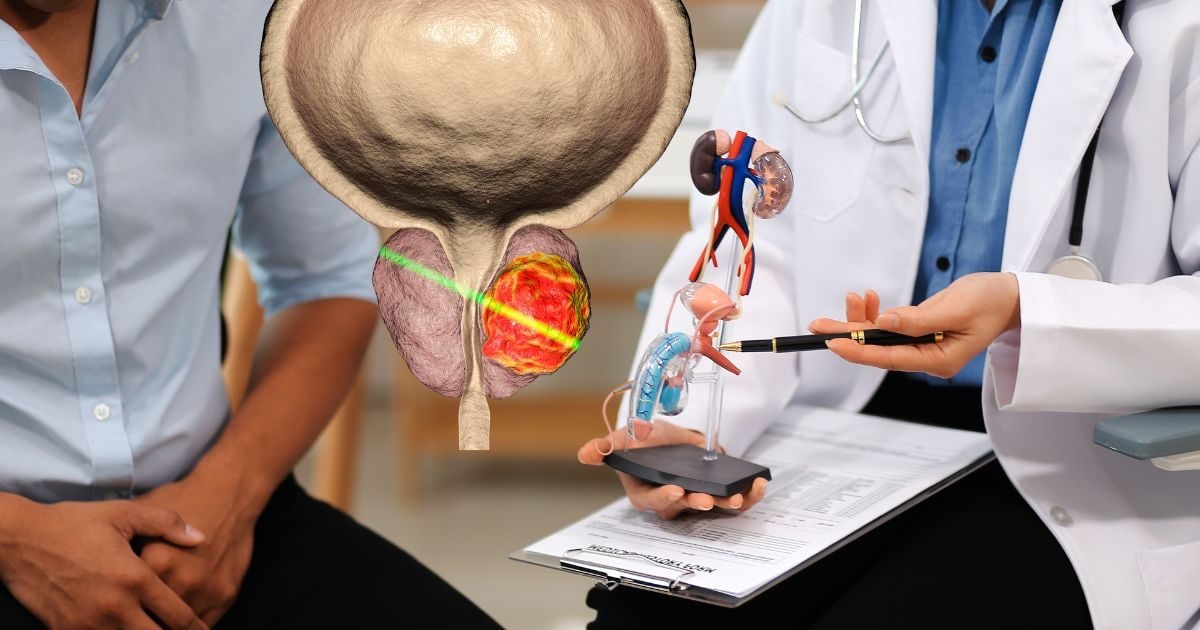
Prostate Problem: Benign Prostatic Hyperplasia (BPH) is becoming a common disease in men over the age of 50. Its onset is so slow that people often ignore it, but this ignorance becomes the cause of pain and trouble. Actually, with increasing age, the size of the prostate gland increases, due to which there is pressure on the urethra and the passage of urine becomes narrow. Due to this, problems like weak urine stream, frequent urination, sudden urge to urinate and waking up several times at night to urinate occur. If it is treated early, life passes smoothly, but if ignored, one has to suffer dire consequences. Here experts are advising to rethink the methods of treatment of BPH.
does not cure completely with medicine
BPH is initially treated with medicine. Alpha-blockers and 5-alpha reductase inhibitors (5-ARIs) are used in this. Alpha-blockers improve urine flow by relaxing the prostate and bladder muscles, while 5-ARIs help gradually reduce the size of the prostate. These medicines definitely provide relief in symptoms, but the blockage caused by enlargement of the prostate does not go away completely. In many cases the disease continues to progress, even if the patient feels that the condition is under control. Dependence on medicines for a long time can also cause side effects, drop in blood pressure, dizziness and kidney problems.
Minimally Invasive Surgical Therapy
Now a new change is being seen in the treatment of BPH. Chief Consultant Urologist at Baby Memorial Hospital, Calicut Dr. Harigovind Pothyedath According to, now the use of Minimally Invasive Surgical Therapy (MISTs) is increasing rapidly. These include modern procedures such as Prostatic Urethral Lift (PUL), which uses the UroLift System. In this technique, small implants are placed, which remove the prostate tissue from the urethra. This opens the way for urination and the blockage is removed. In this procedure neither prostate tissue is cut nor burnt. Usually it is done under local anesthesia and the patient can recover quickly and return to normal life.
Delay in surgery may increase the risk of bladder and kidney problems
Experts say that postponing surgery in BPH can sometimes be harmful. Urologist Dr. Krishnamohan R explains that due to continuous blockage, the bladder has to exert more pressure to expel urine. Due to this the bladder muscles gradually become weak. The result is that urine does not come out completely, urine retention occurs, frequent infections occur and bladder problems become serious. In some cases, these changes may become permanent, limiting the benefits of subsequent surgery. This is why urologists are now advising patients to consider minimally invasive procedures in the initial stages.
There is a risk of sexual ability being affected in the treatment of BPH. Chairman of the Department of Urology, ACE Hospital and Research Center Dr. Suresh Patankar According to the , many medications and traditional surgeries, especially procedures that involve tissue removal or burning, are associated with problems such as erectile dysfunction and retrograde ejaculation. Due to this fear, many patients keep postponing treatment. Minimally invasive techniques like UroLift do not damage tissue, so sexual ability remains safe. Many patients can return home the same day without a catheter and quickly resume their daily activities. Dr. RML Institute of Medical Sciences, Lucknow Head of Urology Dr. Ishwar Ram Dayal It is said that nowadays many BPH patients are also suffering from other diseases like heart disease, diabetes and obesity. Some have to take anticoagulant medicines for a long time, making traditional surgery risky. In such cases, PUL and other MISTs are proving to be a safe option, as they can be performed under local anesthesia and are less stressful on the body.
The approach to treatment is changing
Experts believe that BPH is not just a disease of discomfort but a progressive problem. Now the question is no longer how long to suppress the symptoms, but how to remove the blockage at the right time. If timely treatment is done through minimally invasive surgical therapy, damage to the bladder and kidneys can be prevented. Men who are having problems related to urination should consult a urologist without any delay, so that the right treatment can be chosen according to their condition and health and a better quality of life can be maintained in the long run.
Disclaimer: This information is for patient education only. Do not consider it a substitute for professional medical advice. Consult your doctor for individual advice.