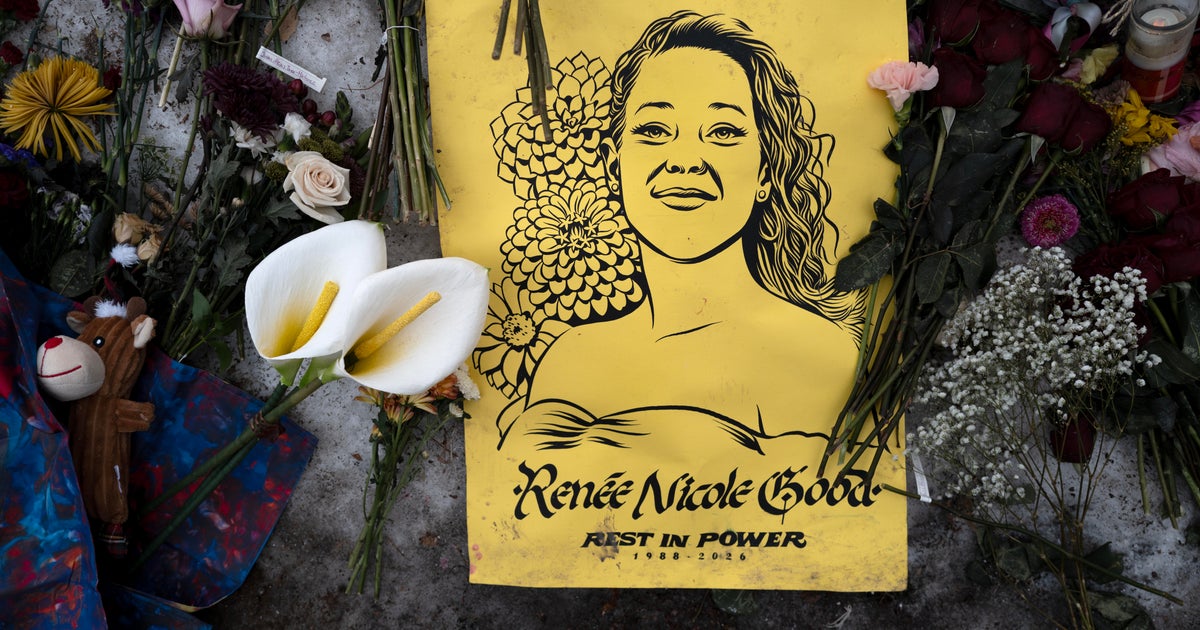
WCCO is uncovering new details about the fatal shooting of Renee Good regarding the emergency response and attempts to save her life.
According to a Minneapolis Fire Department report, Renee Good was shot at least three times. The Minneapolis Fire report says life-saving measures went on for nearly an hour.
People dialed 911 right after hearing the shots. WCCO has obtained the transcripts.
One caller said, “A bunch of ICE agents … they just shot a lady. Point blank in her car.”
The caller later said, “They shot her, like, cause she wouldn’t open her car door.”
Records show the first 911 call came in at 9:38 a.m. The Minneapolis Fire Department report shows crews were dispatched within 90 seconds, arriving at East 33rd Street and Portland Avenue four minutes later.
According to the report, when emergency responders got to Good’s car, they took her out of the vehicle and onto a snowbank to assess her condition. They found her “unresponsive, not breathing” with irregular pulse activity.
The report also details the life-saving measures. It says they moved to a sidewalk for a “more workable scene, better access for ambulances, and separation from an escalating scene…”
Good was shot at least three times, in the chest, the left arm and possibly on the left side of her head, the report said.
First responders covered her chest wounds, administered chest compressions and put a tourniquet on her arm, according to the report, and performed additional advanced procedures on the way to Hennepin Healthcare.
The report said they continued CPR while in the stabilization room at the hospital. They stopped resuscitative efforts around 10:30 a.m., roughly 53 minutes after the officer shot Good.
The document also shows how long the ICE Officer stayed on scene. At 9:41 a.m., right before first responders arrived, the report notes he’s still there. The next time he’s mentioned in the dispatch notes is 10:03 a.m., when he was transported to a federal building.
There were 911 calls with people yelling in the background, about needing crowd control, maintaining a perimeter around the scene, re-routing buses and sending in evidence-gathering teams, the report said.