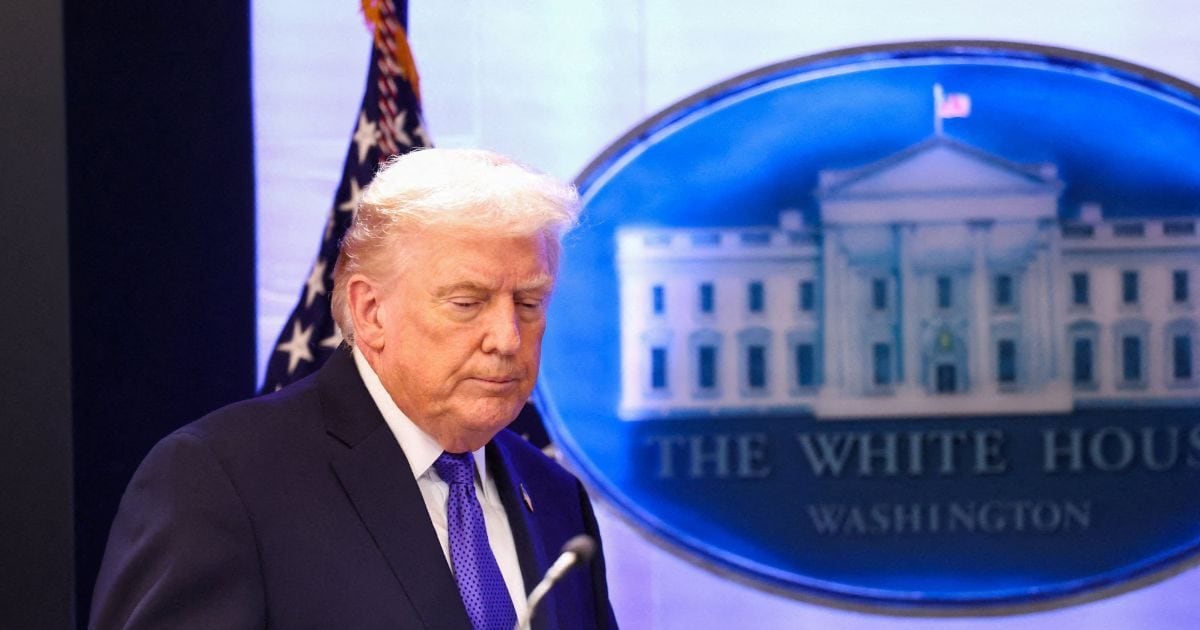
After this decision, Trump expressed his displeasure and clearly said that he will protect America’s interests through ‘alternative laws’ and will continue to collect tariffs worth billions of dollars. Donald Trump told reporters at the White House, ‘This decision is very disappointing. The foreign countries that were looting us are very happy. Taking aim at some members of the court, he said, ‘I am ashamed of some judges.’ However, Trump insisted he had “stronger alternatives” and would continue to take “billions of dollars.”
Donald Trump immediately adopted another path and issued an order to impose a 10 percent global tariff under Section 122 of the Trade Act 1974. He said that in the next five months, additional tariffs will be imposed after examining the trade practices of different countries.
What is Section 122, under which new tariffs will be imposed?
Section 122 gives the President the power to impose temporary tariffs on imports if the US is facing a serious international payments crisis or balance of payments deficit.
Under this law, import duty up to a maximum of 15% can be imposed. Although this system can remain in force only for 150 days, it does not require any lengthy investigation process. Whereas for extension beyond 150 days, Congress’s approval is necessary. That is, it is a temporary but quick measure, which was made to handle the economic situation of America.
How is Section 122 different from IEEPA?
IEEPA has so far been used to impose sanctions, freeze assets and stop financial transactions. Trump was the first president to use it to impose sweeping tariffs, but the Supreme Court rejected this interpretation. In contrast, Section 122 directly talks about import duty, although its limit and time limit are fixed.
What is Trump’s stance regarding India?
Trump said, ‘My relationship with India is excellent.’ Praising Prime Minister Narendra Modi, he said that the agreement will remain intact and India will not get any immediate relief.
Despite the Supreme Court decision ending IEEPA-based tariffs, country-specific agreements will remain in place. Trump indicated that the existing arrangement with India would continue despite the global 10 percent tariff, but new tests and tariffs would be used to maintain pressure on other countries. Trump said, ‘We will adopt other methods, which are even stronger than IEEPA.’
Highlights of the new Trump tariff
Under which law has Donald Trump announced the imposition of new tariffs?
US President Donald Trump has announced the imposition of a new global tariff of 10 percent under Section 122 of the Trade Act, 1974.
What is Section 122 and what powers does it give to the President?
Section 122 allows the President to temporarily impose import duties or quotas if the US is facing a serious international payments crisis, balance of payments deficit or pressure on the dollar.
How much tariff can be imposed under this law and for how long?
Under Section 122, a maximum tariff of 15 percent can be imposed and its duration is limited to a maximum of 150 days.
Why did Trump need to adopt a new law?
Because the US Supreme Court ruled that the International Emergency Economic Powers Act (IEEPA) does not give the President explicit authority to impose sweeping tariffs.
What did the Supreme Court say about IEEPA?
The court said that IEEPA can be used for restrictions or economic control in emergency, but imposing direct tariffs under it is not right according to the Constitution.
How was Trump affected by this decision?
Trump described the Supreme Court’s decision as ‘disappointing’ and said he would use other legal options to maintain tariff revenue.
What has changed in Trump’s tariff policy regarding India?
There has been no change in the 18 percent tariff imposed on India. Trump has clearly said that the India-US trade agreement will continue as before.
Now what next?
Overall, the new tariffs proposed under Section 122 are part of Trump’s strategy to maintain trade pressure despite the court’s ban. The only relief for India at the moment is that there is no change in the existing 18% tariff, but there are clear signs that the global trade environment will become warmer in the coming months.