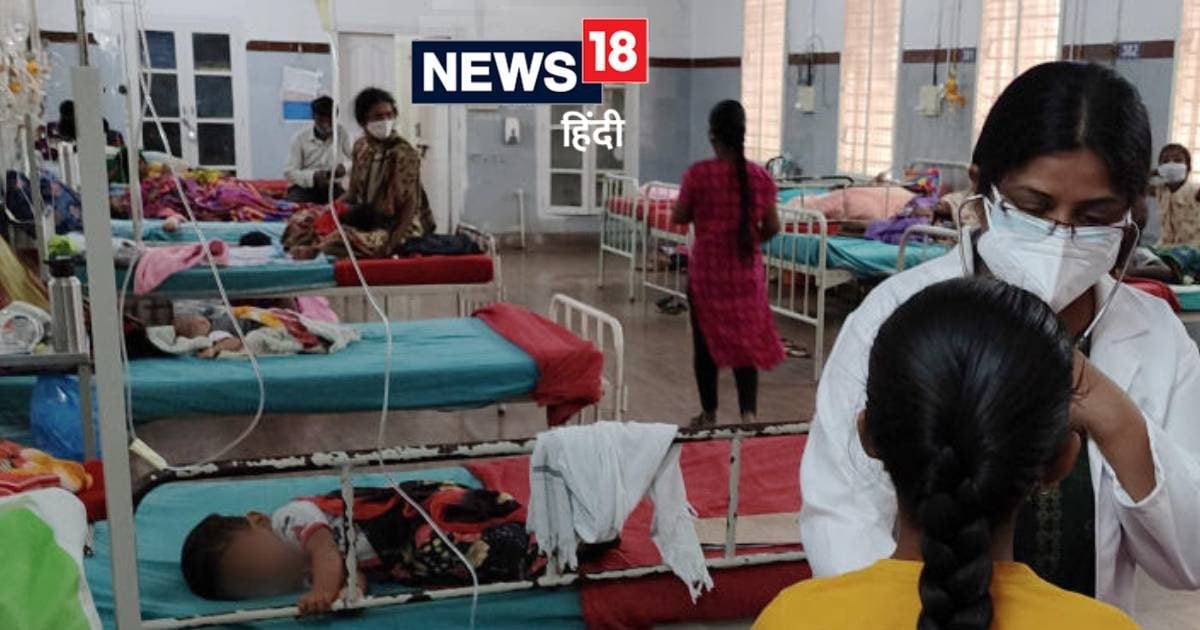
Lancet warns of major threat to Children: Cuts in global aid are now going to pose a threat to young children. A study published in The Lancet clearly warns that a sharp decline in global aid could lead to 22.6 million additional deaths by 2030 in 93 low- and middle-income countries, including India. Which includes 54 lakh children below five years of age.
The study also revealed that between 2002 and 2021, official development assistance (ODA) had helped reduce child mortality by 39 percent, reduce deaths from HIV/AIDS by 70 percent, and reduce deaths from malaria and nutritional deficiencies by 56 percent. Apart from this, many other global health outcomes have also improved in these 93 countries where 75 percent of the world’s population lives. However, now due to reduction in this help, there is a possibility of deep impact.
Research suggests that an annual 10.6 per cent reduction (which is consistent with the average reduction over the last two years to 2024–2025) could result in 9.4 million preventable deaths, including 2.5 million children under five years of age.
Dr. Rajeev J Shah, President of The Rockefeller Foundation, said in his statement on the human cost of cutting foreign aid: ‘The question facing humanity today is whether we will accept a global retreat from our commitments to feed the hungry, treat the sick, and lift up the most vulnerable, or will we together create new models of cooperation that are worth the billions of lives that could be lost if we do not.’
These countries made cuts
International aid will decline in 2024 for the first time in six years. The United States, United Kingdom, France and Germany have significantly cut their ODA contributions for the first time in nearly 30 years. These deep cuts, combined with projected reductions for 2025 and 2026, raise the need to understand what impact this could have on communities around the world at a humanitarian level.
What were the results of the help?
. 23% reduction in total mortality rate
. 39% reduction in child mortality rate
. There was a 70% reduction in deaths from HIV/AIDS, 56% from nutritional deficiencies, 56% from malaria, 55% from diarrheal diseases and 54% from neglected tropical diseases.
. Strengthening health systems and supporting disease control and eradication efforts
. Improved preparedness for outbreaks and pandemics
The study also warns that at least three out of every four people in the world live in countries where two decades of development progress could be reversed, progress made against diseases could be wiped out and preventable loss of lives could occur.
Threat to these countries in Asia
Afghanistan, Azerbaijan, Bangladesh, Cambodia, China, India, Indonesia, Kazakhstan, Kyrgyzstan, Laos, Malaysia, Mongolia, Myanmar, Nepal, Pakistan, Philippines, Sri Lanka, Tajikistan, Thailand, Uzbekistan and Vietnam.