Last Updated:
Iran War Disrupt Drug Supply Chain: The devastation that Iran War is causing with bombs and ammunition is in front of all of us, but due to this war, it should not happen that people of Gulf countries start dying without medicines. In fact, ever since the US-Israel attack on Iran, the air and water routes in the Gulf countries have been badly affected. Due to this, essential medicines are not reaching these countries.
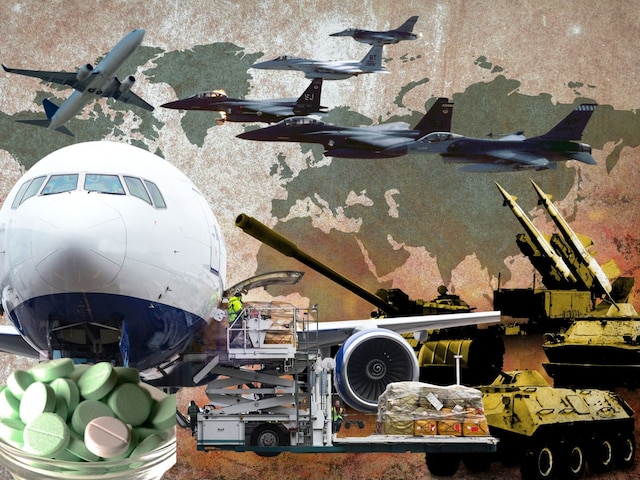

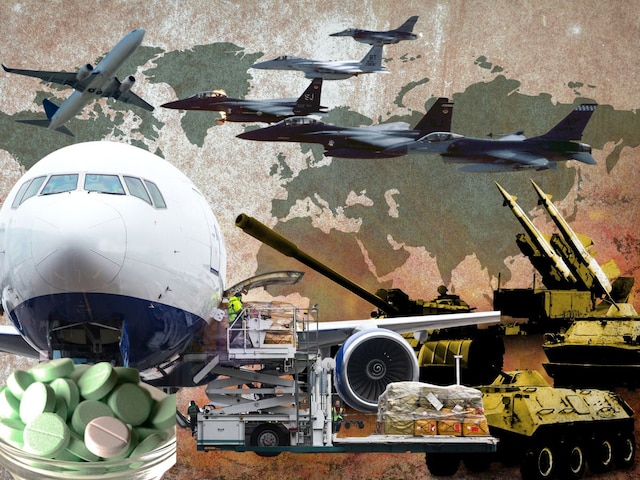
Drug supply chain disrupted after Iran-Israel, America war. Symbolic picture.
Iran War impact: The Iran war is about to take place in two weeks. The life of the people has been disrupted due to the roar of the missiles and the noise of the cluster bombs, but the life of the common people has started getting disrupted. In such a situation, whether or not people die due to bombs and ammunition in this war, they will definitely die due to shortage of medicines. Due to the way the war affected the air service, consignments of essential medicines stopped arriving. Due to this the supply chain of medicines has been broken. This is not just a matter of one country, but the supply chain of medicines is being affected in the entire Gulf countries. The supply of ‘cold-chain’ medicines essential for the treatment of diseases like cancer has also been disrupted.
Delay in medical equipment is fatal
According to a Reuters report, an official said that if a patient has to undergo immediate surgery and is waiting for treatment, then you are forced to choose the air route. Delays for emergency goods like medicines or medical equipment can be fatal. Therefore, despite it being expensive and lengthy, the air route is being chosen. According to experts, the stock of sensitive medicines like cancer is usually only for three months. Prashant Yadav of the Council on Foreign Relations says that the biggest threat is to drugs like monoclonal antibodies used in the treatment of cancer. Some customers have warned that if the situation does not improve, they will face a severe shortage of medicines in the next 4 to 6 weeks. David Weeks of Moody’s has expressed concern that sometimes there is not a shortage of medicine, but there is a shortage of things to pack it or use it. Such as lids of medicine bottles, plastic of IV bags and packaging materials. If even these small things fall short, the entire supply chain of medicines can stop.
Trouble for cancer patients
The Gulf country is mainly dependent on western countries for medicines. There are many medicines whose expiry date is very short. Such medicines mostly fall in the life saving category. That is, if these medicines are less then the patients who are dependent on these medicines may have to face huge problems. Industry officials say that due to the ongoing war in the Middle East, the access of essential medicines to the Gulf countries is being hindered. The biggest danger has arisen for cancer treatment medicines and other medicines which require freezing. Officials say that they are looking for alternative routes to reach the Gulf countries.
considering changing paths
Due to this crisis, companies are having to change their flight routes and look for land routes to deliver goods to the region. They are sending medicines through trucks from airports like Jeddah and Riyadh in Saudi Arabia. Türkiye is adjacent to the Gulf countries which is not involved in this war. Therefore, officials are also considering the options of Istanbul and Oman. However, not only medicines but also the supply of food and fuel is in the grip of this war. Some officials say that although no major shortage of medicines has been seen so far, the situation may change if this war drags on. Gulf countries are heavily dependent on imports and some medicines have very short ‘expiry dates’ and require strict ‘cold-chain storage’ (cold temperatures). In such a situation, shipping over long land routes is no longer practical.
20 percent supply chain affected
After the attack, major airports in the region like Dubai, Abu Dhabi and Doha have been closed. Dubai and Doha are major cargo hubs connecting Europe to Asia and Africa. Airlines like Emirates, Etihad and companies like DHL transport medicines which must be kept within a certain temperature to remain safe and effective. Professor Wouter Deulf of the Antwerp Management School, citing industry figures, said that more than 20% of the world’s total air freight traffic is being affected due to this tension in the Middle East. It is worth noting that air route is the main route for the supply of life-saving medicines and vaccines.
China, Singapore looking for ways
An official speaking to Reuters warned that cold-chain corridors for sensitive medicines cannot be created overnight and are not available everywhere. An executive officer of a pharmaceutical company said that they have formed internal teams to prioritize the supply of medicines for serious diseases like cancer. It also cautioned that if proper storage and handling is not ensured, the consignment of temperature-sensitive medicines may get spoiled. At the same time, officials of a medical device company say that their priority right now is to identify those shipments that are on the way or ready to leave. Only after this it will be decided which medicines have to be diverted and for which a new plan has to be made. An official, speaking on condition of anonymity, said that goods going between Europe and Asia, which usually went through Dubai or Doha airports, are now being sent via China or Singapore. It is not possible to use the sea route because it takes a lot of time and Iran has also closed the Strait of Hormuz. Input – Reuters
About the Author

In a career spanning over 18 years, Lakshmi Narayan has served in prestigious organizations like DD News, Outlook, Nai Duniya, Dainik Jagran, Hindustan. Various issues of contemporary topics, politics,…read more