Indiana GOP

USA Politics

Indiana GOP’s Stunning Rebuff to Donald Trump: A Deepening Rift Inside the Republican Party
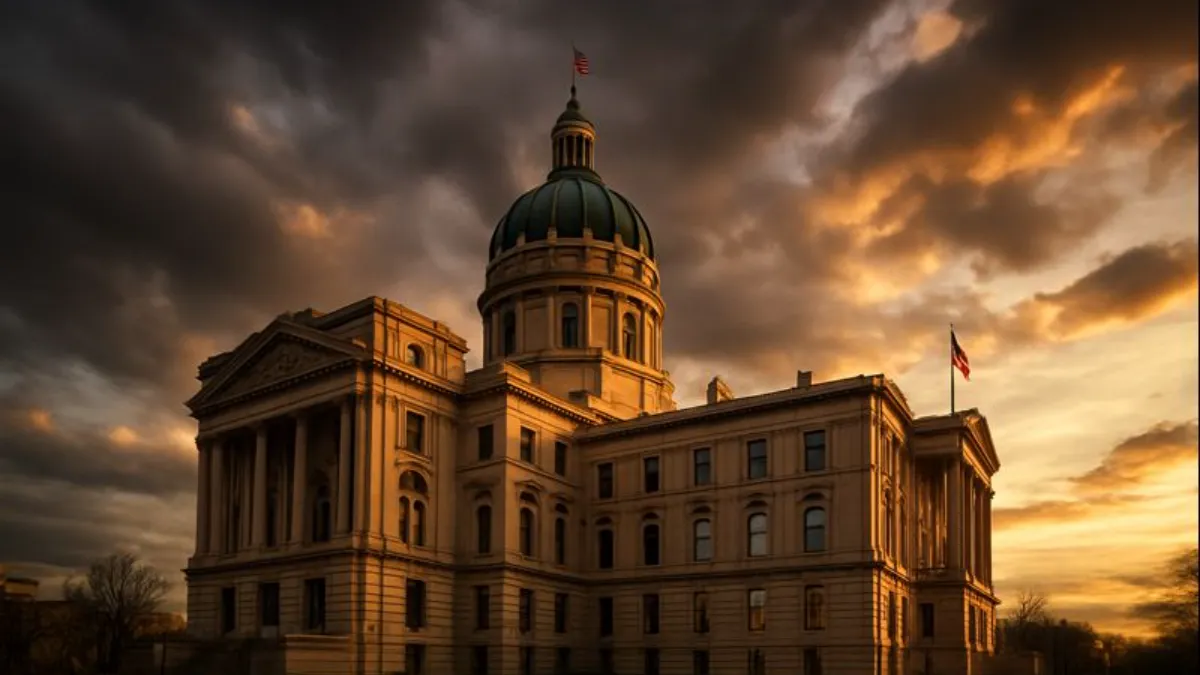
Indiana’s Republican lawmakers reject Donald Trump’s redistricting plan in a rare intra-party rebuke, exposing deep GOP divisions ahead of the 2026 elections. Full details, reactions, and impact at USANewsFast.

December 12, 2025 | Indianapolis, Indiana | 10:40 AM EST

In a dramatic and unexpected political showdown on Thursday evening, Republican state senators in Indiana rejected a redistricting proposal strongly backed by former President Donald Trump, delivering one of the most public intra-party rebukes the GOP has seen in recent years. The vote, which unfolded on December 11, 2025, inside the Indiana Statehouse in Indianapolis, has quickly become one of the most talked-about political developments in the United States, signaling that Trump’s once-unquestioned influence over Republican lawmakers may be weakening as the 2026 midterm elections draw near.

The rejected map was designed to reshape Indiana’s congressional districts in a way that would have solidified additional GOP-leaning seats, tightening the party’s control of the state’s political landscape. Trump personally pressured several top Republican lawmakers throughout the week, urging them to support the plan. Yet the proposal collapsed in a surprising 19-29 vote, with a bloc of Republican senators breaking ranks and joining Democrats in opposing the measure.

This rejection not only stunned many political insiders but also exposed significant strategic disagreements within the GOP over redistricting, electoral strategy, and the role Trump should play in shaping the party’s future.

A Rare Public Defiance of Trump

For nearly a decade, Republican candidates and lawmakers have largely avoided crossing Trump publicly, especially on matters tied directly to elections and power. But Thursday’s vote marked a notable shift.

According to lawmakers present at the session, Trump had called multiple Republican senators personally, pressing them to pass the map. Several reported receiving “direct and intense” messages from members of Trump’s political operation in Florida.

Yet, as the vote approached, GOP lawmakers showed an unusual willingness to push back.

State Senate Majority Whip Mark Holloway, a Republican from Fort Wayne, said shortly after the vote:

“We respect President Trump, but our responsibility is to the voters of Indiana and to preserving fair representation. This map went too far politically and we couldn’t support it.”

The decision represents one of the few times since 2016 that a Republican legislative body has openly rejected a Trump-backed election strategy, signaling evolving internal calculations.

Why the Redistricting Map Failed

Several Republican senators explained that the proposed map would have dramatically reshaped districts in a way that risked long-term instability and potential court challenges.

The map, crafted with Trump-aligned consultants, aimed to flip at least two competitive districts into safe Republican seats—a move Trump argued was essential to securing a House majority in 2026.

But critics within the party raised three major concerns:

1. Legal Vulnerability

Several lawmakers believed the map could face federal court challenges under the Voting Rights Act or anti-gerrymandering provisions. Past legal battles in Wisconsin and North Carolina have made many state legislators more cautious.

2. Backlash From Moderates

Indiana has seen steady growth in suburban areas, where moderate voters reacted negatively in the past to aggressive gerrymandering. Senators feared provoking backlash that could hurt Republicans statewide.

3. Internal Party Stability

The restructuring of districts would have forced several current GOP House members into the same districts, creating brutal primary fights that party leaders wanted to avoid.

Senator Rachel Donovan, a center-right Republican from Carmel, said:

“A map should strengthen our party, not tear us apart with needless infighting.”

Trump’s Immediate Reaction: “A Terrible Decision”

Within an hour of the vote, at approximately 8:15 PM EST, Trump posted on social media from his Palm Beach residence at Mar-a-Lago, blasting Indiana Republicans.

He wrote:

“Terrible decision by weak Indiana Republicans who don’t understand winning. The map was strong and necessary. Indiana deserves better leadership.”

Trump also hinted at supporting primary challengers against specific GOP lawmakers who voted “no,” calling their decision “a betrayal of the Republican voters.”

Sources close to Trump indicated the former president was “furious” and felt blindsided because he believed he had enough votes secured through private conversations earlier in the week.

Growing Signals of Trump Fatigue in the GOP

While Trump remains extremely popular with the Republican base, insiders say lawmakers are increasingly divided over whether his involvement helps or hurts the party’s long-term electoral prospects—especially in swing states and rapidly changing suburban districts.

Over the past six months:

Several Republican governors have publicly broken with Trump on immigration and budget issues.

Senatorial candidates in Arizona, Georgia, and Pennsylvania have avoided seeking Trump’s endorsement.

Major donors have quietly pressured party leaders to “move toward a post-Trump era.”

The Indiana vote is now being viewed as another data point showing that Trump’s hold on institutional Republicans—while still strong—is no longer absolute.

Dr. Michael Hartwell, a political science professor at Indiana University, said Friday morning:

“The symbolism of this vote cannot be overstated. If Republican state senators in a solid red state like Indiana can openly defy Trump, other states will take notice.”

What This Means for the 2026 Midterms

The failure of the redistricting plan could have real implications for the national fight for control of the U.S. House of Representatives.

1. Fewer Guaranteed GOP Seats

Without the Trump-backed map, Indiana will likely retain at least two competitive districts, making them potential targets for Democrats in close national races.

2. Emboldening Anti-Gerrymandering Movements

Advocacy groups across the Midwest say the Indiana result strengthens their arguments against politically-engineered maps.

3. A Fractured Republican Messaging Strategy

Republicans now must navigate:

Trump’s public anger

Growing moderate resentment

Increasing donor impatience

The need for party unity ahead of the national elections

This mix creates real uncertainty for GOP candidates preparing for 2026.

Indiana Becomes a Symbol of a Larger GOP Identity Crisis

The vote comes at a moment when the Republican Party is wrestling with major strategic questions:

Should it continue embracing Trump’s confrontational, personality-driven model?

Should it refocus on traditional conservative governance?

Should it prioritize suburban growth and moderate voters?

Should the party allow Trump to dictate electoral boundaries and candidate choices?

The Indiana Senate’s refusal to adopt the Trump-favored map places the state at the center of a broader national conversation.

A Quiet Shift in Power

Some political analysts suggest the vote signals a changing power dynamic, where state-level Republicans feel increasingly confident pushing back against Trump when they believe local interests are at stake.

One senior GOP strategist, speaking anonymously, said:

“Trump still commands fear among Republicans, but it’s not the unquestioned fear of 2020 or 2022. Lawmakers are starting to think independently again.”

What Happens Next?

The Indiana Senate will now need to revisit the redistricting process. Lawmakers say a revised map could be presented as early as January 2026.

Trump, meanwhile, is expected to escalate his criticism of the Indiana GOP and perhaps campaign against several Republican incumbents in the state.

Local Republican Party leaders worry that the internal conflict could spill into public messaging just as campaign season accelerates.

Still, many senators who voted against the Trump-backed map insist their decision was made in good faith, not defiance.

Senator Donovan stated Friday morning:

“This was not anti-Trump. It was pro-Indiana.”

But regardless of intent, the political ripples have reached far beyond Indiana.

Conclusion

The Indiana GOP’s rejection of Trump’s redistricting map on December 11, 2025, stands as one of the most significant political developments of the season. It showcases a Republican Party divided not only over strategy but over the very question of Trump’s continued dominance.

With the midterms less than a year away, the move highlights an increasingly visible internal struggle that will shape candidate selections, campaign messaging, donor activism, and—ultimately—the party’s future identity.

The vote may have been just one legislative action in one state, but its impact on the broader political landscape is undeniable. Indiana has become a symbol of a major shift: Republicans are no longer uniformly marching behind Trump, and the fractures inside the party are now breaking into public view.