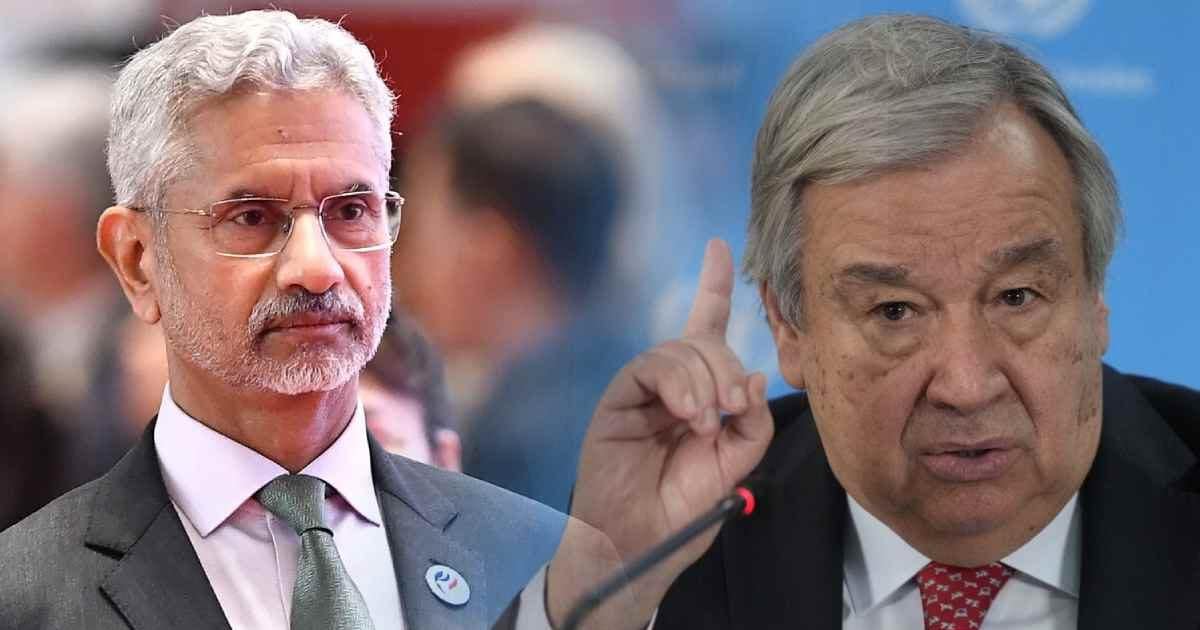
The world waits for no one, and neither should we. These words are not of any revolutionary but of the head of the United Nations, Antonio Guterres. The change that India was demanding from every forum of the world for decades, today the UN Chiefs are also seen joining in the same tune. There is now a growing murmur in the corridors of New York that the Security Council (UNSC), which was formed after the Second World War, is capable of handling today’s reality? Guterres has warned in clear words that those who cling to privileges today will have to pay a heavy price for it tomorrow. India has been saying for years that it is meaningless to take decisions about world security by keeping out a country with a population of 1.4 billion. Now, when questions are being raised on the relevance of the UN itself, the leadership is beginning to feel that this change is ‘inevitable’.
Compulsion for change or India’s growing strength?
The current structure of the United Nations Security Council is far away from today’s geopolitical realities. The five permanent members (P5) involved often use the veto power for their personal interests. India has repeatedly argued in global forums that the 1945 framework cannot meet the challenges of 2026. Be it the Russia-Ukraine war or the Middle East crisis, the failure of the Security Council has put a question mark on its very existence. Now the UN Chief’s statement that ‘reform is essential’ is actually a seal of approval for India’s diplomatic victory which New Delhi has been pursuing for years.
‘We have to be courageous’
India has emerged as not only a contender but also the biggest supporter of multilateralism. Foreign Minister S Jaishankar has made it clear many times that UNSC is incomplete without India. Countries like America, Russia, France and Britain have from time to time supported India’s permanent membership. Now Guterres’s statement that ‘we have to be courageous’ is a direct gesture towards those countries which are creating obstacles in the path of reforms. This is a big opportunity for India because now the demand is coming not only from Delhi but from within the UN.
UNSC Reforms and India: 5 Big Questions and Answers
Question 1: What big warning did UN Chief Antonio Guterres give regarding the Security Council?
Answer: Guterres said that reform in the UNSC is now not only necessary but ‘imperative’. He warned that countries which are not ready to give up their privileges (veto power) will have to suffer the consequences in future.
Question 2: What argument has India been giving for permanent membership in UNSC?
Answer: India believes that it is the world’s largest democracy and its economy is the center of global power. India has all the qualifications required to be a permanent member, so that the Council can truly represent today’s world.
Question 3: What is the current structure of the Security Council and what is lacking in it?
Answer: It consists of 5 permanent members (America, China, Russia, France, Britain) and 10 temporary members. 1 The drawback is that it does not have permanent representation of continents like Africa and Latin America and emerging countries like India.
Question 4: Which big countries have the support of India?
Answer: India has received the support of America, Russia, France and Britain. China often remains silent on this matter or supports procedural delays.
Question 5: What did the UN spokesperson say about India’s role?
Answer: Spokesperson Stephane Dujarric has described India as a “very important part” of the UN system. He said that India is a big supporter of multilateralism and India’s voice within the UN is very important.