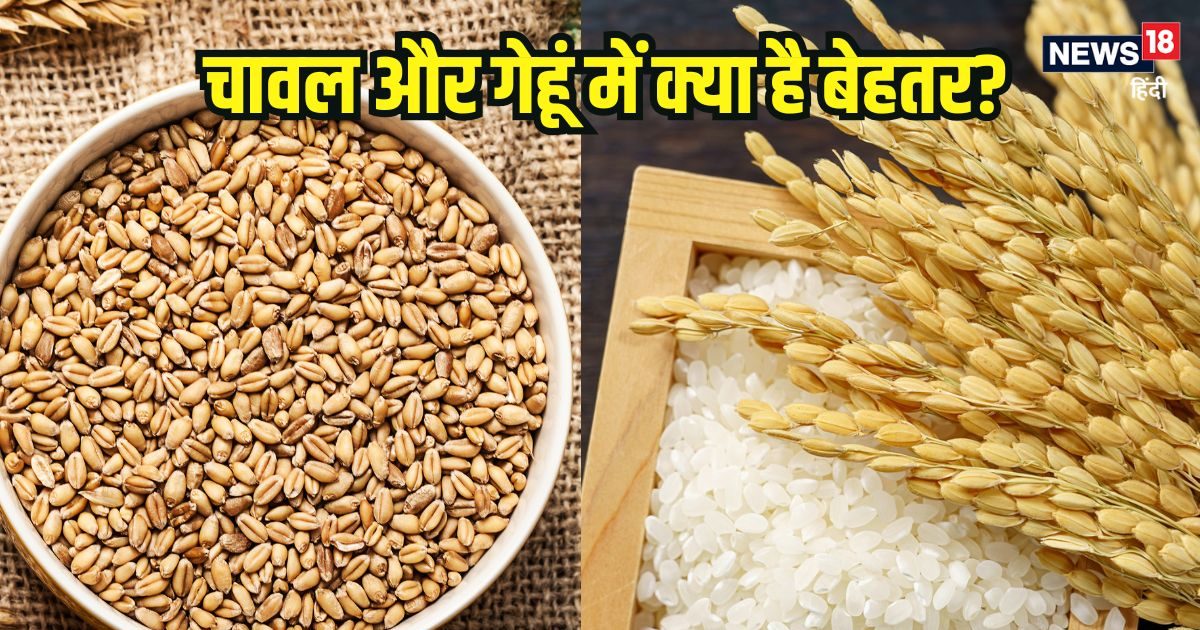
Which is better rice or wheat: Both wheat and rice have been staples of the Indian plate. Indian thali is incomplete without both, but there has always been a difference of opinion between rice and wheat regarding health. Some people believe that wheat is more beneficial, while some people consider rice to be more nutritious than wheat. However, you may be surprised to know that both wheat and rice can be bad for health.
Ayurveda believes that the problem lies not in the grains, but in eating refined grains, in wrong quantities and in the wrong way. Both modern rice and wheat have advantages and disadvantages. Right choice, right cooking method and a balanced plate is the real solution, so let us know the benefits of both wheat and rice.
Advantages and disadvantages of wheat
Wheat contains high gluten, which if consumed for a long time gives rise to diseases like diabetes and thyroid. It also causes stomach related diseases, because it does not provide an environment for good bacteria to grow in the intestines. Second, today’s wheat is deficient in nutrients, especially zinc and iron. Third, excessive wheat consumption increases insulin resistance, due to which the amount of sugar in the blood increases rapidly. But yes, wheat contains abundant amounts of fiber, which is an excellent option for energy.
Advantages and disadvantages of rice
Talking about rice, every type of rice has a high glycemic index, which increases the chances of obesity and diabetes. Second, the roots of the rice plant have less ability to absorb nutrients from the soil than the roots of the wheat plant. In such a situation, more harmful chemicals are found in rice. Third, the polished rice available today does not contain iron, zinc and other nutrients. Rice is only easy to digest and is good for the stomach in limited quantities.
What to eat between rice and wheat?
Which of these two foods is more beneficial? For healthy eating, it is important to follow three rules in life. First, cook the food properly. Be it roti or rice, it is very important to cook both properly. Wash rice several times and cook it thoroughly, while limiting rotis in your diet. Do not consume more than 2 rotis in a day. Second, include other grains in your diet. Do not depend only on rice and wheat. Also use millet, jowar and maize. Third, keep less quantity of grains and more vegetables in the plate. There is a belief that bread and rice provide strength and power, but this is wrong. These only provide temporary energy, not strength or power.