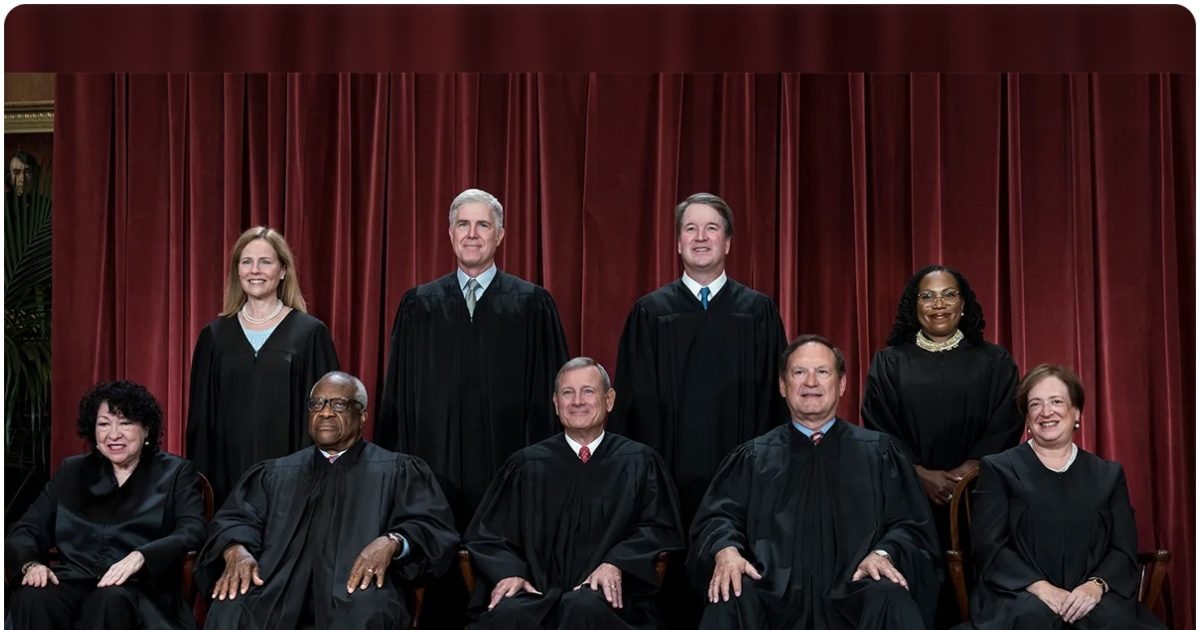
Washington DC. The US Supreme Court, in a historic decision on Friday, has rejected President Donald Trump’s sweeping tariffs, terming them unconstitutional. This decision, which came by a majority of 6-3, has completely overturned the powers of the President in matters of trade. The court clearly said that Trump has exceeded the scope of his powers under federal law. This decision confirms that only the US Congress (Parliament) has the right to impose tariffs, the President cannot impose them on his own will.
Chief Justice John Roberts, writing the majority decision, clarified that the law Trump invoked, the International Emergency Economic Powers Act (IEEPA), “does not give the President the authority to impose tariffs.” Roberts explained that the power to impose tariffs rests entirely with Congress. If lawmakers wanted the President to use IEEPA in this manner, they would have written it clearly.
Decision has no impact on steel-aluminium
This decision of the court has ended Trump’s comprehensive and “reciprocal” tariffs that were imposed on many countries, but will not have any impact on sector-specific tariffs like steel and aluminum, because they were imposed under a separate legal authority.
6 judges in favor of the decision: Conservatives and liberals came together
This decision presented a rare picture, where 6 judges rose above ideological differences and voted together and held that IEEPA does not give such unlimited powers to the President…
Chief Justice John Roberts: He wrote the majority decision and stressed that “the express approval of Parliament” is necessary for major economic decisions.
Justice Neil Gorsuch: He supported Roberts in the interpretation of the law.
Justice Amy Coney Barrett: Conservative judge appointed by Trump, who sided with the majority against the executive’s claims of unlimited powers.
Justice Sonia Sotomayor: Liberal judge, who agreed that IEEPA does not permit blanket tariffs.
Justice Elena Kagan: Liberal judges, who voted with the majority while insisting on the limits of the law.
Justice Ketanji Brown Jackson: He also rejected the President’s claim of tariff rights.
Which 3 judges expressed disagreement with the decision?
Three conservative judges of the Supreme Court strongly opposed the majority decision and supported the President’s right to impose tariffs.
Justice Clarence Thomas: He argued that neither the Constitution nor the law invalidates the President’s actions.
Justice Samuel Alito: He supported the dissenting letter and rejected the majority’s interpretation of limiting executive powers.
Justice Brett Kavanaugh: The third dissenting judge, who believed that the President has broad authority in business matters and considering old precedents, Trump’s decision should have been upheld.