Last Updated:
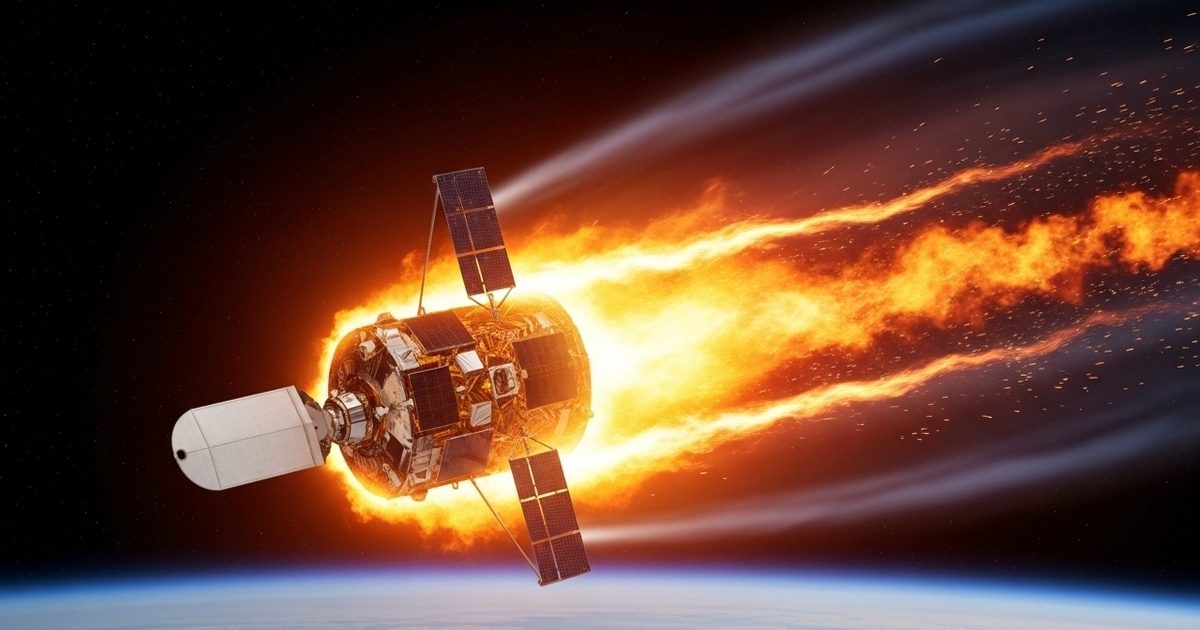
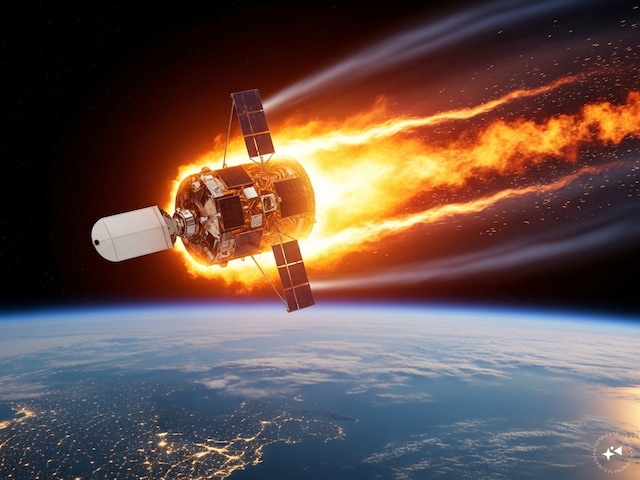
NASA’s Van Allen Probe A satellite is now returning to Earth after being in space for almost 14 years. Scientists estimate that it will enter the atmosphere between March 10–11, where most of it may burn.

This NASA satellite was in space for 14 years
- NASA launched this satellite in August 2012. It was sent into space along with its twin satellite Van Allen Probe B. The mission of both was to study the radiation belts present around the Earth.
- Both satellites were de-activated in 2019 after being active for almost seven years. Since then, they have gradually continued to descend in their orbit and now the mission of Van Allen Probe A is about to end completely.
- According to the estimates of the US Space Force, this satellite can enter the Earth’s atmosphere on the night of March 10 (in the early hours of March 11 according to Indian time).
- Scientists have set a time limit (window) of about 24 hours for this, which means the actual time may vary slightly.
- NASA scientists are continuously tracking it so that its path and possible fall location can be estimated.
The possibility of damage on earth is very less. - According to scientists, the probability of a person getting injured is 1 in 4,200 i.e. about 0.02%, which is considered very low.
- A big reason behind this is that about 70 percent of the Earth’s surface is covered by the ocean, so even if any debris remains, there is a high possibility of it falling into the open ocean.
When can a satellite collide?
According to the US Space Force, this satellite can enter the Earth’s atmosphere in the early hours of March 11 Indian time. Scientists have set a time limit of about 24 hours for this, because it is difficult to tell the exact timing of an object falling at such a high speed. NASA scientists are continuously tracking and monitoring it so that its path and possible place of fall can be estimated.
Can disaster really occur?
Scientists say that when the satellite enters the Earth’s atmosphere, due to strong friction and heat, most of its part will burn to ashes. Still, there is a possibility that some strong metal parts may not burn completely and may fall down as debris. According to NASA, the chance of a person getting injured is only 1 in 4,200, or about 0.02 percent. That means the risk is very less.
If any debris remains, where will it fall?
About 70 percent of the Earth’s surface is covered by ocean, so scientists believe that even if any piece survives, it is most likely to fall into the open ocean. The possibility of falling in a big city or populated area is considered very less.
Why can’t the exact location be known?
The biggest challenge in such cases is that the satellite comes towards the Earth at very high speed. When it enters the atmosphere, its direction may change due to air pressure and temperature. For this reason, scientists are not able to decide in advance in which country or in which sea its debris will fall.
After all, why was this satellite sent?
The objective of this mission was to study the Van Allen Radiation Belts present around the Earth. These are two layers of energy-filled particles that play an important role in protecting the Earth from solar storms and space radiation. Initially this mission was named Radiation Belt Storm Probes, but later it was named Van Allen Probes in honor of James Van Allen, the scientist who discovered the radiation belt. After collecting important scientific information from space for almost a decade, this satellite is now on its last journey.
About the Author

Anoop Kumar Mishra is associated with News18 Digital for the last 6 years and is working on the post of Assistant Editor. He writes on Health, aviation and Defense sector. He also covers development related to…read more