US Economy Shows Strong Growth Ahead of 2026The U.S. economy is showing strong momentum as it heads toward 2026, driven by cooling inflation, rising confidence among consumers, and the re-awakening of optimism in the markets. After a nine-month spell of high interest rates and global economic uncertainty, key indicators reveal that the worst inflationary stress may finally be behind the nation. The Consumer Price Index has gradually moderated, offering households some relief from soaring food, fuel, and housing costs. According to economists, this is helping to stabilize spending power, particularly among middle-income families.At the same time, wage increases surpass inflation in many of the key sectors: technology, healthcare, logistics, and hospitality. In other words, despite earlier economic pressures, real earnings for millions of workers continue to improve. In addition, public and private infrastructure investments are pouring billions of dollars into road construction, rail modernization, broadband expansion, and industrial facilities. These projects are contributing to increasing
economic output and creating widespread large-scale employment opportunities across states.Wall Street likes that. Major stock indexes have shown resilience, buoyed by strong quarterly earnings, robust retail data, and aggressive investments in AI innovation by American firms. Small businesses are also benefiting from better access to credit and stabilizing supply chains, which had earlier suffered due to bottleneck
s related to the pandemic.Financial analysts predict that the United States might be entering a fresh cycle of expansion, given that inflation remains controlled and productivity growth reignites. Though there are still risks in geopolitics and trade worldwide, the country’s domestic fundamentals suggest it could carry a competitive economic edge with it into 2026
.2. Major Winter Storm Alert Across the Northern States Heavy snow, icy winds, and freezing temperatures could create transportation, power grid, and daily disruptions as a powerful winter storm system sweeps through multiple U.S. northern states. Meteorologists issue widespread warnings for winter storms, affecting Minnesota, Wisconsin, Michigan, North Dakota, South Dakota, and parts of northern New York and Maine.The storm is led by an Arctic air mass moving southward, mixing with moisture from the Great Lakes. This combination of factors has brought a forecast of snowfall accumulations of 8 to 20 inches into high-risk areas and blizzard-like

conditions into some cities. Wind will be at 40-60 mph, exposing highways to extreme reductions in visibility.State authorities and emergency-response teams are on high alert. Fleets of snowplows have been deployed, shelters are being readied, and residents are being advised to stock up on vital supplies. Airlines operating from major northern hubs-including Minneapolis-St. Paul International Airport and Detroit Metropolitan Airport-already warn that runway icing and low visibility may delay or cancel flights.Schools and local community services are making contingency plans, as are postal delivery services. Electricity companies are reinforcing grid support because extreme cold raises electricity demand, especially for heating, but it also threatens transmission lines due to icing.Public safety officials advise drivers to avoid unnecessary travel, use winter-grade tires, carry emergency kits, and follow local advisories. Lake-effect snow can strike quickly, making residents living near lakeshores particularly vulnerable.The storm is forecasted to last up to 48 to 72 hours with continuing extreme cold afterward. Authorities continue to monitor the situation closely to minimize the risk in order to ensure rapid emergency support where needed
.3. NASA Prepares New Moon Mission for 2026 NASA is gearing up for the 2026 lunar mission as part of the Artemis program in a critical move toward sending humans back to the moon after a gap of over 50 years. The space agency, working alongside commercial partners and international allies, is finalizing new-generation spacecraft components, astronaut training modules, moon lander prototypes, and space mobility systems.The 2026 mission plans to send a crewed spacecraft into lunar orbit, followed by a controlled descent to the moon’s surface near the south pole, a region believed to have ice deposits and much to offer in terms of valuable research.
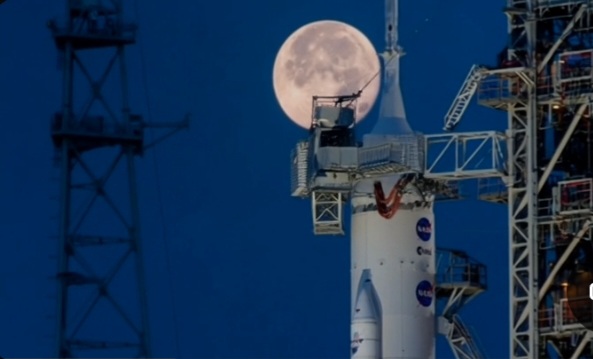
Artemis is expected to create a long-lasting presence on the moon, rather than a fleeting visit like those during the Apollo landings.Astronaut training has already begun at NASA’s Johnson Space Center, where candidates are learning the ways of lunar terrain simulators, microgravity testing labs, and emergency landing protocols. The Orion spacecraft that will carry them is being structurally enhanced, its radiation shielding upgraded, and life-support systems improved to guarantee safe operations during deep spaceflight.A major focus of the 2026 mission is sustainability. NASA will be testing lunar surface habitats, advanced communication networks, and moon-based scientific operations that could later support Mars exploration missions. The initiative ensures progress in real-time data transfer, next-generation navigation precision, and protection solutions against lunar dust for equipment.This mission is not merely a scientific milestone; it’s about creating thousands of jobs in aerospace engineering, robotics, materials science, propulsion research, and logistics involved with space exploration. NASA continues to describe the project as the anchor for America’s long-term space leadership while inspiring global cooperation, STEM education, and human space discovery for generations to come.
4. Tech Companies Lead Global AI Race The United States continues to lead in the global artificial intelligence race as American tech companies push out the boundaries in innovation, investment, and AI-enabled job creation. Leading companies like OpenAI, Google, Microsoft, Meta, and NVIDIA are aggressively scaling deep-learning research, cloud AI infrastructure, responsible AI frameworks, and next-generation automation technologies.Companies in the U.S. are prioritizing high-level neural model development that could power medical research, national defense analysis, real-time language translation, weather forecasting simulations, robotics intelligence, and creative AI content tools. More recently, investments into AI chip manufacturing and GPU acceleration clusters have been on a rapid incline, further strengthening the country’s AI processing capacity to a level far beyond any global competitors.The push is also reshaping the job market. Demand is rising for AI engineers, data scientists, machine learning researchers, cloud architects, and AI ethics specialists. Universities across America are launching new AI-centered programs as industries increasingly integrate automation into healthcare, retail, finance, agriculture, manufacturing, and cybersecurity.Meanwhile, Washington policymakers continue their push for AI regulation that both fosters innovation and prevents misuse. U.S. think tanks and private AI labs are developing safety layers: chatbot guardrails; bias-reduction protocols; watermarking systems for AI-generated content; and AI-guided misinformation detection programs.AI is also fueling economic growth. Companies using AI-enhanced productivity tools have begun reporting faster operations, better decision models, and reduced costs. Many startups emerge in AI-medical diagnostics, AI education platforms, AI video generation, and AI journalism tools.With strong funding for R&D, a leading private sector, and fast-growing exports of AI software globally, industry analysts believe American leadership in AI could persist for decades. Building smarter, safer, and more globally accessible AI breakthroughs will be the hallmark of this next phase.
5. US Achieves Record Oil & Gas Production ⛽⚡The United States has reached record levels in oil and natural gas production, reinforcing its position as one of the most powerful energy suppliers in the world. The trend in the industry shows that domestic energy extraction has been expanding across Texas, North Dakota, Alaska, New Mexico, Wyoming, and facilities offshore in the Gulf of Mexico.Advanced drilling technologies including hydraulic fracturing, or fracking, horizontal drilling, and AI-powered seismic surveying have dramatically increased accessibility of resources. This increase has enhanced fuel supply stability, strengthened global export capacity, and reduced dependence on foreign energy imports.LNG exports from U.S. ports continue to increase, especially to European and Asian allies looking for long-term contract energy security. American refineries are also operating at high capacity, supporting diesel, aviation fuel, and gasoline supply influence worldwide.This surge in production brings both economic benefits and policy challenges. Energy sector job growth is on the rise, increasing demand for petroleum engineers, welding technicians, pipeline developers, offshore rig crews, logistics drivers, refinery safety workers, heavy machinery operators, environmental review specialists, and supervisors of AI-automation. The increase in local economies, especially in production-rich regions, is translating into strong tax revenues, business expansion, and wage growth pegged to the energy boom.However, the debates persist on environmental impact, balancing clean energy transition, methane emissions, land protection, and long-term climate strategy. Many U.S. companies are investing simultaneously in fossil fuel expansion and renewable energy capture technology to try to bridge the economic supply needs with sustainability planning.For now, the U.S. energy sector remains confident that record production will support national economic resilience and geopolitical leverage while ongoing research pursues reducing environmental harm.
,6. New Bipartisan Bill for Road & Bridge Upgrades A new bipartisan congressional bill, dedicated to upgrading America’s aging road and bridge infrastructure, is building momentum in Washington as lawmakers come together on national transportation safety and modernization needs. Highways and bridges in the United States, some built more than 70–80 years ago, are increasingly under stress due to surging vehicle use, economic freight movement, and extreme exposure to the elements.The new proposal would inject federal funding into bridge repairs across the nation, highway redesign projects, rural road resurfacing, intelligent traffic systems, and freight corridor reinforcement. Lawmakers from both parties agree that critical investment in infrastructure remains essential to public safety, economic growth, disaster resilience, and future mobility innovation.Potential upgrades include earthquake-resistant structural reinforcement in California, support for the elevation of bridges against flooding in southern states, winter-storm-resistant highway material for northern regions, and smart-monitoring sensors that detect cracks, overload stress, and corrosion before collapse risks escalate.Beyond safety, the bill is likely to promote modernization initiatives: congestion-reducing express lane redesigns, AI-monitored signal adaptability, highway hubs connected with public transportation, and better interstate rest zones, including greener runoff controls for drainage.Infrastructure economists argue that every dollar invested into transport upgrades produces multiplied economic returns by improving delivery speed, reducing accident rates, supporting tourism travel stability, improving trucking fuel efficiency, and preventing costly emergency repair cycles.The demand for construction labor will build up nationwide, including that of bridge engineers, asphalt technicians, inspection crews, logistics planners, metal fabrication workers, heavy crane operators, civil design contractors, and AI-assisted surveying analysts.According to Congressional analysts, this bill could represent a defining milestone in renewing America’s transportation backbone, if passed, for coming decades
.7. Miami Beach Plans New Tourist Safety Rules New tourist safety regulations have been rolled out in Miami Beach as part of efforts to enhance public order, boost emergency response capability, protect wildlife, and avoid viral public-disruption beach incidents. Miami remains one of America’s most popular tourist hubs, drawing millions to its coastline, restaurants, nightlife districts, cruise ports, and oceanfront entertainment zones every year.With increased visitor density comes unique safety challenges, including crowd congestion, accidental wildlife-human interactions, heat-related illness, ocean current risks, alcohol-connected accidents, and lost-device incidents near shoreline zones.The new regulations may also include increased monitoring of the public areas through enhanced lifeguard rotations, beach policing patrols, temperature-alert medical response units during peak summer and winter tourist spikes, clearer beach wildlife distance protocols, upgraded shoreline signage, and visitor awareness campaigns.Officials want to ensure that viral wildlife interactions—such as sea creatures grabbing devices near beach towels or tourists accidentally approaching protected animals—are minimal and do not harm either party, people or marine life. Wildlife experts and tourism leaders alike are advising collaboration on safety boundaries that will sustain nature preservation while ensuring visitor enjoyment.Discussions are also ongoing on modernization for emergency responses, including faster ocean-rescue jet-ski dispatch systems, drone scanning for unsafe rip currents, updated medical tent distribution, better multilingual tourist instructions, and improved lost-device or child reunification protocols.Tourism businesses welcome the proposals, adding that visitor safety ensures long-term success in tourist engagements. Hotels, cruise leaders, local businesses, and public safety advocates are all in agreement: prevention-focused beach guidelines are central to Miami’s tourism brand, public order, and safer coastal enjoyment for every traveler
.8. California Expands Wildlife Rescue Programs California is scaling its wildlife rescue programs, placing a premium on relocating invasive species, protecting marine mammals, expanding conservation tech, supporting licensed rescue professionals, and strengthening environmental preservation. It has faced ecological pressures from invasive Burmese pythons entering warmer zones, crowd stress points along the beaches from sea lions, wildfire habitat displacement, and urban-animal conflicts with cities expanding into natural territories.The state government is now channeling new financial and logistical support to licensed animal capture specialists, habitat rehabilitation centers, reptile conservation units, marine wildlife hospitals, research into the migration of species linked with wildfires, veterinary rescue networks, and AI-driven monitoring of wildlife.One major focus is responsible relocation. In place of harming invasive or displaced animals, California rescue operations focus on safe-zone transfer protocols, new habitat matching, stress-reducing rescue boxes, biological tracking tags, veterinary check cycles, and cross-state ecological balance partnerships.Marine life support is also improving. Sea lions injured by fishing nets or those taken from human crowd-stress zones receive faster treatment through rescue coastal ambulances, ocean-linked medical holding stations, and public animal boundary education, crowd-noise-stress research, and improved fish-repopulation support that protects natural feeding cycles.AI technology is being used in defense of conservation goals. It includes automated camera wildlife detection tools, thermal imaging relocation scans, acoustic stress indicators for marine animals, cliff habitat risk forecasts, ocean migration pattern analysis, and species safety prediction models that are scaling across rescue networks.This initiative is also creating environmental careers including rescue trappers, wildlife veterinarians, species analysts, habitat engineers, marine conservation technicians, AI data wildlife researchers, ecological balance officers, volunteer rescue instructors, and nature-linked STEM training programs for future conservation experts.
9. Stock Market Hits New Confidence High The U.S. stock market has been riding high on waves of strong confidence, with a better-than-expected economic stability outlook, resilient corporate earnings, cooling interest-rate uncertainty, and massive investment inflow into America’s AI and energy development sectors. Optimism in Wall Street is supported by high institutional funding movement and a global investor belief in American long-term industrial leadership.The leading market drivers include AI innovation companies expanding their GPU-driven model development clusters, cloud automation profits rising, sharp increases in defense-linked AI analysis patents, and valuation trust being built in major hedge funds by medical-AI research startups. This shows that next-generation intelligence software capacity has become a defining pillar in American market stability today.Simultaneously, confidence in America’s energy production, which is linked to the record domestic extraction milestones, strengthens fuel-linked equities such as pipeline logistics firms, offshore support companies, industrial power distribution stocks, refinery system manufacturers, and national energy-linked AI automation analysts that improve drilling margin output ratios. Market analysts say retail investment trust is back. Small traders feel safer now that inflation is easing, and billionaire funding partnerships continue to pump in billions into future-looking national development pillars. Economic textbooks refer to the expansion cycle in American infrastructure investments as one of the strong triggers of market upswings. Even sectors like airline transport firms benefit from market stability because better infrastructure reduces logistics inefficiencies. Although global risks remain, American markets still show lots of strong fundamentals. According to analysts, Wall Street’s confidence remains largely intact because investors see America aggressively betting on innovation, extraction dominance, transport modernization, AI regulation safety frameworks, energy supply power, and long-term national industrial capability leadership. Wall Street remains cautiously optimistic, but sentiment favors U.S. market endurance.
10. Digital Modernization of US Immigration System Begins The U.S. government has embarked on digital modernization in its immigration system, an ambitious administrative technology upgrade for the country in decades. This reform will also reduce reliance on paperwork, accelerate the processing cycles, enhance cybersecurity, improve digital border intelligence, enable innovation in visa applications, and increase AI-assisted document verification systems. For decades, immigration-linked processes had been persistently dependent on manual document submission, congestion of scheduling in interviews, paper verification bottlenecks, limitations of outdated databases, and security gaps that are susceptible to document fraud. The modernization plan introduces expanded e-filing systems, encrypted biometric verification networks, AI-cross-checked global applicant identity scanning, fraud-prediction software, predictive immigration case prioritization algorithms, secured digital timestamp auditing frameworks, multilingual application AI support portals, cloud-backup redundancy for applicant records, next-