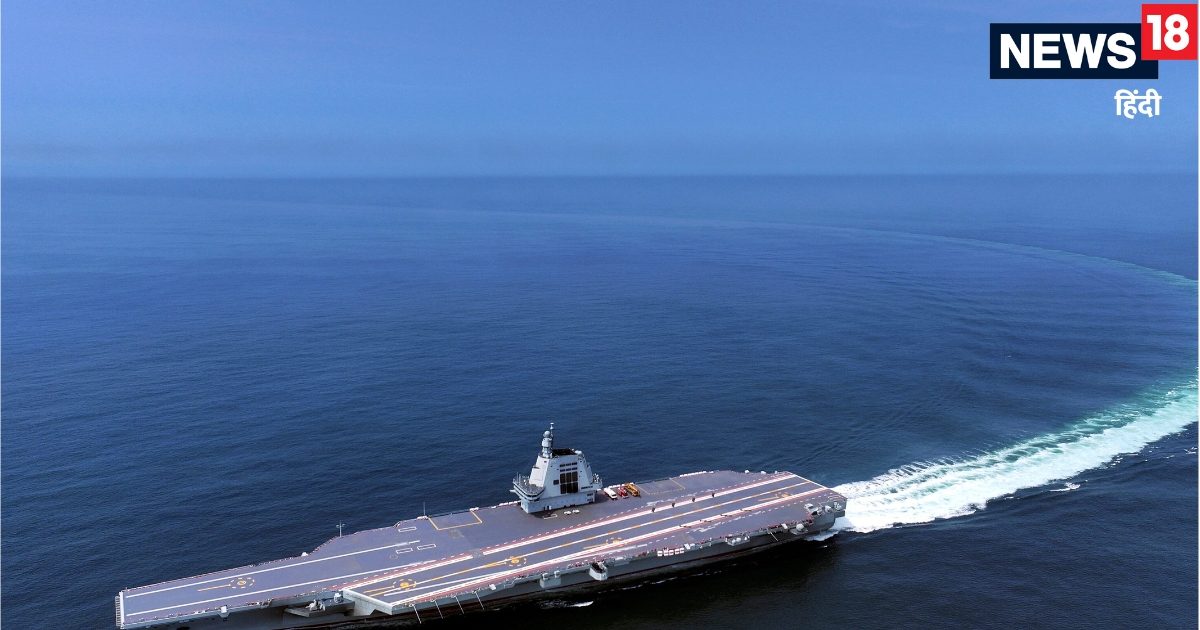
The arrangement of the catapult system also increases these problems. Fujian has state-of-the-art electromagnetic launch systems, but one of the catapults interferes with the landing zone, making it impossible to use during landing. Apart from this, another catapult is located very close to the aircraft lift, which creates another ‘choke point’. Experts believe that the change from a steam-powered catapult to an electromagnetic system during construction led to these compromises, which affected overall deck operations. According to independent analysts, due to these design deficiencies, the Fujian cannot perform simultaneous take-off and landing, a regular capability of American supercarriers. Its angled flight deck also has less width and depth than American designs, making landing in bad weather or rough sea conditions more challenging.
Gerald R. What is Ford Aircraft Carrier?
It is America’s most modern and world’s largest nuclear energy powered aircraft carrier. It has been developed as a new generation supercarrier of the US Navy and is named after former US President Gerald R. Named in honor of Ford.
What are its main technical features?
Electromagnetic Aircraft Launch System (EMALS), advanced arresting gear and state-of-the-art radar systems have been installed in this carrier. With these technologies, aircraft take off and land faster and safely, which greatly increases operational efficiency.
What is its capacity and strength?
Gerald R. This first ship of the Ford class has a displacement of more than 1 lakh tonnes and can deploy more than 75 fighter jets, helicopters and support aircraft. It has living and working facilities for about 4,500 sailors.
What is its strategic importance for the US Navy?
This carrier is the main basis of America’s maritime power and global military presence. Its deployment in sensitive regions like the Indo-Pacific and West Asia helps the US respond quickly and maintain the balance of power.
Problem in take-off and landing of fighter jet
Due to all these reasons, Fujian’s sortie generation rate i.e. the speed of take-off and landing of planes is affected. It is estimated that it is able to achieve only about 60 percent operational tempo compared to the American Nimitz-class aircraft carriers. Even though it has advanced launch technology, the limitations of the deck limit its actual combat capability. According to the report of ‘Shipborne Weapons Defense Review’ magazine, the root of these problems is the propulsion system running on conventional fuel. The large exhaust funnels and engine room limit the position of the island and elevators, resulting in a use of interior space that does not optimize the flow of the flight deck. In contrast, nuclear energy powered aircraft carriers do not require such heavy propulsion systems. This gives designers the freedom to move the island back, better position the catapult, and make the deck more spacious. This makes take-off and landing possible simultaneously and significantly improves operational efficiency. Another specialty of nuclear reactors is their huge power generation capacity, which is important for electromagnetic catapults, advanced radar, sensors and electronic warfare systems. Also, by eliminating the need for fuel, more space becomes available in the ship for aircraft fuel, weapons and support systems.
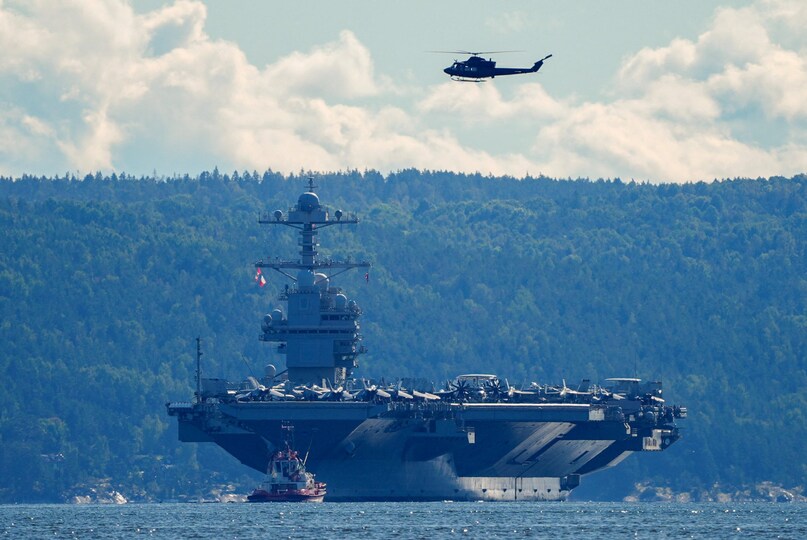
China Aircraft Carrier: After the failure of Fujian, China is now working on a plan to build an aircraft carrier bigger than the American Gerald R Ford class. (File photo/Reuters)
Aircraft carrier bigger than Gerald R Ford
Satellite images of the end of the year 2025 indicate that China is working rapidly on its fourth aircraft carrier (Type-004). The large square structures seen at the Dalian Shipyard are considered by experts to be reactor containment vessels, which is considered a solid indication of nuclear propulsion. It is estimated that the weight of Type-004 could be from 1.10 to 1.20 lakh tonnes, which would be equal to or more than the American Gerald R Ford class aircraft carrier. This new aircraft carrier is expected to have four electromagnetic catapults, so that its launch capability can be like that of American supercarriers. Also, the newly designed deck, smaller and pushed back island and better parking and rearming space can overcome the shortcomings of Fujian.
Fujian still useful
However, analysts say Fujian is suitable for operations in nearby areas such as the Taiwan Strait and the South China Sea, but the nuclear aircraft carrier will give China the ability to project sustained power into the Indian Ocean and beyond. This is being considered a big step towards becoming Beijing’s ‘blue-water navy’. Fujian is proving to be an important testing ground for China. Its limitations are helping to improve future designs. Beijing aims to reduce the operational gap with the world’s leading navies and take its role in the balance of maritime power to new heights.