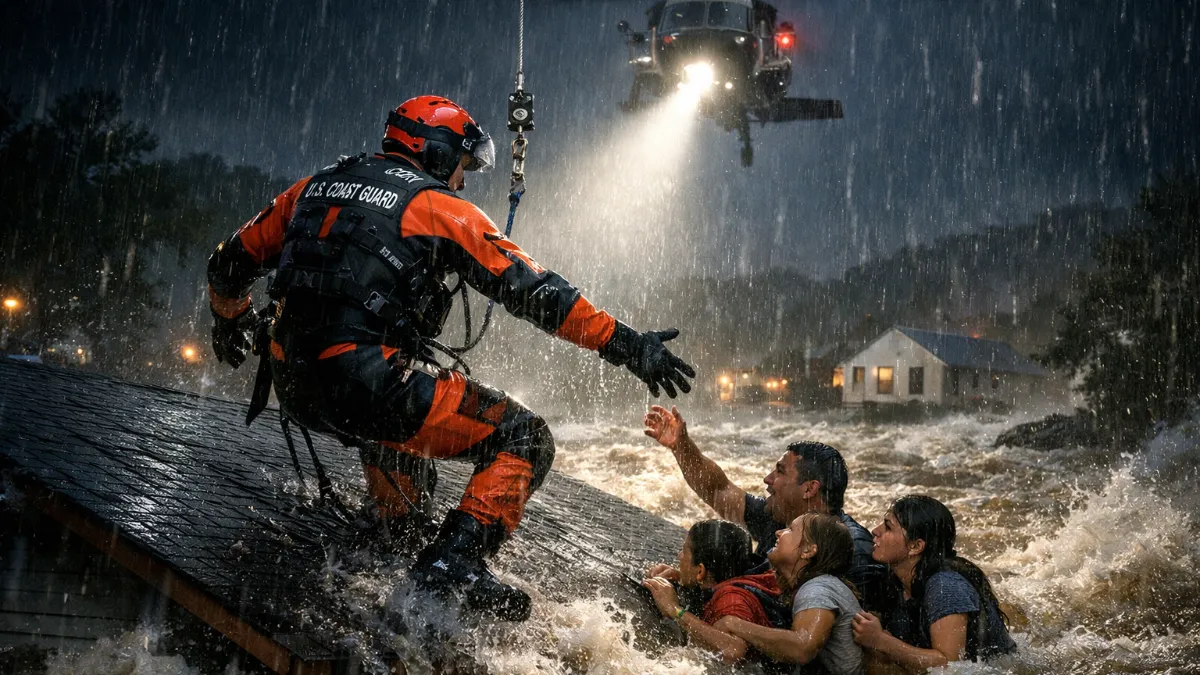
Heroic Coast Guard rescue swimmer saves nearly 200 people during deadly Texas flash floods, risking his life amid raging waters and nighttime chaos.
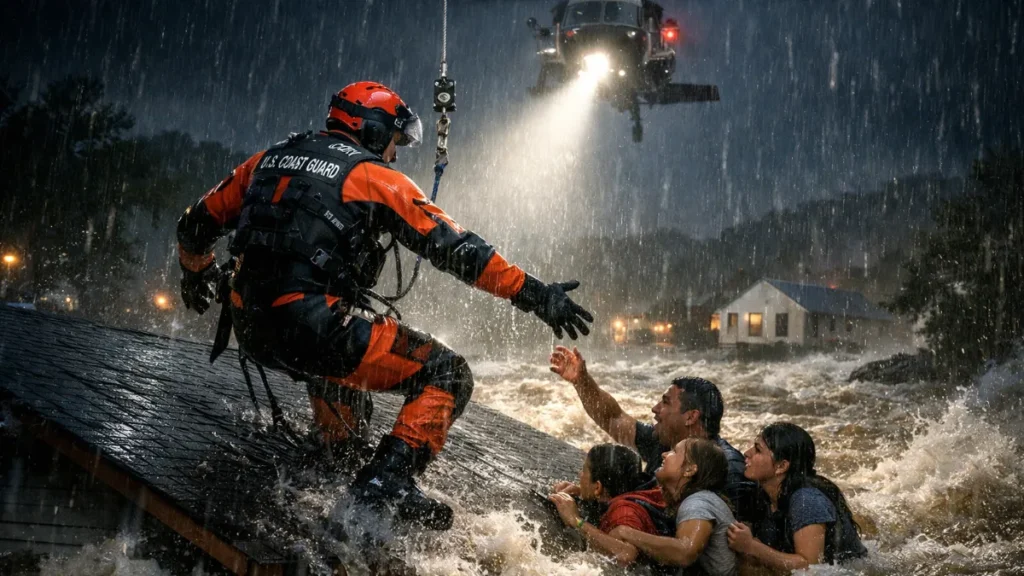
KERR COUNTY, Texas — July 7, 2025, 3:21 a.m. EDT — In the face of the catastrophic flash floods which ravaged Central Texas in early July, Petty Officer 3rd Class Scott Ruskan, 26, originally from New Jersey, had an important role in saving more than 165 persons, who are estimated to number close to 200. These acts of bravery occurred in the vicinity of the Guadalupe River as well as in Camp Mystic, which operates as a summer camp and had been badly hit by flooding. Thousands of rescue workers participated in the effort, constantly working for hours to evacuate people stranded in flash flooding.
Severe Flash Flooding Strikes Central Texas
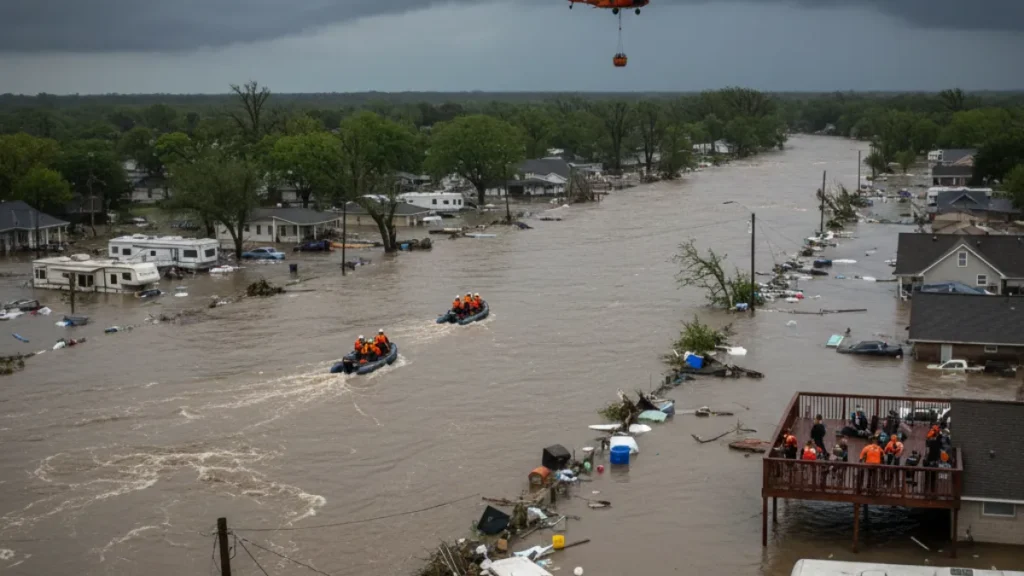
The rains responsible for the flooding began on “July 4, 2025, as a strong low-pressure system moved through the central part of Texas.” The “Hill Country, particularly Kerr County, broke records by accumulating unprecedented amounts of rain within a very short period, resulting in rapid increases in rivers, streams, and even the Guadalupe River.” The rapid flooding caught many residents, as well as those who were camping, by surprise as the floodwaters inundated low-lying areas and campground sites within a matter of hours.
A minimum of 135 deaths has been reported among both children and adults, while dozens are presumed to be missing in the wake of the floods. Hundreds of people have already been rescued in collaborative rescue operations conducted between emergency response personnel and government authorities. The acute flooding has caused numerous property damages and has left thousands homeless due to evacuation.
Among the most affected areas was Camp Mystic. For over a century, this was the oldest and largest Christian summer camp located along the Guadalupe River. However, the water had overwhelmed the infrastructural and activity sites in less than hours, leaving the children stranded and the officials racing for shelter. The intensity of the floods had necessitated rescue efforts.
First Large-Scale Rescue Mission of Petty Officer Ruskan
For Petty Officer Scott Ruskan, the flood in Central Texas was his first major rescue mission. Ruskan graduated from Rider University in 2021 and joined the U.S. Coast Guard, where he was trained as a rescue swimmer. Being a rescue swimmer in the U.S. Coast Guard is a prestigious title that involves elite levels of physical endurance and performance in severe environments. Individuals seeking to become rescue swimmers are required to go through rigorous physical tests in water, water survival skills, and first aid training.
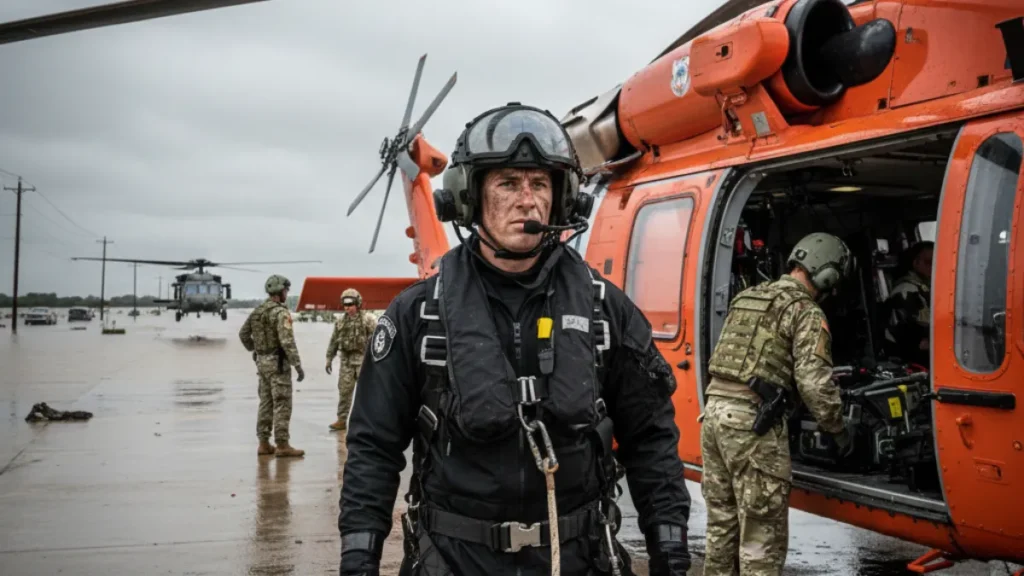
Ruskan was deployed with his helicopter crew, that comprised Lt. Ian Hopper, Lt. Blair Ogujiofor, and Air Mechanic Petty Officer Seth Reeves, from Coast Guard Air Station Corpus Christi, to address the Central Texas disaster. Although the Coast Guard primarily operates within the marine environment, the occurrence of flash floods in the land demanded flexibility and cooperation from the Army and the National Guard, who assisted them with logistical support as well as helicopters that could access the isolated areas.
A Harrowing Arrival at Camp Mystic
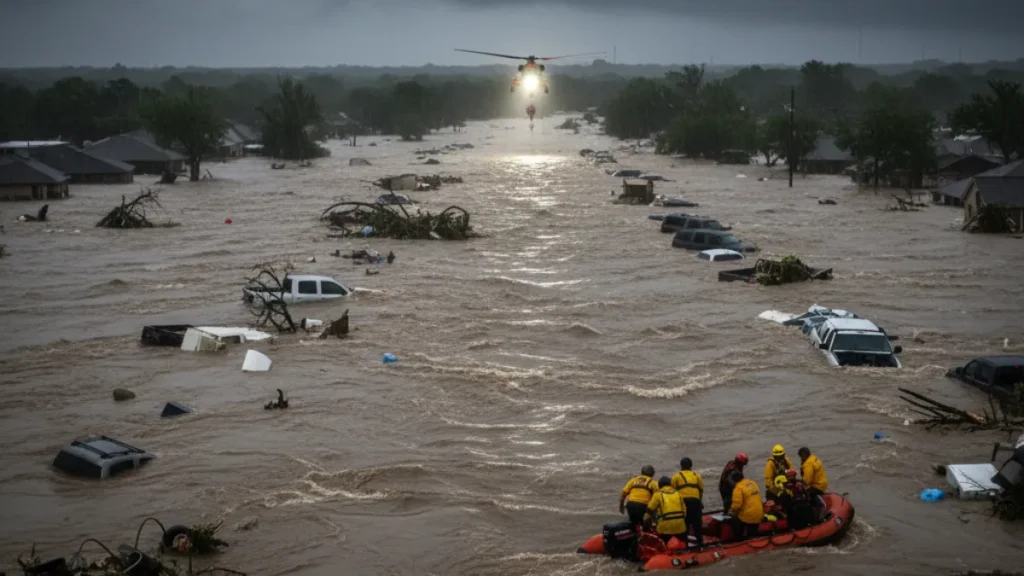
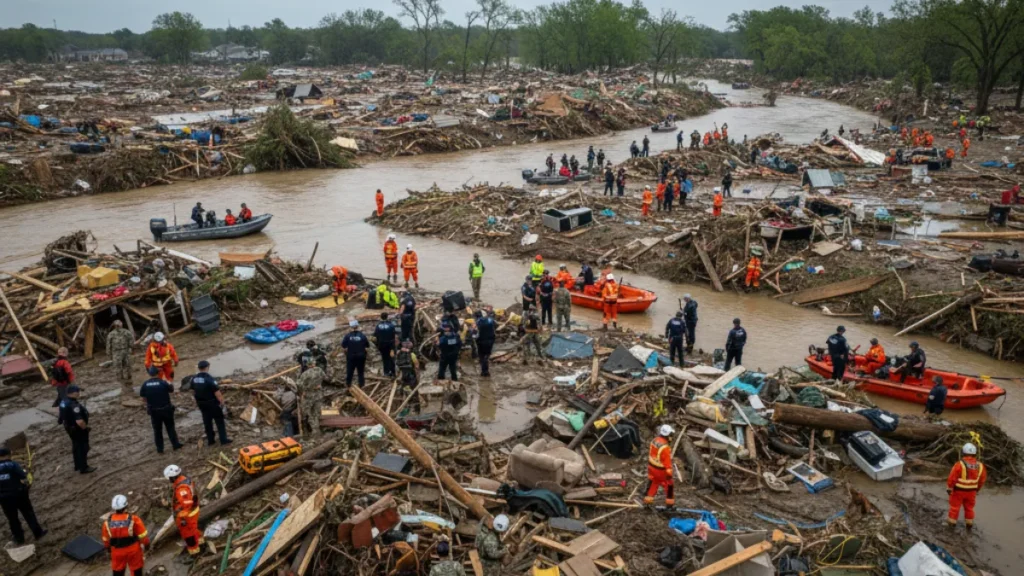
When Ruskan and his team finally reached Kerr County and the surrounding area of Camp Mystic, they found that the region was highly devastated. The roads were under flooding, bridges were broken, and locals were marooned in waters that were waist-deep and higher. Helicopter pilots had very dangerous conditions to fly and land due to strong rains, strong winds, and debris.
From the air, Ruskan saw that there were a huge number of people from the youth camp trapped and unable to escape. Helicopter airlifts were the only alternative if they were to escape the rising floodwaters.
Ruskan’s observations from the helicopter indicated that there were many people from the youth camp stranded. He said that he saw “about 200 kids” shaking in fear and covered in mud. However, it was not possible to rescue them from the land or from the flooded waterways due to the presence of debris.
Taking initiative, Ruskan became the coordinator of on-site triage. He led the campers and staff in directing them to waiting helicopters for transport. His actions were important in preventing panic and maintaining order during a very stressful situation.
Organizing Rescue and Triage Operations during a Crisis Situation
His role also involved more than just the physical evacuation of those in danger. Ruskan managed the triage efforts, identified who should receive priority attention, and dispensed fundamental first aid to those affected by the floods. Many campers were scared, cold, and tired, and Ruskan’s arrival comforted them as helicopters carried them to safety in numerous missions.
He was still in contact with the ground forces as well as the command level, as he was reacting to the conditions that were changed every minute. Over the course of several hours, Ruskan was instrumental in the evacuation of over 165 people, most of whom were children. Further reports have indicated that close to 200 people were rescued.
Recognition by Authorities & Public Acclaim
The uniqueness of Ruskan’s actions made them of great interest to the nation. Kristi Noem, Secretary of the U.S. Department of Homeland Security, commended his actions as having “selfless courage,” citing his crucial work as a triage coordinator. He was declared a hero by all levels of authorities, with his actions being attributed to having reflected the mission and values of the U.S. Coast Guard.
To acknowledge their act of courage, Ruskan and pilot Lt. Hopper were jointly awarded the Distinguished Flying Cross in recognition of their heroism as well as excellent service during rescue missions. The rest of the team was awarded Air Medals in consideration of their service during this endeavor.
Personal Experiences of Survivors
The survivors shared personal experiences regarding rescues by the helicopter crews. Campers shared their experience as they were rescued by helicopter crews, who lifted them with backpacks and pets to safety. A survivor said, “I thought we were stuck there forever, but then a helicopter showed up, and he just kept telling us everything’s going to be okay, and he made sure everyone got on.”
The parents expressed appreciation for the rescue operations. One of the mothers whose daughter was at Camp Mystic said, “I don’t know how to repay him. He saved my daughter’s life. If he and his crew hadn’t been there, I don’t know what would have happened.” Such testimonials highlight the role that Ruskan’s swift thinking and bravery played in this life-threatening incident.
Joint Response and Recovery Activities
apart from these dramatic air rescues, search and rescue efforts continued to involve local police forces, National Guardsmen, volunteers, and federal authorities. Search teams scoured miles of riverbanks, debris fields, and inaccessible terrain to find missing victims. Over 2,000 volunteers participated in rescue efforts alongside professional rescue teams, reflecting a community-level dedication to saving and recovering victims.
The scale of the disaster highlighted the risks posed by flash flooding and the difficulties that have been posed for emergency planners. Although rescue efforts by the airborne services have made headlines across the country, countless others have done the same work with similar risks to their own safety.
Lessons Learnt from the Floods
Specialists in disaster management have stressed that early warning systems, flood preparedness, and good coordination between local, state, and federal authorities are imperative. The incidence that occurred at Camp Mystic and in Kerr County generally illustrates that there is a critical need for better disaster preparedness due to unpredictable and sudden developments of flood conditions.
The flood also highlighted the importance of having rescue teams that can work in different environments. Such teams can easily tackle special situations and are always an asset when it comes to offering aid in times of disasters. For instance, Ruskan is trained in both maritime and inland rescue operations. Such individuals are always valuable when it comes to responding to disasters.
A Hero’s Legacy & Future Service
For Petty Officer Scott Ruskan,”the response in Texas has shown the courage, skill, and devotion of the Coast Guard, and I am proud to be part of it.” While humble about his contributions, the good that Ruskan has done has inspired the nation and restored people’s faith in the Coast Guard’s mission.
While the Kerr County and surrounding areas rebuild from the devastating flood event, the impact of the heroism that has been displayed during the flood is an important reminder of the bravery of the emergency response teams. The selflessness and composure that Ruskan has displayed in the most trying of situations has provided an important role model in rescue efforts.
The incident of this rescue will go down in history as part of Central Texas history, depicting both the risks of natural disasters as well as the courage needed in response.
Conclusion
The flash floods that occurred in July 2025 in Central Texas were characterized by tragedy and loss. However, they also showcased instances of human bravery and resilience. Scott Petty Officer Ruskan and his coastguards demonstrated professionalism and human kindness despite being confronted with overwhelming adversity. Some 165 people were rescued by this coastguard, with estimates giving this figure to be approximately 200. This rescue mission prevented further loss of life. As the communities are left to mourn and rebuild, it will be the heroism of Ruskan and his crew that will be a testament to the strength and resilience that others exhibit when they put their lives on the line to save others under the most perilous conditions.