Rep. Ilhan Omar was attacked with a syringe and unknown liquid during a Minneapolis town hall. A suspect was arrested as police investigate the incident.
A Town Hall That Turned Into a Nightmare
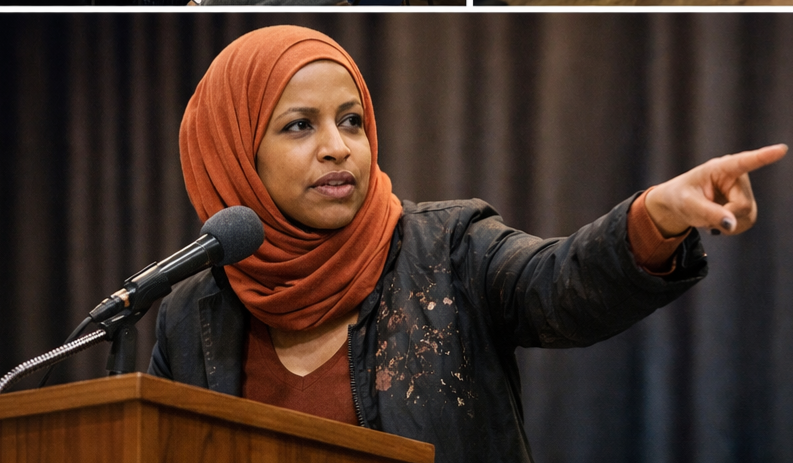
What began as a routine community town hall in North Minneapolis on Tuesday night, January 27, 2026, quickly descended into chaos that few in attendance will ever forget. Residents had gathered inside a packed community center to hear Representative Ilhan Omar discuss immigration, federal law enforcement, and rising concerns about public safety. The atmosphere was intense but orderly—until it wasn’t. In the middle of Omar’s speech, a man seated in the front row suddenly sprang forward, clutching what appeared to be a syringe. Before anyone could react, he splashed an amber-colored liquid onto the congresswoman’s jacket. The sharp smell, described by witnesses as similar to vinegar or chemicals, instantly sent shockwaves through the room. Gasps turned into screams as people jumped from their seats, unsure whether they had just witnessed a chemical attack. For a moment, fear overtook everything—fear for Omar’s life, fear for their own safety, and fear that something far worse might be unfolding. That brief moment of terror reshaped what should have been a simple political gathering into a symbol of America’s growing political volatility.
– Swift Security Response and Arrest
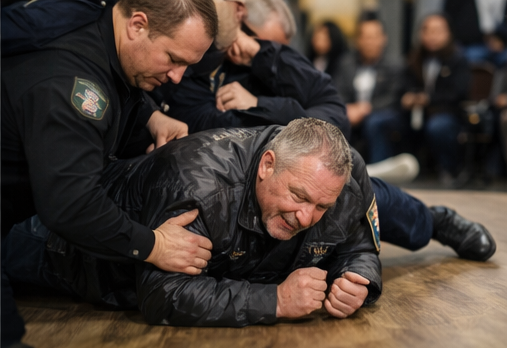
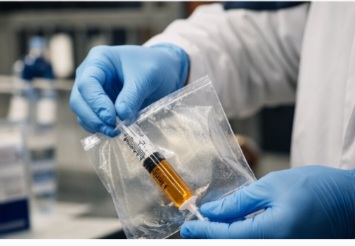
Within seconds, security personnel and local law enforcement rushed toward the stage. The attacker was tackled to the floor near the podium as officers shouted commands and forced him into handcuffs. Minneapolis Police later identified the suspect as 55-year-old Anthony James Kazmierczak. Witnesses say he offered little resistance after being restrained and did not speak as he was escorted out of the building. The unknown nature of the liquid raised immediate alarm among authorities, prompting evacuation procedures for the immediate area around the stage. First responders treated the incident as a potential hazardous materials situation until proven otherwise. Omar was quickly guided aside for medical evaluation while forensic teams were called in to secure the syringe and collect samples. Kazmierczak was later booked into the Hennepin County Jail on charges of third-degree assault, with additional charges possible pending laboratory results. While no one else was injured, the psychological impact on those present was profound. Parents shielded their children, elderly residents clutched one another, and volunteers struggled to maintain order as the crowd tried to process what had just happened.
– Omar’s Defiant Return to the Podium
What happened next became the most talked-about moment of the night. After briefly stepping away to wipe the liquid from her jacket and confirm she was not injured, Representative Omar walked back to the podium. The room fell silent. Her voice, steady and resolute, cut through the lingering fear. She made it clear she would not allow intimidation to derail her work. Her blunt words drew both gasps and applause, but more importantly, they signaled determination. Omar reminded the crowd that she has survived war, displacement, and countless threats throughout her life and political career. Compared to that, she said, one attacker would not silence her. The audience rose to their feet in a standing ovation that lasted nearly a minute. Many attendees later described the moment as emotional, even surreal. In a room where fear had just dominated, Omar’s decision to continue speaking restored a sense of purpose. It was no longer just a town hall—it had become a powerful statement about refusing to surrender to political violence.
– Political Tensions Boiling Over
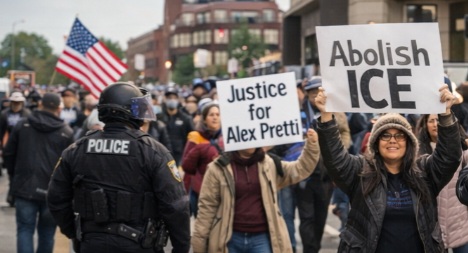
The attack did not occur in a vacuum. Minnesota, like much of the country, has been grappling with escalating tensions over immigration enforcement and federal policing. Moments before the incident, Omar had criticized U.S. Immigration and Customs Enforcement and called for the resignation of Homeland Security Secretary Kristi Noem. Her remarks came amid widespread protests following the recent fatal shooting of intensive care nurse Alex Pretti during a federal operation. Demonstrations across Minneapolis and neighboring cities have drawn thousands, with calls for accountability and systemic reform. The town hall had already attracted strong opinions on both sides of the issue, making it a flashpoint for emotion and anger. Analysts say the assault reflects a broader national trend in which political disagreements increasingly spill into physical confrontations. For many Minnesotans, the attack felt like another chapter in a painful pattern—one where words are no longer enough, and some individuals turn to violence to express their grievances.
– Condemnation Across Party Lines
Reaction to the attack was swift and widespread. Minnesota Governor Tim Walz condemned the assault, calling it a direct consequence of “toxic political rhetoric” and urging leaders to lower the temperature of public discourse. Several members of Congress, including those who frequently clash with Omar on policy, also spoke out. Republican Representative Nancy Mace wrote on social media that while she strongly disagrees with Omar’s views, violence against elected officials is unacceptable under any circumstances. Civil rights organizations echoed that sentiment, warning that normalizing attacks on public servants threatens the foundation of democracy. Though the White House did not immediately release a statement, senior administration officials privately expressed concern over the growing number of threats and assaults targeting lawmakers. For many Americans, the bipartisan condemnation offered a rare moment of unity in an otherwise fractured political landscape.
– Investigation Into the Substance and Suspect
As of Wednesday morning, forensic laboratories are still analyzing the amber-colored liquid recovered from the syringe. Preliminary assessments suggest it is likely non-toxic, but authorities have not yet confirmed its composition. Omar underwent medical screening as a precaution and later stated she felt shaken but unharmed. Investigators are also examining Kazmierczak’s background, including online activity that appears to show hostility toward immigration policies and federal officials. Law enforcement has not indicated whether he acted alone or if he had ties to any organized group. Prosecutors are expected to review the case once lab results are finalized, which could lead to more serious charges. Security officials nationwide are closely watching the case, viewing it as another warning sign that public events involving elected leaders are increasingly vulnerable.
A Syraphmbol of Resilience in a Divided Era
By the end of the night, as Omar exited the building surrounded by supporters and security, the mood had shifted from terror to resolve. Many attendees described feeling proud—not just of their representative, but of the community that refused to let violence define them. The image of Omar returning to the podium is already being shared widely as a symbol of resilience in an era marked by division and fear. While serious questions remain about how to better protect public officials and restore civility, one thing is clear: intimidation did not succeed in Minneapolis that night. Instead, it strengthened the message that democracy depends on participation, even when it becomes dangerous. For Omar and her constituents, the town hall will be remembered not only for the attack—but for the courage that followed.