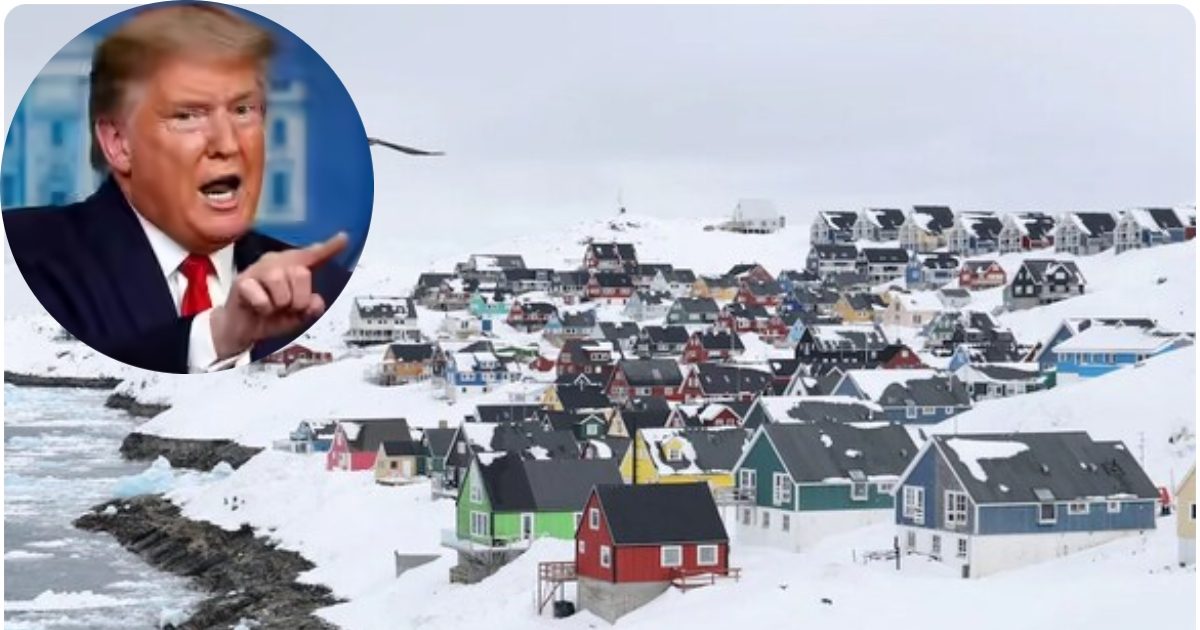
Washington. US President Donald Trump’s stance on Greenland may seem to be changing daily – sometimes threatening to take over by force, sometimes refusing… but one thing is very clear: America is in no mood to leave this Arctic island on the strategic front. Greenland has now become an important center of Washington’s global power politics. It was not without reason that the news spread just hours after Trump’s speech at the Davos summit that the US and Denmark were in secret talks regarding new US military bases in Greenland. Even if there was no official confirmation, these speculations made it clear that what once seemed like Trump’s whim or political drama, has now turned into a solid geopolitical strategy.
In fact, Greenland is no longer just an ice-covered island, but has become the junction point of the Arctic, space and global military balance. The rapidly warming Arctic is opening up new sea routes, while space is becoming increasingly militarized. Between these two fronts, Greenland can provide a decisive advantage for America. Trump’s proposal to ‘buy’ Greenland in 2019 may have been mocked by the world, but behind that joke was America’s deep restlessness, restlessness to maintain dominance from the Western Hemisphere to space.
At the center of this strategy is the Pitufic Space Base (formerly Thule Air Base) – transformed from a Cold War outpost to a key hub of the US Space Force. This base has become the eyes and ears of America in missile detection, space surveillance and global military warning system. Trump has repeatedly counted it among America’s most important assets and has talked about adopting ‘every option’ to strengthen it.
This is not just a game of military security. The rocket launch race of private space companies has made Greenland even more valuable. This high-latitude area is ideal for launching satellites into polar and sun-synchronous orbits. Amidst the shortage of launch sites in the world and increasing competition, Greenland has suddenly become the key to the space economy.
But the problem is bigger than this. All this is happening at a time when the rules-based international system seems to be crumbling. The Outer Space Treaty of 1967 is proving inadequate for today’s reality… It was neither prepared for the rush of private satellites, nor for lunar mining, nor for the open race for dominance in space. The situation today is that ground bases like Thule/Pitufik are deciding who will have control over space. The superpowers have now started considering space not as a common heritage but as a strategic battlefield.
Greenland is the biggest warning sign of this changing global balance. If America further strengthens its hold here, its dominance in space surveillance will create an imbalance. This raises questions – will space really be a common domain for all? Or will Earth’s politics take the form of direct conflict in space? Institutions like the Arctic Council are already paralyzed by geopolitical tensions. The UN space committees are falling behind in technical and strategic progress. Many countries are now focusing more on resources and power than collective governance.
This situation is a double-edged sword for the people of Greenland. Strategic importance gives them strength, but also makes them vulnerable amid the clash of global powers. As the ice melts, the island will become even more important – and also more controversial. What was once a political curiosity is now sending a clear signal: the Arctic has become the front line of space power. And Greenland – no longer just an icy island, but a gateway to global power struggles.