USA Politics

USA Politics

Trump Moves to Ease Federal Marijuana Rules with New Executive Order

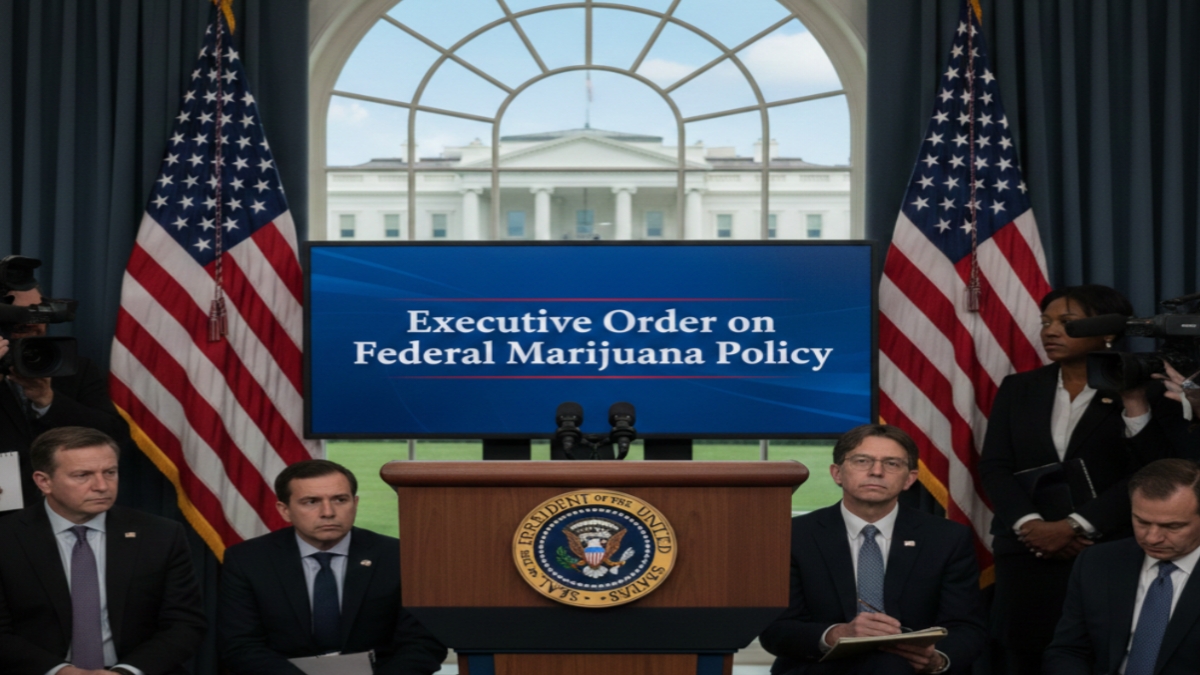
The Trump administration has issued an executive order to ease federal marijuana restrictions, directing agencies to review cannabis classification and enforcement policies, aligning federal rules more closely with state laws.

Washington, D.C. | Dec 19, 2025 —
In a surprising turnabout in drug policy, the Trump administration announced Thursday that an executive order would be issued that seeks to relax the existing prohibition on marijuana under the federal government. This executive order that seeks to shift how marijuana is categorized by the federal government has made headlines as one of the most popular political stories in the U.S. today.
“The executive order calls on the Department of Justice and the Department of Health and Human Services to initiate the process that could lead to the rescheduling of marijuana. It does not legalize marijuana, but it’s the most significant move on the matter in decades and could mark a shift in federal policy consistent with legalization that’s taken place at the state level.”
The news was announced by the White House amid rumors of changes regarding drug enforcement priorities within the government. The decision was described by administration officials as a way of modernizing outdated policies, ensuring that unnecessary crimes are no longer penalized, and aligning the federal law with public opinion and state laws.

A Major Shift in Federal Policy

At the current level of federal law, marijuana is scheduled alongside drugs that have been deemed to have no currently accepted medical use and to have high potential for abuse. This scheduling has been challenged by legislators, medical professionals, and activist groups who feel that the drug is not properly scheduled relative to current studies and uses.
The new executive order calls on government agencies to re-categorize marijuana using modern medical and scientific evidence. Sources clarified that the whole process of reviewing marijuana’s category would go through proper channels and involve health officials and representatives from national security agencies.

Although the Obama administration has not issued a statement concerning the outright reclassification of marijuana, this executive order is definitely paving the way for loosened federal regulations. If it does become reclassified, marijuana will have access to fewer regulations.

White House Rationale

In a statement, White House officials explain, “This order expresses an commitment to common-sense reform that takes into account the changes that are already occurring in the United States.”

“The states have now gotten out ahead of the federal law, the vote of the people has been made, and its time that the federal law caught up,” said an administration official. “This executive order is the start of that process,” he said.
Former Republican presidential hopeful Donald Trump has shown mixed stances in the past regarding marijuana, sometimes supporting states’ rights to legalize the drug and, at other times, insisting that the country needs a crime-fighting stance. This recent development tries to walk this tight rope to some extent.

Effects on States and Businesses

The new executive order is believed to have far-reaching effects on those states that have already legalized the use of marijuana for medicinal as well as recreational purposes. As things stand today, more than half of the states in the US have already made laws that allow the use of cannabis.
For the business community, the federal regulations have presented significant challenges such as a lack of access to the banking system, increased taxes, and uncertainty. According to industry analysts, the slightest regulation by the federal government can remove such challenges and induce stability within the expanding cannabis market.
Small business owners and investors acted swiftly in response to the announcement, with more trades involving cannabis-related stocks being recorded after the development. Industry organizations have welcomed the move as directed by the order, although more action is required.

Criminal Justice Implications

Proponents of this executive order believe that this could potentially lead to a decrease in marijuana prosecutions by the federal government and could eliminate this discrepancy. For many years, this disparate impact has been cited as a reason to criticize this regulation.
While the order does not cover the automatic expungement of previous offenses, it directs the enforcement agencies of the federal government to survey current practices and offer recommendations for change consistent with the new direction.

The civil rights community welcomed this development but called on President Trump to take this momentum further by supporting efforts to expunge records and reform sentencing laws through Congress.

Public Opinion and Political Reaction

Public opinion regarding marijuana has undergone a significant transformation in recent years. According to national opinion polls, a majority of Americans are in favor of or may consider decriminalizing or legalizing marijuana, especially for medicinal purposes. Younger generation Americans have been very vocal about this.

Reactions among politicians have been mixed but passionate. While some top Republicans have welcomed an emphasis on less government intervention, others have denounced the action as undermined drug law enforcement. Most Democrats welcome the action but feel that it will not address the problems alone.
Some members of Congress called again for full legislative action to change the status of marijuana under the law.

Perspectives in Law Enforcement and Health

A cautious approach was made to law enforcement agencies, recognizing a need to establish proper guidelines and direction accordingly. Various individuals were expressed over driving while impaired as well as public safety, while others acknowledged a recognition of a shift in priorities to focus upon severe offenses.
Public health professionals pointed out that regulation, research, and education were important issues that were brought out because, for a long period, federal laws had restricted scientific research on marijuana.
The fact that the executive order emphasized research review was well-received among health practitioners, as improved information in health matters is vital for health policy rationalization.

a. Economic Consider

The growth of the cannabis industry has been very rapid in states that allow the legalization of cannabis, creating billions of dollars of revenue and jobs for hundreds of thousands of individuals. Activists pushing for a reform of the law also believe that the economy can get a further boost.
According to economists, the effect of the classification change may lower the cost of doing business, promote investment, and even provide the opportunity for the conduct of interstate business. Nonetheless, fundamental shifts will require the intervention of the U.S. Congress.
To date, the executive order is believed to represent a market and regulator signal that wider reform may be forthcoming.

What the EO Is Doing — And Is Not Doing

The executive order signed by Obama focused mainly on
Although the news triggered public concern, the officials with the Administration made clear that the new rule did not legalize the use of marijuana on a federal level or overturn state laws forbidding its use.
The order, rather:

Launches a comprehensive federal reclassification investigation into marijuana
Requires agencies to coordinate enforcement priorities with current guidance
It promotes wider medical and scientific research
Indicators: less priority placed upon low-level federal marijuana offenses
Indicators of

Any further changes in the classification would need completion of the regulatory process, which may require several months.

Next Steps Within the Regulatory Process

The federal agencies are expected to start the process right away. Scientific information and expert opinions would have to be gathered for the proposal. This would involve administrative procedures that might face legal disputes. According to observers, what ultimately happens will depend on how each agency decides to weigh existing evidence. Congressional activity may also affect the final outcome, especially in the event that lawmakers proceed with bills concerning marijuana reforms. During this time, nations and companies are waiting to hear what will happen to changes in federal enforcement actions during this review period.

A Broader Political Moment

The executive order is coming at a time when marijuana has become a mainstream political issue and is no longer at the fringes. When voters on both sides express their desire for a change in marijuana laws, this makes federal action imperative. Experts believe that the development may have repercussions outside the realm of drug regulation policy, as it may influence negotiations regarding matters of criminal justice, health policy, and state rights. In addition, it may also influence political messaging regarding upcoming elections.

Conclusion

The Trump administration’s signing of an executive order to ease federal rules regarding marijuana use is a significant turning point in American drug policy. Although this policy change is limited, it also reflects shifting views of marijuana use as well as a push to align federal policy with state policy regarding this drug. As this regulatory process continues, just how this executive order is going to play out will still need to come to light. But it has certainly ignited a lot of discussion across this country, bringing cannabis reform right back into the forefront of political discussion in America.

Sources/References:-

Trump Orders Reclassification of Marijuana Under Federal Law
https://www.pbs.org/newshour/health/watch-trump-orders-reclassification-of-marijuana-downgrading-its-drug-schedule

Trump’s Executive Order Could Reclassify Marijuana as Less Dangerous Drug
https://apnews.com/article/ab2aec5865dd140bac00b7cef5de89c5

Trump Signs Order to Reclassify Marijuana as Schedule III Drug
https://www.cbsnews.com/news/trump-order-reclassifying-marijuana-schedule-iii-drug-expected/

Trump Signs Executive Order Easing Marijuana Restrictions
https://abcnews.go.com/US/trump-signs-executive-order-easing-marijuana-restrictions-reclassifying/story?id=128526817

Trump Orders Biggest Federal Shift on Marijuana in Decades
https://www.axios.com/2025/12/18/trump-marijuana-reclassification-executive-order

UncategorizedUSA Politics

Trump Administration Unveils Major Federal Effort to Restrict Gender-Affirming Care for Minors

The Trump administration has unveiled a major federal initiative aimed at limiting gender-affirming medical care for minors, proposing restrictions that could affect funding, healthcare access, and treatment options nationwide.

Washington, D.C. | December 19, 2025 Proposed Federal Rule Signals Major Policy Shift
Proposed regulatory changes that would significantly impact the accessibility of gender-affirming health care for minors have been introduced by the U.S. Department of Health and Human Services. The initiative represents one of the most sweeping federal regulatory efforts to curtail healthcare affecting the transgender community and continues the Trump administration’s broader policy direction on the issue.

Federal Funding at the Center of the Proposal
At the core of the proposal is a plan to deny federal healthcare funding to hospitals and providers that offer gender-affirming care to patients under the age of 18. This would effectively prohibit the use of federal funds for puberty blockers, hormone therapy, and related medical interventions, even in states where such treatments are currently permitted.

Administration Frames Move as Child Protection
Health and Human Services Secretary Robert F. Kennedy Jr. introduced the proposal at a press briefing, stating that the administration’s position is focused on protecting children. According to Kennedy Jr., gender-affirming medical procedures for minors are harmful and should not be considered legitimate healthcare, a claim strongly disputed by medical experts.

A Policy With Nationwide Consequences

Medicaid-Dependent States Face Major Disruptions
The proposed rules could affect nearly two dozen states where Medicaid currently covers gender-affirming care for minors. While some states already restrict such procedures, others allow them under established medical guidelines. Because Medicare and Medicaid funding is essential for hospital operations, the rule could effectively eliminate these services nationwide.

Hospitals Warn of Financial Fallout
Most U.S. hospitals rely heavily on Medicare and Medicaid funding not only for children but also for elderly, disabled, and low-income patients. Losing access to these funds could make it financially impossible for hospitals to continue operating, forcing even supportive institutions to halt gender-affirming care.

Children’s Insurance Programs Also Impacted
The proposed restrictions would extend to the State Children’s Health Insurance Program (SCHIP), further limiting care options for transgender youth from low-income families and reducing already scarce medical support avenues.

Regulations Still in Draft Stage

Rule-Making Process and Legal Challenges Ahead
Although wide-reaching, the proposed regulations are not yet final. Federal agencies must complete a formal rule-making process that includes drafting detailed provisions and reviewing public comments. This process may take months and is expected to face strong legal challenges from advocacy groups, medical associations, and civil rights organizations.

Immediate Chilling Effect Already Reported
Healthcare professionals warn that even the proposal itself is causing immediate consequences. Some hospitals have already reduced or discontinued gender-affirming care for minors due to fear of regulatory penalties and future liability risks.

Medical Organizations Push Back

Major Medical Groups Oppose the Plan
The administration’s stance directly contradicts guidance from leading medical organizations, including the American Medical Association and the American Academy of Pediatrics. These groups support gender-affirming care for minors when medically appropriate and carefully supervised.

How Gender-Affirming Care Is Typically Provided
Doctors emphasize that care is delivered through a cautious, step-by-step process involving mental health evaluations and clinical oversight. Treatment may begin with social transitions, followed by puberty blockers, and in rare cases, hormone therapy or surgery. Medical professionals argue these approaches are evidence-based and improve mental health outcomes.

Civil Rights and Disability Protections Under Review

Gender Dysphoria Removed From Disability Protections
Beyond funding cuts, HHS proposes removing gender dysphoria from the legal definition of disability. Since gender dysphoria is a clinically recognized medical condition, critics argue this change could strip transgender individuals of key civil rights protections.

Concerns Over Increased Discrimination
Advocates warn that redefining disability protections could make it easier for transgender individuals to face discrimination in healthcare, education, and employment, intensifying ongoing civil rights debates.

Families Share Growing Fear and Uncertainty

Parents Fear Loss of Care Access
Advocates for transgender youth warn the regulations could devastate families. Parents report rising fear and uncertainty, even in states historically supportive of LGBTQ+ families.

Financial Barriers Leave Few Alternatives
While private hospitals not dependent on federal funding may still offer care, these services are often prohibitively expensive. Advocacy groups warn that low-income families would be disproportionately affected.

Administration Defends Its Position

Officials Cite Oversight and Public Support
Trump administration officials argue federal intervention is necessary in what they consider controversial medical practices involving children. CMS Administrator Dr. Mehmet Oz has stated concerns over treatment standards, claiming minors require guidance rather than medical intervention.

Conservative Groups Applaud the Move
Conservative activists and detransition advocates have welcomed the proposal, viewing it as a step toward protecting children and acknowledging voices they believe have been previously ignored.

Legislative Efforts Reinforce Federal Push

Congressional Bills Mirror Regulatory Goals
The proposed regulations align with broader Republican legislative efforts in Congress aimed at restricting gender-affirming care, banning transgender participation in women’s sports, and limiting federal funding for transition-related healthcare.

State Laws Gain Momentum
At least 27 states have enacted laws restricting gender-affirming care for minors. A recent Supreme Court ruling upholding Tennessee’s law has strengthened the likelihood that similar statutes will stand elsewhere.

Critics Warn of Long-Term Consequences

Healthcare Independence at Risk
Medical professionals and civil rights experts warn that withholding funding based on specific treatments sets a dangerous precedent for federal control over medical decision-making.

Children’s Advocacy Groups Raise Alarm
Children’s organizations argue that denying care does not eliminate need and instead places vulnerable youth at greater risk. They urge HHS to reconsider before finalizing the policy.

What Happens Next

Public Comment and Legal Battles Loom
The proposed regulations now move into the federal review process, where public input will play a key role. Legal challenges are expected if enforcement proceeds.

A Deeply Polarizing National Debate Continues
As uncertainty grows for families, hospitals, and caregivers, transgender healthcare for minors remains one of the most divisive issues in American politics, reflecting broader ideological conflicts shaping national policy.

USA Politics

James Woods Criticizes Gavin Newsom’s National Rise, Citing California Wildfire Failures

Actor James Woods criticizes Gov. Gavin Newsom’s growing national profile, citing California wildfire mismanagement and governance failures as warning signs.

Max Bacall | Fox News | Tues., Dec. 16, 2025 | 5:22 AM GMT+

Actor James Woods launched an attack against California Gov. Gavin Newsom that was scathing on Sunday, asserting that while Newsom appears to be gaining momentum for what was seen as an impending run for president, this momentum has come about based upon a thoroughly “atrocious” record in California that Newsom has compiled. Appearing on Fox News, Woods suggested that while Newsom has managed to capitalize on the lack of leadership from the Democratic Party, his moment in the sun will soon come to an end once his record receives closer examination.
When speaking with One Nation with Brian Kilmeade, Woods stated that “the presence of Newsom in the political limelight has more to do with a void in leadership in the Democratic Party” than his own ability as a politician, because with a national leader, Newsom “would not be at center stage with all of the problems that are occurring in California.”

Remedy for a “Power Vacuum” in Democratic Leadership

Woods is very candid in his appraisal of the current crop of national-level leaders within the Democratic Party. He writes of several key Democrats who are regularly touted in speculation about the future leadership of the party and says that they have not been able to gain the confidence of the public.
“They have no leader,” Woods told the interviewer. “I mean, Kamala Harris, Alexandria Ocasio-Cortez, all these people—they’re, I hate to use the expression because it’s used so often, but they’re a clown show. And nature abhors a vacuum.”
In Woods’ opinion, “’Newsom has moved to fill this void, positioning himself as a smooth, media-savvy politician who is able to lead the Democratic cause on a national level.” But, he cautioned, “Visibility is not necessarily efficacy, and it is far too soon to tell what will prove to be popular in a very short period of time.”
“This slick grifter, Gavin Newsom, whose record is atrocious, but people don’t pay a lot of attention to that fact—he’s filling in the slot, basically,” Woods went on. “But as fruit farmers always say, early ripe, early rotten.”

National image vs. state-level reality

Newsom’s public profile has grown steadily in the past few years due to his highly publicized events and comments on national issues. According to his supporters, it is his crisis-leading skills, his boldness to differ with his counterparts in the Republican party, and the capacity to articulate the policy positions of the Democrats that qualify Newsom to run for presidency.
Woods, however, claimed that this view of the national image conceals what he termed as “governance failure at home.” He asserted that when the people outside of California become more aware of the problems facing the state, from the homeless crisis to crime rates to natural disasters and infrastructure issues caused by wildfires, the appeal of the governor will wane.

“He looks good on television, he sounds good giving speeches, but being a governor is based on results,” Woods said. “And California’s results speak for themselves.”

Wildfires and Personal Experience


A great deal of Woods’ criticism was aimed at the situation concerning wildfires in California, an issue which has entered headlines repeatedly and caused hardship for residents there. Woods’ comments were made not solely as an analyst of politics, but as someone who has known the danger of wildfires himself.
Woods told of how fires swept through his neighborhood, damaging several homes and threatening to reach his own. He attributes the fact that his house was spared from destruction to the provision of guidelines offered by the fire department on how to terrrace his hillside.
“Our house did survive—by the grace of God, and because we followed fire department guidelines,” Woods stated. “The house next to us didn’t do it—burned down.”

In the view of Woods, the rule was evident within his neighborhood because properties that did not remove the brush and defensible space were leveled while the others followed the guidelines and stood a better chance of surviving.

“He said the houses on his street that didn’t have their brush cut back burned down,” Woods emphasized, noting that words are less important than enforcement in combating and mitigating the destruction from wildfires.

Allegations of State Neglect

In addition to placing the onus on personal responsibility, Woods put a lot of fault on the state government as a result of inaction on land management that he asserts directly led to the fires. This was in reference to a land parcel adjacent to the wildfire site that had been under the control of the state government and had not been maintained in decades.

“They haven’t cut that brush since the 1978 fire,” Woods explained. “They can’t cut it because that piece of land is owned by the state. And they are protecting a plant that is literally a weed. And that is how the fire started in our neighborhood.”

Woods suggested that government policies and the efficiency of the bureaucracy have impeded operational brush clearance and fuel reduction on these lands, making them a dangerous fuel just waiting to be ignited. He attributed these policies to misguided administrative goals in the Newsom regime.
“It’s very simple,” Woods said. “If you don’t manage the land, nature will do it for you—with fire.”

Climate Change and Policy Choices

In 2007


Although Newsom and other state leaders have frequently cited climate change as a factor in the increasing intensity of wildfires in California, Woods has dismissed the theory as inadequate and somewhat politicized. The presenter insisted that, despite the possible influence of the weather, the destruction caused is mainly the result of failed policies.
“This had nothing to do with climate change,” Woods declared. “This was an issue of mismanagement. It was an issue of not clearing brush, enforcing regulations, and in some cases letting ideology trump common sense.”
Woods’ remarks reflect the larger conversation that is taking place in the state of California and the country at large, where there is belief that forest management is no longer being done but rather that the environment is being protected at the expense of forest management. On the other hand, proponents of the current state of affairs assert that drought and heat brought about by climate change are responsible for the intensity of fires regardless of the level of land management that is taking place.

Political Connotations for After 2028

Speculation about a potential run by Newsom has intensified, given his ongoing funds-raising and campaigning on behalf of other Democrats. Although Newsom has yet to make a declaration regarding his potential future plans, it is a common perception that Newsom is preparing for a run.
Woods believed that these aspirations are both premature and likely destined for failure once his credentials are put under national examination.
“People on the other side of California aren’t living with the situation on a daily basis,” said Woods. “But once they begin to delve into the crime, the fires, the homelessness, the cost of living, this image isn’t going to hold.”

As Woods stated, a voter base in the Democratic Party may be attracted to the charisma and communication skills exhibited by Newsom, particularly within a crowded presidential primary field. He anticipated that focus on the issues in California would lead to a loss of support over time.

A Broader Conservative Critique

This is consistent with a larger theme that has evolved among conservatives in their criticism of the Democratic Party government in “deep blue states.” The Republican Party has often referred to California as a “case study” where “progressivism has failed.”
“Case Study: California and the Flawed Policies of Progressivism” is a pamphlet by the Republican State

In any case, the actor has long been a vocal conservative presence in the film industry and a critic of Governor Newsom in particular within the context of a larger attempt by conservatives to make California a warning story rather than a model. Nevertheless, Newsom’s allies would argue that the issues faced by the state are complex in nature and have arisen primarily due to years of growth and inequities. They would also say that Newsom has made significant progress in several sectors.

Looking Ahead This is a national political landscape that will increasingly place Gavin Newsom and people like him under intense pressure from all sides. The bottom line for people like James Woods is that charisma alone will simply not be sufficient.
“Early ripe, early rotten,” he said, repeating the words he once used to categorize Newsom’s ascendency, “That’s what you get when you confuse image with substance.”
Whether the voting public will ultimately support or reject Woods’ views remains to be seen. However, as the rumors of the coming presidential election period continue to build, the debate over leadership, qualifications, and record—particularly in as powerful a state as California—can only grow.

USA Politics

Donald Trump Amps Up the 2025 Campaign Amid Court Battles and Nationwide Rallies

President Donald Trump dominates the 2025 political landscape with large rallies, legal challenges, and strong Republican support. Experts analyze his influence on the election.

Washington, D.C., December 15, 2025 — For the first time in a generation, former President Donald Trump again dominates the news in American politics as his 2025 campaign heats up from sea to shining sea. From high-energy rallies across key battleground states to ongoing legal challenges, Trump remains a force in shaping political conversation and commanding attention from both supporters and critics alike.

Trump Rallies Draw in Huge Crowds

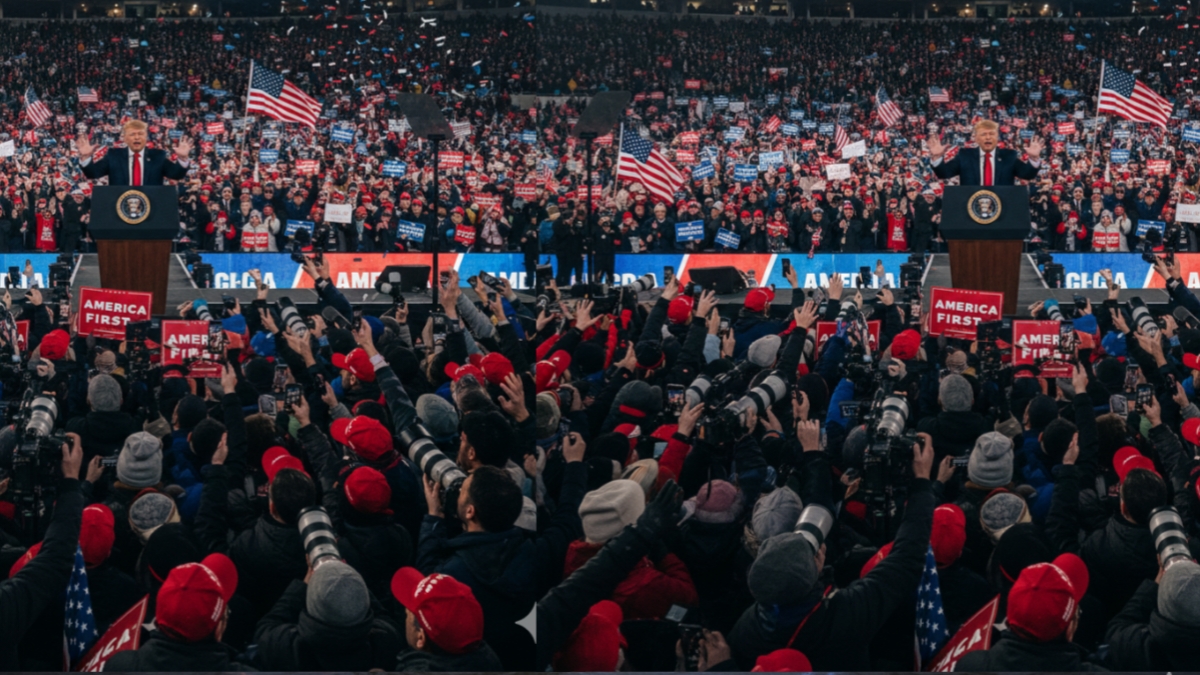
In recent weeks, Trump has made excursions to critical states such as Pennsylvania, Arizona, and Florida, conducting rallies where thousands attend. Supporters wave flags and hold signs reading “America First”, as he addresses border security, inflation, and public safety.

Organizers say interest consistently outpaces expectations, demonstrating the former president’s continuing influence within the Republican Party. Analysts note that Trump’s rallies serve not just as voter mobilization events but as media spectacles, often overshadowing competing Republican and Democratic campaigns.

Strong Support from Republican Base

Recent polling shows Trump as the clear leader among Republican voters. Surveys indicate an overwhelming number of GOP members prefer Trump over any other potential 2025 candidate. Top issues for his supporters include immigration policy, economic growth, and law enforcement initiatives.

Party strategists highlight Trump’s unique combination of charisma, media presence, and grassroots support. His frequent statements and appearances ensure he remains at the center of the Republican Party, making it difficult for other contenders to gain momentum leading up to the primaries.

Legal Fights as a Campaign Weapon

Ongoing legal challenges, including federal investigations, have become a linchpin of Trump’s political narrative. Rather than weakening his campaign, these cases are framed as politically motivated attacks, energizing his base.

Major legal developments have reportedly driven surges in campaign fundraising, signaling strong grassroots support. Trump’s team uses these cases to emphasize themes of “establishment bias” and media unfairness, mobilizing loyal voters.

Democratic leaders contend these legal matters raise questions about governance and democratic integrity. While the White House has stayed largely silent, Democratic campaigns juxtapose Trump’s controversies with alternative policy proposals.

Polarization of the Electorate

Analysts note that Trump’s return to politics has intensified polarization among American voters. Enthusiasm, both for and against him, appears stronger than in past election cycles.

This heightened attention could significantly affect turnout in battleground states, where elections are often decided by narrow margins. Independent and moderate voters remain crucial, with concerns over stability, economic growth, and international relations shaping their decisions. The response of this group could define the 2025 election.

Media Coverage and Messaging Strategy

Trump’s media strategy remains a cornerstone of his campaign. Every rally, interview, and court appearance becomes a headline, dominating television, digital platforms, and social media.

Experts say this media dominance allows Trump to control the national narrative, keeping policies and legal challenges in public focus. While beneficial to the Republican Party, overexposure could alienate undecided voters. To his base, frequent appearances reinforce loyalty and engagement.

Influencing National Policy Debates

Trump’s campaign has influenced national policy discussions, including immigration enforcement, economic reform, and crime reduction, even as lawmakers address other pressing issues.

By shaping public discourse, Trump pressures politicians to align with his positions. Legal accountability and federal investigations have become central election topics, framed by Trump as evidence of bias against him.

Grassroots Support and Campaign Organization

Trump relies heavily on grassroots mobilization. In swing states, local organizers coordinate volunteers, door-to-door outreach, and digital campaigns to maximize voter turnout. Fundraising from small donors indicates enduring enthusiasm among supporters.

Campaign officials emphasize that a strong ground game in key states is essential for maintaining momentum through primaries and into the general election. By combining rallies with online engagement, Trump aims to maintain visibility and participation.

Key Battleground States in Focus

Swing states critical to Trump’s campaign include Pennsylvania, Arizona, Florida, Michigan, and Wisconsin. Events are strategically scheduled to maximize media coverage and mobilize supporters ahead of early voting and primaries.

Analysts note that small shifts in turnout in these states could impact overall election results, underscoring the importance of targeted campaign efforts.

Looking Ahead: The Path to the 2025 Election

In the coming weeks, Trump is expected to announce additional policy proposals and expand ground operations in swing states. With primaries, debates, and legal rulings approaching, his influence on the election remains substantial.

Observers agree that Trump’s candidacy guarantees a highly contested race. Whether his campaign leads to a Republican resurgence or further polarizes the electorate, Trump will remain a central figure shaping the 2025 election.

Conclusion

Trump’s rallies, legal battles, and media strategy collectively ensure he remains at the center of American politics. Strong grassroots support, continued media coverage, and his ability to frame key issues around himself have positioned him to dominate the next election cycle. As the nation watches, both supporters and critics will play pivotal roles in determining the outcome of this consequential political year.

USA Politics

High Prices Cloud the Holidays as Americans Struggle Despite White House Economic Optimism

Rising grocery, electricity, and gift prices are straining U.S. families this holiday season, even as the White House highlights economic strength. Families are feeling the weight of increased costs, with many reporting that their holiday budgets are tighter than ever. Experts analyze the implications of these economic trends, tying them to the larger context of the U.S. economy. This is a critical time for US economy news.

Washington, D.C. | December 12, 2025 | 9:00 a.m. ET

Rising Costs Overshadow the Holiday Spirit

As families shift their priorities, many are turning to budget-friendly alternatives for holiday celebrations. For example, potluck gatherings have become increasingly popular, as they allow families to share the cost of meals while still enjoying the festive spirit together. Additionally, crafting homemade gifts or experiences rather than expensive store-bought items has gained traction, emphasizing the value of thoughtfulness over monetary spending.

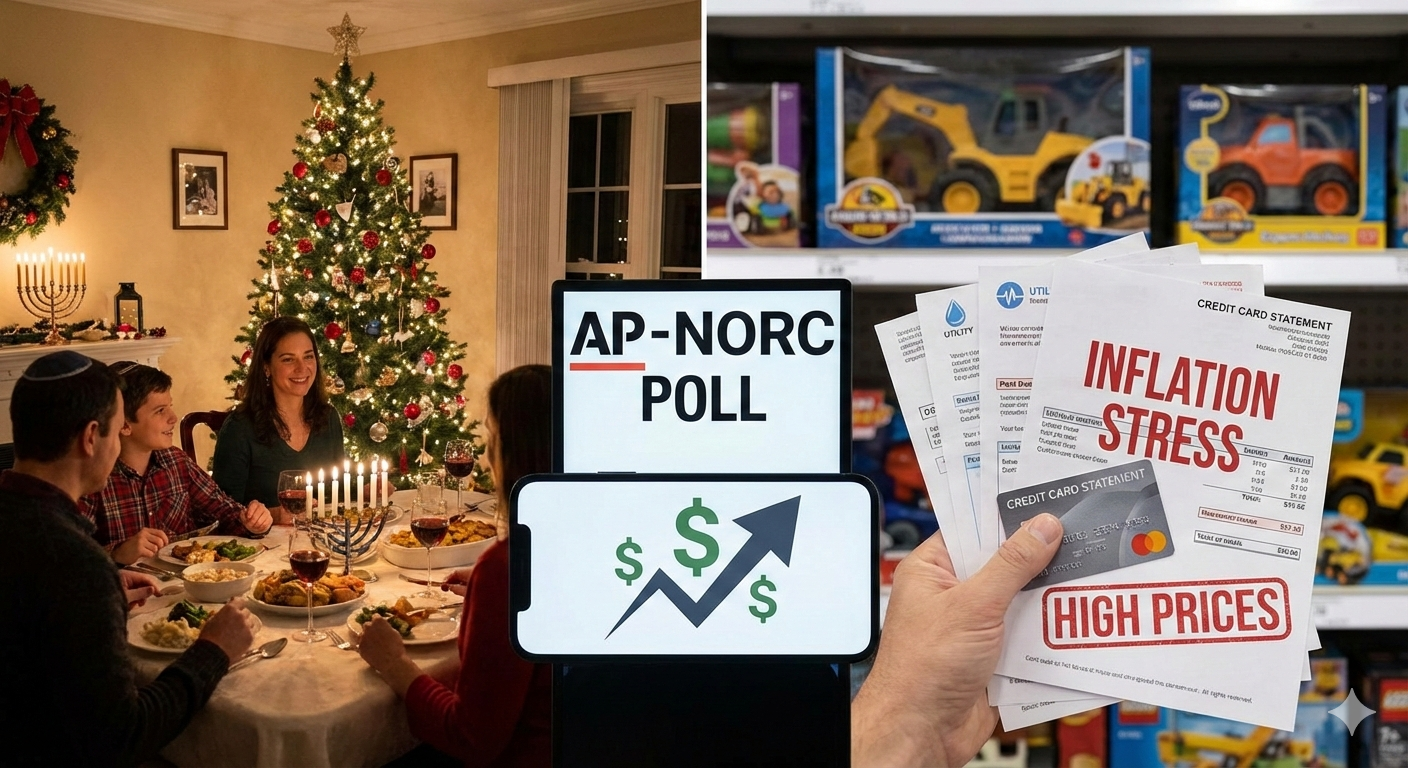
WASHINGTON (AP) — As holiday decorations brighten streets across the United States, many Americans say the financial pressure behind the season is growing heavier. A new AP-NORC Center for Public Affairs Research poll reveals that rising prices for groceries, electricity, fuel, and holiday gifts are making this year’s celebrations harder for millions of families. About half of U.S. adults surveyed said holiday shopping feels more difficult than it did a year ago, while nearly nine in ten Americans report noticing higher prices in everyday purchases. From grocery aisles to online shopping carts, consumers say inflation remains impossible to ignore. “I used to enjoy holiday shopping,” said Maria Lopez, a working mother in suburban Maryland. “Now I check prices twice and still walk away shocked at the total.”

Moreover, local businesses are feeling the impact of changing consumer behavior. Many are adapting by offering discounts or bundles to entice shoppers who are more budget-conscious this year. Some stores have introduced loyalty programs to encourage repeat customers while providing some relief against rising prices.

Economic Optimism From the White House Meets Public Doubt

The findings highlight a growing disconnect between the Trump administration’s economic messaging and how Americans feel about their personal finances. President Donald Trump has repeatedly pointed to strong employment numbers, steady markets, and business growth as proof that the U.S. economy remains resilient. In recent remarks, Trump urged Americans to remain confident, describing the economy as “strong and moving in the right direction.” However, the AP-NORC poll suggests many households remain unconvinced. Respondents said higher electricity bills, rising grocery costs, and increased holiday expenses continue to strain monthly budgets. “We hear that things are improving,” said James Walker, a retiree in Ohio. “But my utility bill doesn’t feel improved at all. It just keeps going up.”

In light of these pressures, families are also exploring community resources for support. Food banks are seeing an uptick in demand as families seek help to make ends meet during the holiday season. Community-driven initiatives, such as toy drives and clothing swaps, are fostering a sense of togetherness while alleviating some of the financial burdens associated with the holidays.

Families Adjust Spending as Inflation Pressures Persist

In conclusion, the current state of the U.S. economy affects not just statistics but the very fabric of families and communities across the nation. As challenges mount from inflation and rising costs, the resilience of Americans shines through in their ability to adapt and find joy in simpler traditions. The importance of staying informed through reliable sources remains paramount, as the ongoing discussions around the economy evolve. For the latest insights and updates, staying tuned to US economy news is essential.

As we look ahead to the new year, economists are closely monitoring how these trends will affect consumer behavior and overall economic stability. The interplay between public sentiment and economic data is crucial, as the experiences of everyday Americans will heavily influence policy decisions and business strategies going forward. The anticipation of whether these inflationary pressures will ease may reshape spending patterns in 2026.

Economists note that while inflation has slowed from previous peaks, prices remain far above pre-pandemic levels, creating lasting financial stress. The poll shows Americans are adapting by cutting back on travel, reducing gift purchases, and delaying major spending decisions. Some families report relying more on credit cards to cover seasonal expenses, while others are skipping long-standing traditions altogether. Electricity costs were cited as a major concern as colder temperatures drive higher energy use. “It’s not just one bill,” said Sarah Mitchell, a teacher in Michigan. “It’s groceries, heat, gas, and then Christmas on top of that. You feel like you’re constantly catching up.”

Political and Economic Implications Heading Into the New Year

The persistent affordability concerns reflected in the AP-NORC poll carry significant political weight. A majority of Americans surveyed said they feel pessimistic about future price trends, expressing little confidence that costs will come down soon. Analysts say that while economic indicators may show stability, public sentiment is shaped by daily experience. Small business owners are also feeling the impact, reporting slower holiday sales and more cautious shoppers. “People come in, look around, and leave without buying,” said a Pennsylvania gift shop owner. As the holiday season unfolds, the poll underscores a broader reality: for many Americans, the economy is judged not by national statistics but by what remains in their wallets after paying the bills.

USA Politics

Indiana GOP’s Stunning Rebuff to Donald Trump: A Deepening Rift Inside the Republican Party

Indiana’s Republican lawmakers reject Donald Trump’s redistricting plan in a rare intra-party rebuke, exposing deep GOP divisions ahead of the 2026 elections. Full details, reactions, and impact at USANewsFast.

December 12, 2025 | Indianapolis, Indiana | 10:40 AM EST

In a dramatic and unexpected political showdown on Thursday evening, Republican state senators in Indiana rejected a redistricting proposal strongly backed by former President Donald Trump, delivering one of the most public intra-party rebukes the GOP has seen in recent years. The vote, which unfolded on December 11, 2025, inside the Indiana Statehouse in Indianapolis, has quickly become one of the most talked-about political developments in the United States, signaling that Trump’s once-unquestioned influence over Republican lawmakers may be weakening as the 2026 midterm elections draw near.

The rejected map was designed to reshape Indiana’s congressional districts in a way that would have solidified additional GOP-leaning seats, tightening the party’s control of the state’s political landscape. Trump personally pressured several top Republican lawmakers throughout the week, urging them to support the plan. Yet the proposal collapsed in a surprising 19-29 vote, with a bloc of Republican senators breaking ranks and joining Democrats in opposing the measure.

This rejection not only stunned many political insiders but also exposed significant strategic disagreements within the GOP over redistricting, electoral strategy, and the role Trump should play in shaping the party’s future.

A Rare Public Defiance of Trump

For nearly a decade, Republican candidates and lawmakers have largely avoided crossing Trump publicly, especially on matters tied directly to elections and power. But Thursday’s vote marked a notable shift.

According to lawmakers present at the session, Trump had called multiple Republican senators personally, pressing them to pass the map. Several reported receiving “direct and intense” messages from members of Trump’s political operation in Florida.

Yet, as the vote approached, GOP lawmakers showed an unusual willingness to push back.

State Senate Majority Whip Mark Holloway, a Republican from Fort Wayne, said shortly after the vote:

“We respect President Trump, but our responsibility is to the voters of Indiana and to preserving fair representation. This map went too far politically and we couldn’t support it.”

The decision represents one of the few times since 2016 that a Republican legislative body has openly rejected a Trump-backed election strategy, signaling evolving internal calculations.

Why the Redistricting Map Failed

Several Republican senators explained that the proposed map would have dramatically reshaped districts in a way that risked long-term instability and potential court challenges.

The map, crafted with Trump-aligned consultants, aimed to flip at least two competitive districts into safe Republican seats—a move Trump argued was essential to securing a House majority in 2026.

But critics within the party raised three major concerns:

1. Legal Vulnerability

Several lawmakers believed the map could face federal court challenges under the Voting Rights Act or anti-gerrymandering provisions. Past legal battles in Wisconsin and North Carolina have made many state legislators more cautious.

2. Backlash From Moderates

Indiana has seen steady growth in suburban areas, where moderate voters reacted negatively in the past to aggressive gerrymandering. Senators feared provoking backlash that could hurt Republicans statewide.

3. Internal Party Stability

The restructuring of districts would have forced several current GOP House members into the same districts, creating brutal primary fights that party leaders wanted to avoid.

Senator Rachel Donovan, a center-right Republican from Carmel, said:

“A map should strengthen our party, not tear us apart with needless infighting.”

Trump’s Immediate Reaction: “A Terrible Decision”

Within an hour of the vote, at approximately 8:15 PM EST, Trump posted on social media from his Palm Beach residence at Mar-a-Lago, blasting Indiana Republicans.

He wrote:

“Terrible decision by weak Indiana Republicans who don’t understand winning. The map was strong and necessary. Indiana deserves better leadership.”

Trump also hinted at supporting primary challengers against specific GOP lawmakers who voted “no,” calling their decision “a betrayal of the Republican voters.”

Sources close to Trump indicated the former president was “furious” and felt blindsided because he believed he had enough votes secured through private conversations earlier in the week.

Growing Signals of Trump Fatigue in the GOP

While Trump remains extremely popular with the Republican base, insiders say lawmakers are increasingly divided over whether his involvement helps or hurts the party’s long-term electoral prospects—especially in swing states and rapidly changing suburban districts.

Over the past six months:

Several Republican governors have publicly broken with Trump on immigration and budget issues.

Senatorial candidates in Arizona, Georgia, and Pennsylvania have avoided seeking Trump’s endorsement.

Major donors have quietly pressured party leaders to “move toward a post-Trump era.”

The Indiana vote is now being viewed as another data point showing that Trump’s hold on institutional Republicans—while still strong—is no longer absolute.

Dr. Michael Hartwell, a political science professor at Indiana University, said Friday morning:

“The symbolism of this vote cannot be overstated. If Republican state senators in a solid red state like Indiana can openly defy Trump, other states will take notice.”

What This Means for the 2026 Midterms

The failure of the redistricting plan could have real implications for the national fight for control of the U.S. House of Representatives.

1. Fewer Guaranteed GOP Seats

Without the Trump-backed map, Indiana will likely retain at least two competitive districts, making them potential targets for Democrats in close national races.

2. Emboldening Anti-Gerrymandering Movements

Advocacy groups across the Midwest say the Indiana result strengthens their arguments against politically-engineered maps.

3. A Fractured Republican Messaging Strategy

Republicans now must navigate:

Trump’s public anger

Growing moderate resentment

Increasing donor impatience

The need for party unity ahead of the national elections

This mix creates real uncertainty for GOP candidates preparing for 2026.

Indiana Becomes a Symbol of a Larger GOP Identity Crisis

The vote comes at a moment when the Republican Party is wrestling with major strategic questions:

Should it continue embracing Trump’s confrontational, personality-driven model?

Should it refocus on traditional conservative governance?

Should it prioritize suburban growth and moderate voters?

Should the party allow Trump to dictate electoral boundaries and candidate choices?

The Indiana Senate’s refusal to adopt the Trump-favored map places the state at the center of a broader national conversation.

A Quiet Shift in Power

Some political analysts suggest the vote signals a changing power dynamic, where state-level Republicans feel increasingly confident pushing back against Trump when they believe local interests are at stake.

One senior GOP strategist, speaking anonymously, said:

“Trump still commands fear among Republicans, but it’s not the unquestioned fear of 2020 or 2022. Lawmakers are starting to think independently again.”

What Happens Next?

The Indiana Senate will now need to revisit the redistricting process. Lawmakers say a revised map could be presented as early as January 2026.

Trump, meanwhile, is expected to escalate his criticism of the Indiana GOP and perhaps campaign against several Republican incumbents in the state.

Local Republican Party leaders worry that the internal conflict could spill into public messaging just as campaign season accelerates.

Still, many senators who voted against the Trump-backed map insist their decision was made in good faith, not defiance.

Senator Donovan stated Friday morning:

“This was not anti-Trump. It was pro-Indiana.”

But regardless of intent, the political ripples have reached far beyond Indiana.

Conclusion

The Indiana GOP’s rejection of Trump’s redistricting map on December 11, 2025, stands as one of the most significant political developments of the season. It showcases a Republican Party divided not only over strategy but over the very question of Trump’s continued dominance.

With the midterms less than a year away, the move highlights an increasingly visible internal struggle that will shape candidate selections, campaign messaging, donor activism, and—ultimately—the party’s future identity.

The vote may have been just one legislative action in one state, but its impact on the broader political landscape is undeniable. Indiana has become a symbol of a major shift: Republicans are no longer uniformly marching behind Trump, and the fractures inside the party are now breaking into public view.

USA Politics

SUPREME COURT REVIEW OF CAMPAIGN SPENDING RULES IGNITES MAJOR POLITICAL FIGHT AHEAD OF 2026 MIDTERMS

Supreme Court review of campaign spending rules sparks intense political debate as parties gear up for the 2026 midterm elections.”

Published: December 9, 2025 — 10:45 AM EST | Washington, D.C.
 

The debate over money in American politics erupted again Monday morning after the U.S. Supreme Court announced it will review a major challenge to federal limits on coordinated campaign spending. The case, which has been winding its way through the courts since 2022, could reshape how political parties support their candidates — and it comes at a moment when control of Congress hangs by a thread.

The announcement was made shortly after 9 AM inside the marble halls of the Supreme Court, where reporters waited for the Court’s weekly release of accepted cases. Although the justices offered no explanation, they didn’t need to — the political world reacted within minutes.

“This could be the biggest campaign-finance decision in more than a decade,” said Dr. Karen Whitmore, a constitutional law professor who spoke with reporters outside the Court.

“If the justices strike down these limits, the entire structure of modern campaigns changes overnight.”

A Case With the Power to Rewrite Election Rules

The case centers on long-standing restrictions that cap how much political parties can coordinate with their own candidates. These limits were originally put in place to prevent wealthy donors from using political parties as vehicles to pump unlimited sums into specific races.

The challengers — primarily Republican campaign committees — argue that these limits violate the First Amendment, which protects political expression and association. They say parties should be allowed to work openly and fully with the candidates who represent them.

One of the advisers backing the challenge, Mark Ellison, spoke from Columbus, Ohio, where the lawsuit originated.

“A political party exists to support its candidates. Telling them how much they can coordinate makes no sense, especially when outside groups can spend freely.”

Democrats offered a very different perspective.

During a brief press gathering at the U.S. Capitol, Sen. Maria Delgado (D-CA) warned that striking down the limits could allow powerful donors to dominate elections.

“This would tie candidates directly to unlimited donor money. It’s dangerous for democracy and dangerous for transparency.”

Why This Case Comes at a Sensitive Time

The timing could not be more consequential. The 2026 midterms are less than a year away, and both parties are preparing for what analysts believe will be one of the most expensive cycles in American history.

Political strategist James Alcott, speaking on a morning broadcast from New York, explained:

“If the Court lifts these restrictions, you will see a fundraising and spending surge unlike anything we’ve ever tracked. Party committees could invest tens of millions more into key Senate and House races.”

Battleground states — including Arizona, Georgia, Wisconsin, Nevada, and Texas — would feel the impact immediately. Even traditionally safe seats could become harder to challenge without access to national party resources.

Supporters Say It’s About Free Speech

On the conservative side, legal scholars and campaign professionals argue the restrictions are outdated. They point out that the rules were created in an era before smartphones, social media, and real-time digital advertising.

At a legal forum in Dallas, election attorney Richard Halpern explained:

“Campaigns don’t operate the way they did when these limits were written. Parties and candidates must coordinate constantly to respond to attacks, breaking news, and online misinformation. Old rules shouldn’t strangle modern campaigns.”

Supporters also claim that unlimited coordination could reduce the influence of super PACs and dark-money groups, which are able to spend large sums with little oversight.

Critics Fear a New Era of Donor Control

Opponents say removing the limits will do the exact opposite — expanding the influence of wealthy donors and pushing small-donor candidates further to the margins.

During an interview in Chicago, campaign-finance watchdog leader Danielle Kemp didn’t mince words.

“This is how billionaire donors will gain direct access to candidates. They’ll pour money into party committees and expect influence in return. Voters will have less power, not more.”

Her group and others argue that:

Party spending could overwhelm local voices

Donors could shape candidate priorities

Grassroots challengers may struggle even more

Elections could become less competitive overall

Some reform advocates are calling the case “the next Citizens United.”

How the Ruling Could Shape the 2026 Elections

If coordination limits disappear, parties could build campaigns that look and operate very differently.

Here’s what analysts expect:

1. Massive Financial Muscle

National committees could pour unprecedented sums into competitive races. Senate campaigns in swing states might see hundreds of millions in combined spending.

2. More Top-Down Control

Local candidates may rely heavily on national party infrastructure for messaging, staff, data, and advertising.

3. Increased Outside Pressure

Donors may seek greater direct influence over which candidates parties choose to support.

4. Harder Road for Independents

Third-party and self-funded candidates would face stronger competition from heavily coordinated party machines.

“This ruling won’t just change how campaigns are funded,” said Dr. Riya Mallick of the University of Michigan.

“It will change which candidates even bother entering a race.”

The White House Reacts

At 11:30 AM, White House Press Secretary Jordan McCallister addressed the issue during the daily briefing. When asked whether President Trump supports striking down the limits, McCallister responded:

“The President has long believed political parties should be free to communicate fully with their nominees. He supports a system that strengthens transparency and accountability.”

The statement makes the administration’s position clear: they favor removing the restrictions.

What American Voters Are Saying

Public opinion is split.

A new nationwide poll found:

47% worry unlimited party spending would lead to corruption

33% say parties should be allowed to coordinate freely

20% say they need more information

Across the country, individual voters expressed their own concerns.

In Atlanta, café owner Melissa Proctor said:

“Politicians already don’t listen. More big money will drown out normal people completely.”

But in Phoenix, small business owner David Hollis disagreed:

“If a party believes in its candidate, let them support them. That’s part of the democratic process.”

What Happens Next

The Supreme Court will hear oral arguments early next year. A final ruling is expected in the summer of 2026, likely in June — right as campaigns shift into high gear.

Between now and then:

Party strategists are preparing parallel fundraising plans

Reform groups are ramping up public-awareness campaigns

Legal analysts are debating how far the justices may go

Candidates are quietly adjusting their budgets and strategies

Regardless of the outcome, both parties expect major changes.

Conclusion: A Defining Moment for U.S. Democracy

The Supreme Court’s willingness to revisit coordinated spending limits marks a rare moment where legal theory, political power, and public trust all collide. Whether the justices choose to uphold or dismantle the rules, their decision will shape not just the 2026 midterms but the long-term structure of American elections.

“This ruling will decide who holds real influence,” Dr. Whitmore said as she left the Court.

“The voters? The parties? Or the donors? That is the question at the center of this case.”

USA Politics

`🇺🇸` Trump’s Power Shake-Up: Supreme Court Reviews Case That Could Rewrite U.S. Governance

:

🇺🇸

Supreme Court reviews a landmark case amid Trump’s power shake-up, potentially reshaping U.S. governance and political landscape.”

Date/Time & Location: December 7–8, 2025 — Washington, D.C.

The political landscape in Washington entered a high-tension zone this week as the U.S. Supreme Court heard oral arguments in a landmark case that could redefine the limits of presidential authority. At the center of the debate is whether President Donald J. Trump can gain expanded power to dismiss leaders of independent federal agencies — a shift legal analysts say could reshape the fabric of American governance. The case challenges a nearly 90-year-old precedent restricting presidents from freely firing agency heads, a safeguard originally designed to maintain checks and balances within the federal system

 The Case That Could Redraw U.S. Government Power Lines

The case before the Court questions whether independent agencies — including the Federal Trade Commission (FTC), Securities and Exchange Commission (SEC), and other regulatory bodies — can remain shielded from direct presidential removal. Several conservative justices signaled skepticism toward the old rule, noting it may conflict with the Constitution’s structure of executive authority.

Justice Samuel Alito asked during the hearing:
“How can the President be expected to faithfully execute the laws if he cannot control the officials who enforce them?”

The Biden-era rule still in place prevents presidents from firing agency heads without specific justifications. Trump’s legal team argues this limits the elected executive’s accountability to voters. White House spokesperson Katherine Reilly said the President “fully supports the Court’s review because restoring executive clarity is essential for efficient governance.” Opponents, however, warn that removing these boundaries could allow presidents to place loyalists in powerful regulatory positions without oversight.

Supporters Say It Brings Accountability; Critics Fear Centralization of Power

Supporters of Trump’s stance claim that the President should have the authority to replace officials obstructing his policy agenda. “No president should be held hostage by unelected bureaucrats,” said Sen. Marco Ellis (R-TX), calling the current system “a relic that prevents modern leadership.”

But critics argue that empowering presidents to dismiss agency heads at will could politicize institutions historically designed to act independently. Former FTC chair Linda Whitaker warned that the move “could collapse decades of bipartisan regulatory stability and turn agencies into political battlegrounds.”

Legal scholar Dr. Raymond Clark further explained that if the Court overturns the 1935 precedent, “it could give President Trump influence over financial markets, environmental rules, labor regulations, and consumer protections — all overnight.”
Civil liberties groups have rallied outside the Supreme Court, with signs reading “Independent Agencies Protect the People” and “No One Man Should Have All This Power.” Many everyday Americans watching from home have expressed mixed feelings, torn between the desire for efficient governance and fear that too much power could erode democratic safeguards.

 — What This Ruling Means for Americans and the World

The Court’s decision — expected in early 2026 — could have sweeping consequences. If Trump gains enhanced authority, analysts believe we may see rapid leadership changes across multiple federal bodies. This could accelerate policy actions on border enforcement, economic deregulation, energy expansion, and technology oversight.

White House reporter Melissa Carter, who attended the hearing, noted the unusual intensity. “You could feel the weight of history in that courtroom,” she wrote. “Every justice understood that this ruling could redefine how every future president governs.”

Internationally, U.S. allies are watching closely. A senior European diplomatic official, speaking anonymously, said, “A dramatic centralization of power in the U.S. executive branch would shift how we negotiate agreements, treaties, and regulatory cooperation.” Markets are also bracing, with financial analysts warning that sudden regulatory shifts could create short-term uncertainty.

For millions of Americans, the ruling will determine how much influence a president can exert over systems that affect the economy, consumer rights, health, and daily life. Whether seen as a necessary modernization or a dangerous overreach, the decision will become one of the defining moments of Trump’s second term.

USA Politics

Trump Strengthens Support as New H-1B Visa Review Policy Gains Backing From Business Groups

Trump gains momentum as business groups back new H-1B visa review policy, boosting his support among key U.S. stakeholders.”

Washington, D.C. — December 7, 2025 | 11:10 a.m. ET
Former President Donald Trump is receiving renewed support from several U.S. business and policy groups following the administration’s updated review measures for the H-1B visa program. The new guidelines, announced this week, tighten screening processes for foreign skilled-worker visas, a move that supporters say will help protect American jobs and improve workforce opportunities for U.S. citizens.

Policy Aims to Strengthen Domestic Workforce

According to officials familiar with the policy update, the measures are designed to reduce misuse of the H-1B program and ensure that companies prioritize qualified American workers. The administration argues that stricter verification will bring greater transparency and limit instances where firms rely on foreign labor instead of investing in local talent.

Supporters of the policy say it reflects Trump’s long-standing position on reshaping immigration to better serve national economic interests. Many point to his earlier calls for fair hiring practices and greater accountability in industries that heavily rely on imported labor.

Business Leaders See Positive Shift

While immigration policy often sparks mixed reactions, several U.S.-based business organizations have welcomed the adjustments. Leaders in manufacturing, transportation, and small-business sectors noted that the updated screening rules may open more opportunities for American graduates entering the job market.

“Companies remaining competitive while hiring domestically has been a major priority for us,” said Patrick Miller, a spokesperson for an independent business coalition. “The administration’s decision aligns with what many employers have been asking for — a system that rewards American workers while keeping the visa process fair.”

Economists observing the change say it could strengthen local job placement and help reduce wage gaps in certain technical fields. Early public feedback, particularly from states with rising unemployment among recent college graduates, shows increasing support for the administration’s approach.

Trump’s Message Gains Traction Ahead of 2026

Political analysts say the move has helped Trump regain attention among voters who prioritize economic protection and immigration reform. His supporters argue that the updated H-1B policy reinforces his long-standing belief that immigration policy should benefit American citizens first.

At a recent public event, Trump emphasized that the new measures are about “restoring fairness in the hiring system” and “ensuring Americans have the first opportunity at the best jobs.” The message resonated strongly with attendees, many of whom expressed support for what they view as a practical, job-focused approach.

Critics Voice Concerns, But Support Remains Strong

Some technology firms have expressed concerns that tighter review processes may slow recruitment for specialized roles. However, Trump’s supporters counter that the system has long required reform and that companies should prioritize training and hiring American workers before seeking foreign labor.

Despite differing viewpoints, the administration reports that the policy will continue to be refined to maintain balance between workforce protection and industry needs.

A Shift With Nationwide Impact

As the updated H-1B measures roll out, early indicators suggest that Trump’s economic message is resonating with a broad segment of voters who view employment opportunities as a top national concern. With the 2026 election cycle approaching, analysts say the policy could become a significant point of discussion — and one that underscores Trump’s continued influence on national economic priorities.